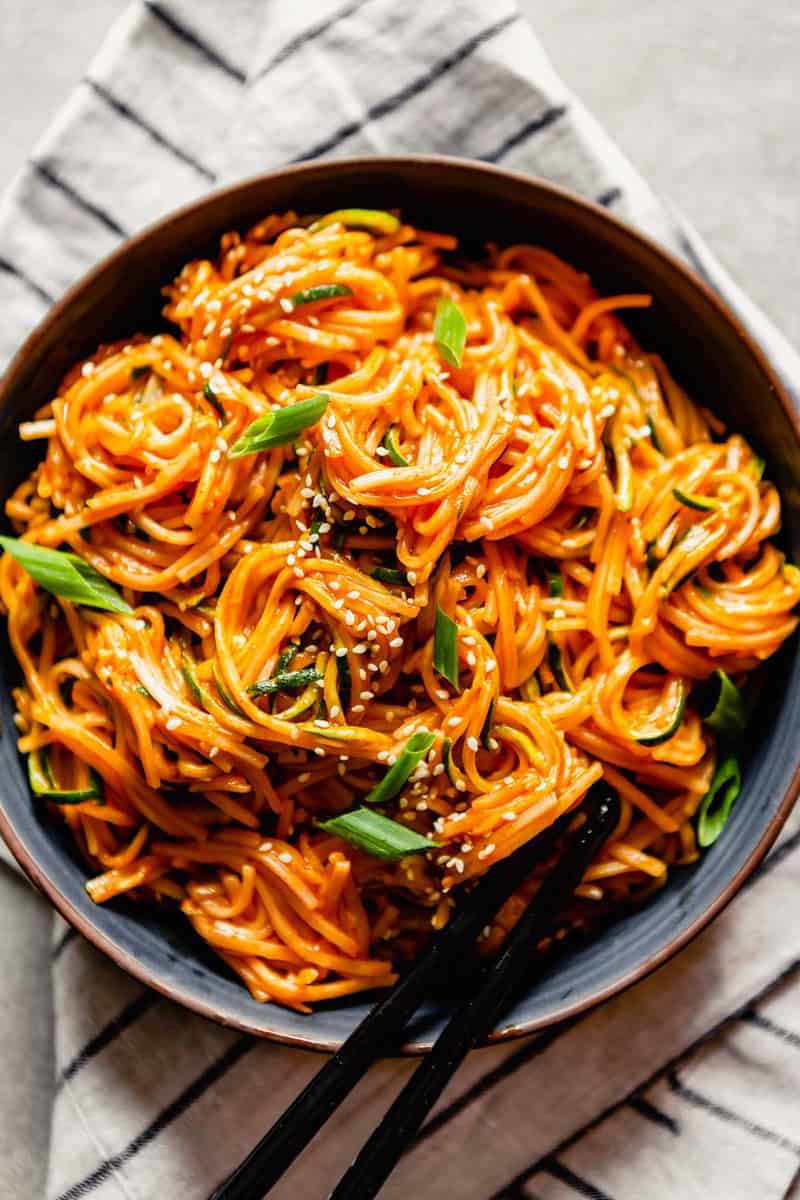
Saucy Gochujang Noodles (Easy Korean Noodles)
Description
Crave-worthy gochujang noodles made with a luscious savory, spicy and salty Korean noodle sauce. This dish is easy to make, has punchy heat, and is very versatile. An interesting yet practical side dish!
Video
Save This Recipe!
Ingredients
- 3 large zucchini, spiralized*
- 1 teaspoon kosher salt
- ¼ cup gochujang*
- 3 tablespoons hoisin sauce
- 3 tablespoons fresh lime juice
- 3 tablespoons olive oil
- 1 teaspoon minced fresh garlic
- 8 ounces rice noodles, cooked according to package directions; drained
- 1 tablespoon cornstarch
- 2 tablespoons unsalted butter, vegan butter if needed
- 1 tablespoon toasted sesame oil
- Sliced scallions and sesame seeds for serving, optional
Instructions
- Toss 3 spiralized zucchinis with 1 teaspoon salt in a strainer set over a bowl; let sit 15 minutes.
- Meanwhile, whisk together ¼ cup gochujang, 3 tablespoons hoisin, 3 tablespoons lime juice, 3 tablespoons oil, and 1 teaspoon minced garlic.
- Cook 8 ounces rice noodles according to package directions; drain and transfer back to pot over medium heat. Pour gochujang sauce over noodles and cook 2 minutes.
- Squeeze zucchini noodles over a bowl to release excess liquid (when you think you’re done, squeeze a bit more), reserve liquid then transfer zucchini noodles to pot with rice noodles and sauce and gently toss to combine.
- Whisk together ½ cup reserved zucchini water and 1 tablespoon cornstarch; pour into pan with noodles and cook until thickened and silky; about 1 minute. Off heat, stir in 2 tablespoons butter and 1 tablespoon toasted sesame oil.
- Top with scallions and sesame seeds and serve immediately.
Equipment
Notes
*Don't want a mixture or rice noodles and zucchini noodles? You can use one or the other. If you want just rice noodles, use 14–16 ounces of rice noodles. If you choose to use all zucchini noodles, use 6–8 medium zucchini.
Toasted sesame oil is not the same as regular sesame oil. Be sure to seek out toasted sesame oil at the store.
*Gochujang: if you're gluten-free be sure to check the labels of gochujang. Some products are gluten-free, while others are not. Same goes with hoisin.
Storage: store leftovers in an airtight container in the refrigerator for up to 4 days.
Nutrition
Serving: 1cupCalories: 224kcalCarbohydrates: 25.5gProtein: 3gFat: 13gSaturated Fat: 4gCholesterol: 10mgSodium: 868mgFiber: 3gSugar: 11g
Like this? Leave a comment below!I love hearing from you and I want to hear how it went with this recipe! Leave a comment and rating below, then share on social media @zestfulkitchen and #zestfulkitchen!