
This post may contain affiliate links.
Bulgogi is probably the dinner I make most in my house. I make it multiple times a month with all kinds of proteins, but beef bulgogi—made with either ribeye or top sirloin—is my favorite. My marinate differs from traditional recipes because it uses Gochujang for some savory spice that rounds out the flavors. The beautiful thing about this recipe is you can make it on the stovetop or the grill, a real year-round meal!

As I mentioned earlier, I make bulgogi a lot. And when we’ve had our fill of beef, I will make pork tenderloin bulgogi or chicken bulgogi (aka dak bulgogi), both are just as easy to prepare as the beef version.
Translated as “fire meat,” the process of making bulgogi includes charring strips of marinated meat (really any kind!) over an open flame.
And like all recipes, the method for making Korean beef bulgogi varies widely by region. My recipe follows the general process and idea, but is adapted for the American home cook.
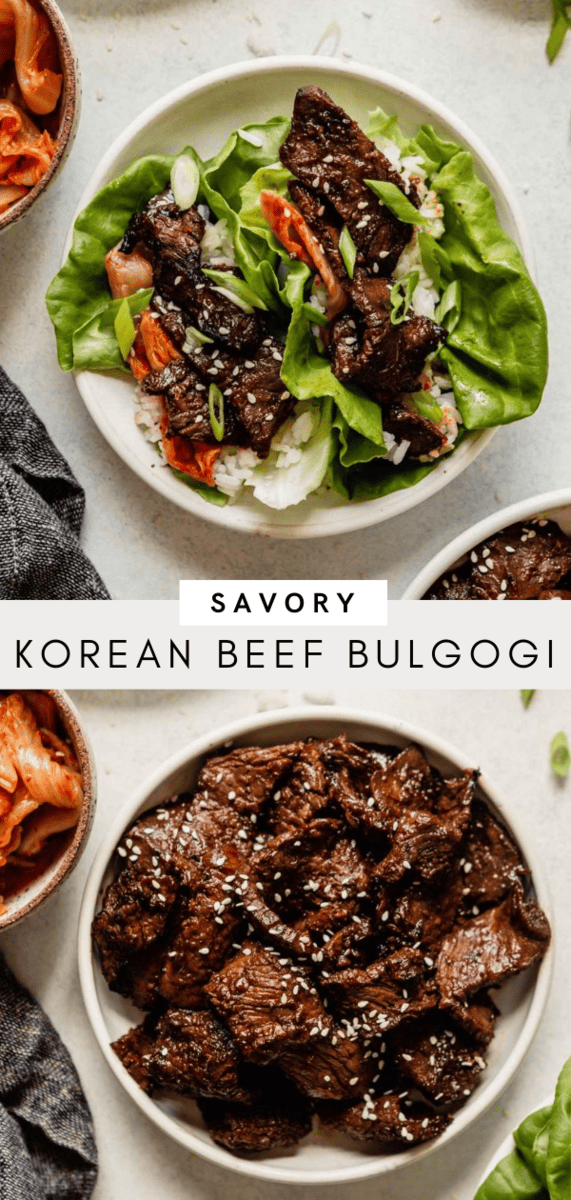
The marinated and charred beef is often served with rice and perilla leaves. But for my less traditional version I serve it in bibb lettuce leaves with rice, kimchi, and green onions. If you can find perilla leaves, I encourage you to give those a try!
Reader Review
“Our new favorite! We don’t eat a lot of beef, but this will be on regular rotation. Lost a few tiny pieces through the grill grate and it felt like losing gold! Will try this in a cast iron skillet next. so good.
– Carolyn
I’ve seen some Korean home cooks use this basket for grilling. It’s a great way to get the char of grilling without the risk of losing strips of meat through the grill grate.
This recipe article was originally published in 2020, it has since been updated with helpful tips and step-by-step images for clarity.
What’s In a Bulgogi Marinade
Traditionally a bulgogi marinade consists of black pepper, garlic, onion, ginger, sesame oil, sesame seeds, soy sauce, sugar and mirin. Oftentimes Asian pear or pear juice is added as well because it contains a tenderizing enzyme.
For my version of bulgogi I skip the pear and add some honey for sweetness instead. Additionally, I add gochujang to my bulgogi marinade. It’s not traditional but I like the mild spice and savoriness it adds.
If you don’t have gochujang you can use ½ a teaspoon or so of red pepper flakes and a bit more honey.

Bulgogi Beef Recipe Ingredients
- Steak: You’ll need a pound of steak, I recommend rib-eye or top sirloin. Both are ultra-tender and flavorful. Perfect for a quick cooking recipe like this.
- Soy sauce: I always develop recipes with low-sodium soy sauce because that’s what we always did in the test kitchen. I’ve made this recipe with regular and low-sodium soy sauce and it’s great either way. Use what you prefer. Swap in Tamari to make this gluten-free.
- Onion: yellow or white onion works here.
- Honey or brown sugar: either works! I usually opt for honey.
- Gochujang: Look for this in the Asian section of your grocery store sold in short red rectangular containers.
- Garlic and ginger: fresh is essential for this recipe! Don’t swap in dried for either.
- Mirin: a sweet rice wine that’s great for cooking (not so much drinking). If you don’t have it, increase the amount of honey or brown sugar you use by 2 teaspoons.
- Toasted sesame oil: this flavorful ingredient needs to be in your pantry! Adds so much depth of flavor.

How to Make Bulgogi: Marinate then Char
This beef bulgogi with gochujang can be cooked on the stove top in a grill pan or cast-iron skillet, or on the grill. I prefer cooking beef bulgogi on the grill because it adds more flavor, charring and caramelization.


- Make the marinade in a large bowl by whisking together the soy sauce, grated onion, honey, gochujang, garlic, ginger, mirin, sesame oil and black pepper.

- Thinly slice the beef then toss it with the marinade to evenly coat.
Tip: place the steak in the freezer for 10 minutes prior to slicing. This will make it much easier to thinly slice.
- Cover and refrigerate for 4–8 hours.
I recommend marinating the beef for at least 4 hours, though the absolute minimum is 2 hours. It can marinate for up to 8 hours.


- If you’re grilling the bulgogi, cook the steak slices over high heat until charred on both sides, this will take just 1½ minutes per side.
- If you’re cooking on the stove-top, cook the steak slices in a single layer in a preheated cast-iron skillet, set over medium-high heat, for 1½–2 minutes per side.
Tip: No matter how you cook the beef, avoid overcrowding the grill or pan. The goal is to char, not steam. So be prepared to cook in batches if needed.
Beef Bulgogi Recipe Tips
- Some recipes use flank steak or skirt steak. These cuts take well to marination, but are fairly tough. For that reason, they aren’t my favorite cut for this recipe. If you use either of these cuts, just be sure to cut against the grain.
- I usually slice the beef myself, but you can buy pre-sliced meat at your local Korean grocery store or international market.
- Shredded Asian pear or pear juice is a common ingredient in bulgogi marinade because it contains a tenderizing enzyme. I leave it out because, frankly, if you use a tender cut of beef you don’t really need it. If you want to add it, start with ½ cup of shredded pear or ¼ cup pear or pineapple juice and skip the honey.

How I Serve Bulgogi
Traditionally, bulgogi is served in perilla leaves with gochujang, doenjang (soybean paste) and/or ssamjang (a Korean spicy dipping sauce). I like to serve bulgogi in lettuce cups with cooked jasmine rice, kimchi, scallions and sesame seeds.
I’ll often cook down the leftover marinade (safe to eat once it’s brought to a boil and cooked for at least 1 minute) and drizzle that over top.
To make a bulgogi bowl, serve the bulgogi over rice with some charred carrots and pickled cucumbers (this is how I serve my quick and easy ground beef bulgogi).
How to Store Korean Beef Bulgogi
Store any leftovers in an airtight container in the refrigerator for up to 4 days. Reheat gently on the stovetop or microwave until warmed through.
Leftovers are delicious served with ginger scallion rice noodles. So good! Or I’ll turn them into bulgogi bowls with quinoa and roasted broccoli.

Korean Beef Bulgogi with Gochujang
Description
Video
Save This Recipe!
Ingredients
Beef Bulgogi
- ¼ cup low-sodium soy sauce
- ½ large white or yellow onion, grated on a large-hole grater
- 3 tablespoons honey or brown sugar
- 1 tablespoon gochujang
- 1 tablespoon minced garlic
- 1 tablespoon grated fresh ginger
- 1 tablespoon mirin
- 1 tablespoon toasted sesame oil
- ¼ teaspoon cracked black pepper
- 1 pound boneless rib-eye or top sirloin, cut into ⅛–¼-inch thick slices
- vegetable oil, for cooking
- to serve, optional: rice, bibb lettuce, kimchi, scallions, sesame seeds, ssamjang
Instructions
- Whisk together ¼ cup soy sauce, ½ grated onion, 3 tablespoons honey, and 1 tablespoon each gochujang, garlic, ginger, mirin and sesame oil, and ¼ teaspoon black pepper. Add 1 pound sliced steak and toss to coat; cover and refrigerate for at least 2 hours, ideally 4 hours, or up to overnight.
Grilling Method
- Heat a grill to medium-high. Brush grill grate clean; brush grate with oil to coat. Use tongs to remove steak slices from marinade, allowing excess marinade to drip off, and arrange slices on grill grate. Grill just until cooked through and charred, about 1½ minutes per side.
Stove-Top Method
- Heat a cast-iron grill pan or skillet over medium high for 5 minutes. Brush pan with oil and, working in batches, use tongs to remove steak slices from marinade, allowing excess to drip off, and arrange beef in a single layer in pan.
- Cook beef until charred and just cooked through, 1½–2 minutes per side; transfer to a serving platter. Repeat cooking process until all of beef has been cooked.
- Optional: boil the marinade in a saucepan over medium-high heat until slightly thickened, about 3 minutes. Serve sauce with bulgogi.
- Serve bulgogi with rice, butter lettuce cups, kimchi, scallions, sesame seeds, and ssamjang, if desired.

Made this last night and we LOVED it thank you! So flavorful!
Yay! It’s a favorite around here too! So glad you enjoyed it!
our new favorite! We don’t eat a lot of beef, but this is will be on regular rotation. Lost a few tiny pieces through the grill grate and it felt like losing gold! Will try this in a cast iron skillet next. so good.
Hi Carolyn! I am so happy to hear you enjoyed it!!