
This post may contain affiliate links.
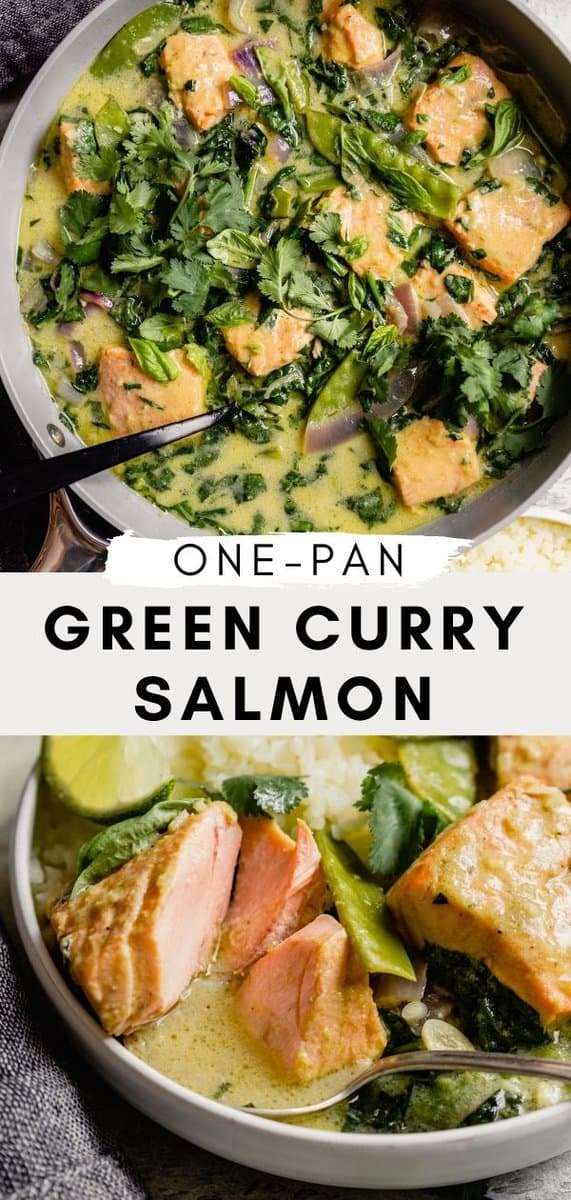
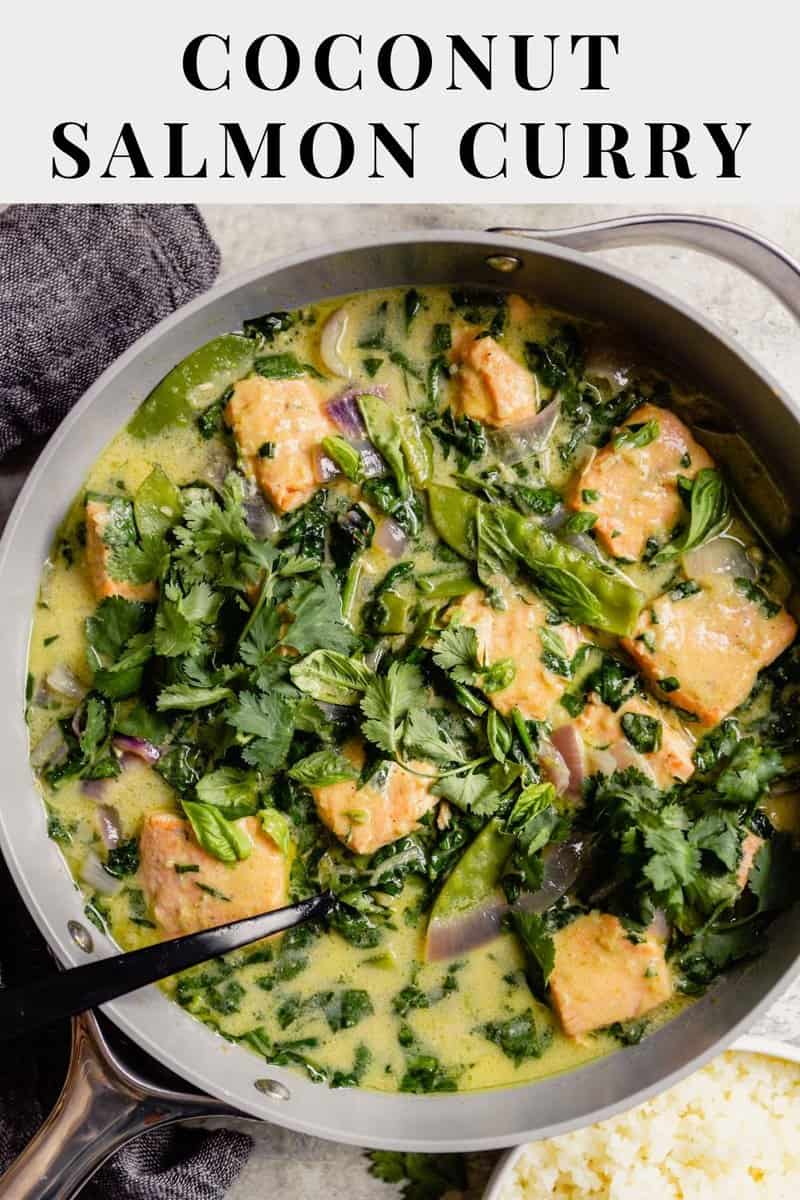
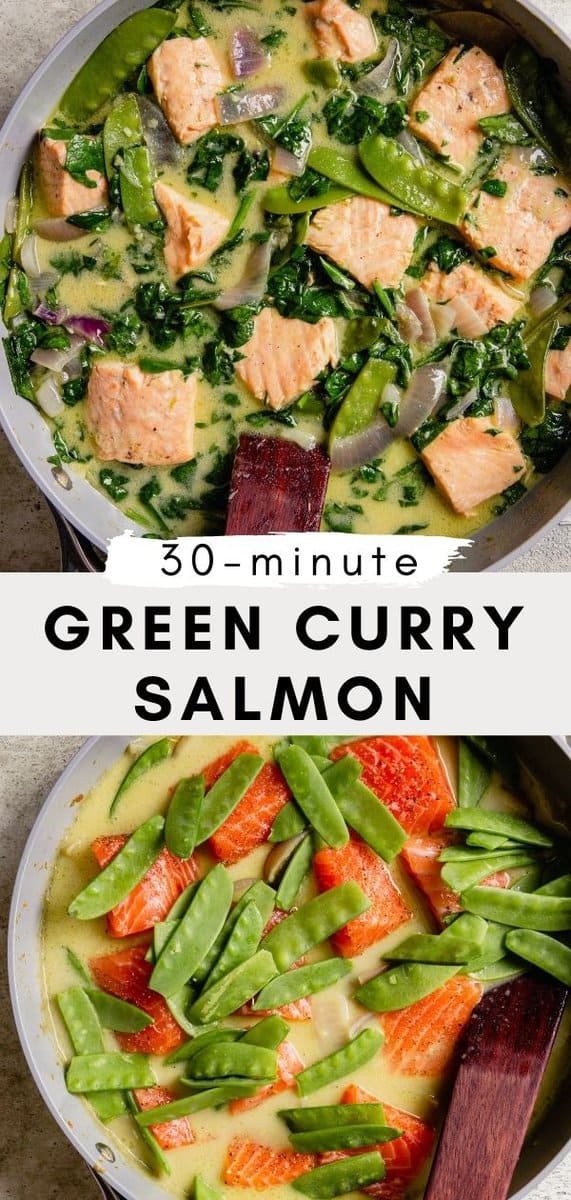
This one-pot, aromatic Green Curry Salmon is loaded with veggies and flavor! The combination of green curry paste with fresh ginger, garlic and lime creates a dish that tastes like it simmered all day, but actually only took 30 minutes. Plus, large chunks of salmon are simmered right in the sauce, which means they come out perfectly moist every time.
As a food scientist and former food magazine editor, I’ve been cooking and developing salmon recipes for more than 10 years. There are so many ways to cook salmon—I’ve done them all. But poaching might be the easiest method there is for cooking salmon.
Poaching chunks of salmon in a flavorful curry sauce does a few things. First, it slowly-cooks the salmon through at an even rate, so each bite is cooked perfectly. Second, all those flavors in the curry sauce season the fish as it cooks. Just genius!
The rest of this dish is pure vibrancy. Tons of fresh vegetables add texture while lime juice and zest brightens it all up. The result is a salmon green curry recipe that’s savory, cozy and fresh all at the same time.
This recipe article was originally published in January of 2021, it has since been updated with helpful tips, clearer instructions, step-by-step photos and a video for guaranteed success.
As noted in the recipe card, this recipe is inspired and adapted from a recipe by Kay Chun for The New York Times.

Ingredients in This Coconut Salmon Curry Recipe
- Curry paste: jarred green curry paste is a great shortcut ingredient! Don’t use curry powder here—it’s just not the same. Find it near other Asian condiments in the grocery store.
- Coconut milk: the type of coconut milk you use is important! Use full-fat canned coconut milk. Not all canned coconut milks are created equal, I like Aroy-D coconut milk, Goya coconut milk and Chaokoh coconut milk.
- Salmon: a thick salmon fillet is best here—it should be at least 1-inch thick. To ensure you get a thick fillet, ask for a center-cut fillet request that the fish monger remove the skin for you.
- Aromatics: Fresh ginger, fresh garlic and red onion are all used here. Ginger and garlic are in most jarred curry pastes, but I think this dish needs some extra to amp up the overall flavor.
- Fish Sauce: Just a tablespoon is needed to add a layer of deep umami. It’s stinky, but worth it!
- Veggies: snow peas and chopped spinach add texture and color. Sugar snap peas, broccoli, shelled edamame and bell peppers are all great veggie options as well.
- Herbs and lime to finish: finish the curry with a combination of fresh basil and cilantro, along with lime zest and juice to brighten everything up.
How to Make Thai Green Curry Salmon

- Cook the onions, ginger, and garlic until starting to soften.

- Add the curry paste and cook briefly—this “blooms” the paste and unlocks all those flavors.


- Add the coconut milk and water, bring to a boil then reduce to a simmer and cook until the liquid has slightly reduced.


- Add salmon and the snow peas and cook just 3 minutes.


- Off heat, stir in the spinach, fish sauce, lime juice and lime zest.
- Sprinkle basil and cilantro over top and serve.

Test Kitchen Tips
- The combination of canned coconut milk and water create a creamy yet light curry sauce. If you prefer a decadently creamy sauce, skip the water and use two cans of full-fat coconut milk.
- For fool-proof, perfectly cooked salmon, remove the pan from heat when the salmon is nearly cooked through. It will continue to cook off-heat as you add the spinach, fish sauce and lime.
- This recipe is so foolproof you don’t need a thermometer. BUT, if you’re someone who likes that extra level of guarantee, use a quality thermometer.
- The USDA recommends cooking salmon to an internal temperature of 145ºF. I prefer salmon cooked to 125ºF. The salmon will continue to cook through as it sits in the broth, so I recommend removing it from heat at 120ºF.

How to Serve It
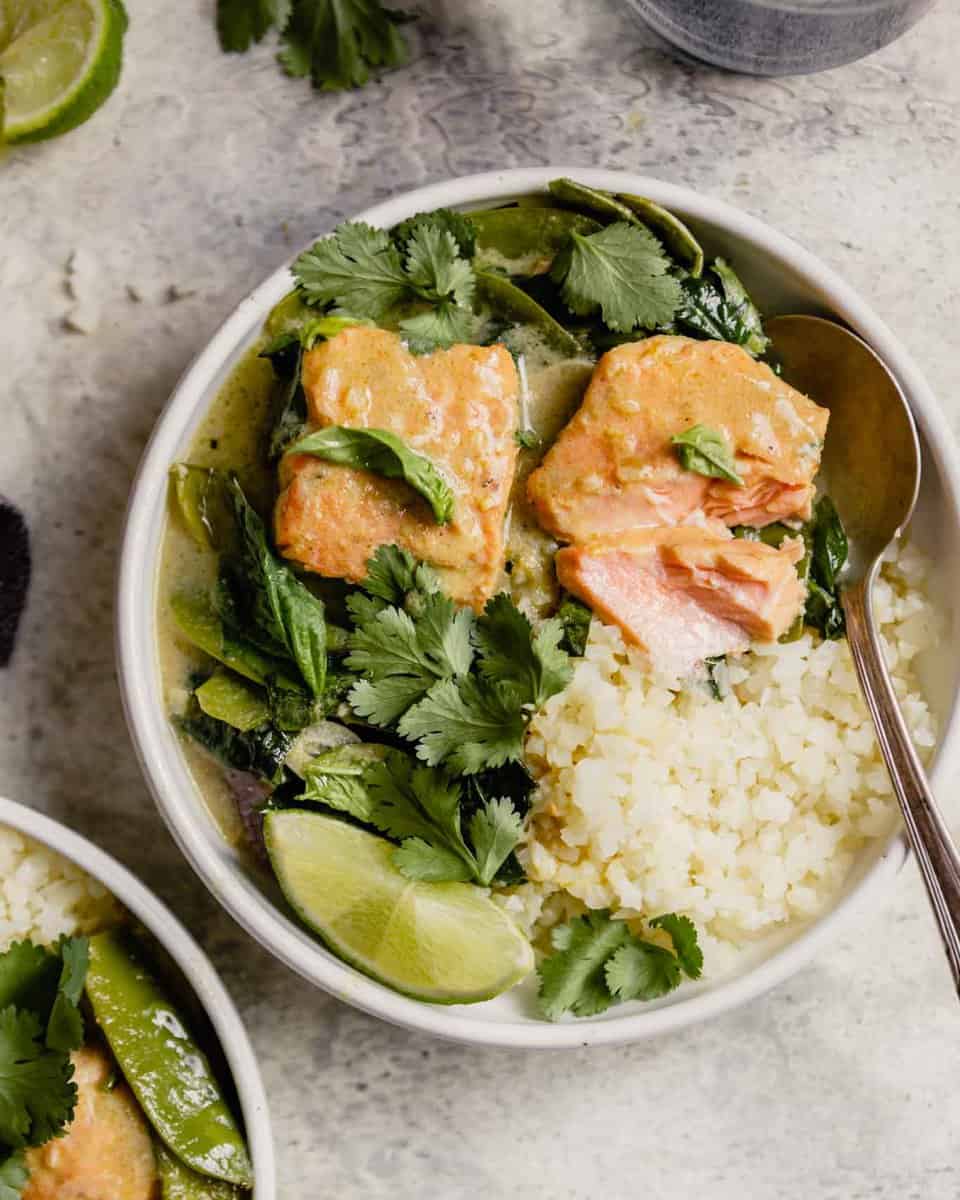
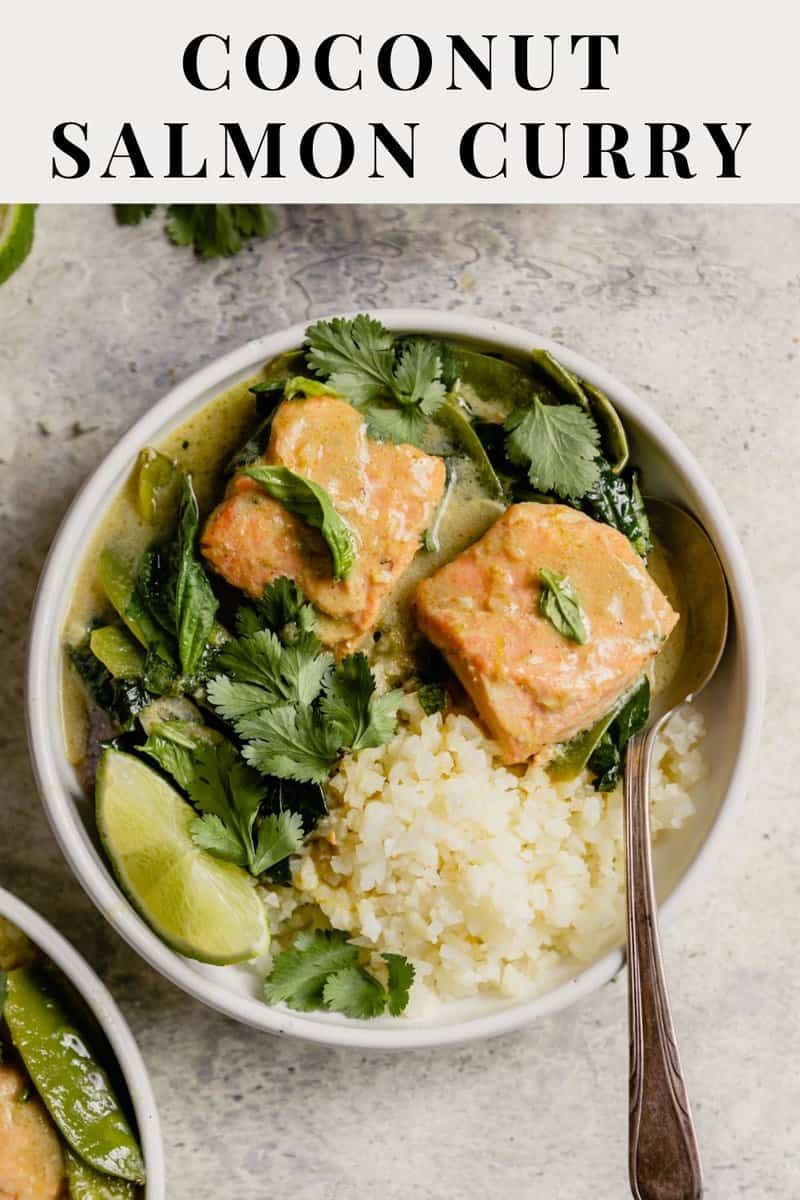
My favorite way to serve this green curry salmon is over rice (cilantro lime brown rice would be great) or cauliflower rice. An all-in-one meal!
Or, you can serve it as is, like a coconut curry salmon soup—just skip the rice and add some additional water to thin it out.
If you add a side dish, keep it light and simple. I like to pair it with a fruit salad—try this Grape Salad without sour cream, or this unique Citrus Salad with peanuts.
Storing and Reheating Leftovers
Store leftover coconut salmon curry in an airtight container in the refrigerator for up to 2 days. Reheat gently in a saucepan over medium-low just until bubbling and heated through.

Green Curry Salmon
Description
Video
Save This Recipe!
Ingredients
- 2 tablespoons coconut oil
- 1 medium red onion, thinly sliced
- 4 cloves garlic, thinly sliced
- 1 (2-inch) knob fresh ginger, minced
- Black pepper and kosher salt
- 3 tablespoons green curry paste
- 1 (14.5-ounce) can full-fat coconut milk
- 1½ cups water
- 1 (1–1 ½ pound) skinless salmon fillet, cut into 2-inch chunks
- 1 cup snow peas, trimmed
- 5 ounces baby spinach, chopped (5 cups, packed)
- 1 tablespoon fish sauce
- 1 lime, zested and juiced + wedges for serving
- ¼ cup chopped fresh basil + more for serving
- ¼ cup chopped fresh cilantro + more for serving
- rice or cauliflower rice and toasted sesame oil (optional), for serving
Instructions
- In a large sauté pan, heat 2 tablespoons oil over medium. Add onion, garlic, ginger, ½ teaspoon pepper and ¼ teaspoon salt. Cook, stirring occasionally, until starting to soften, about 5 minutes. Add curry paste and cook, stirring frequently, 3 minutes.
- Add coconut milk and 1 ½ cups water; bring to a boil over high heat, then reduce heat to medium-high and simmer until liquid is slightly reduced, about 5 minutes.
- Lightly season salmon with ¼ teaspoon each salt and pepper. Stir in snow peas, then nestle salmon in sauce; reduce the heat to medium-low and simmer gently, covered, until just cooked through, 3–5 minutes (*see notes below).
- Off heat, stir in spinach, fish sauce, 1 tablespoon lime juice and 1 teaspoon lime zest. Sprinkle basil and cilantro over top.
- Serve salmon curry over rice and drizzle with toasted sesame oil, if desired. Serve with lime wedges and additional herbs.

great healthy dish, and yes, over cauliflower rice, coconut milk, all of it, thank you!
I’m so glad you enjoyed it! I love this with cauliflower rice!
I found this recipe on TikTok and it might become one of my favorites! So delicious and flavorful with so many aromatics. It could use a few slices of hot peppers, or something like that. But 10/10 so good, adding this to my rotation STAT
Hi Darby! I’m so happy to hear you enjoyed this! Great idea to add some hot peppers. I’ll have to try that next time.
Super good! Made it with salmon as written the first time, but also can’t wait to try it again with tofu!
Oh, let me know how the tofu goes when you try that. I bet that will be delicious. Happy to hear you enjoyed the recipe!