
This post may contain affiliate links.
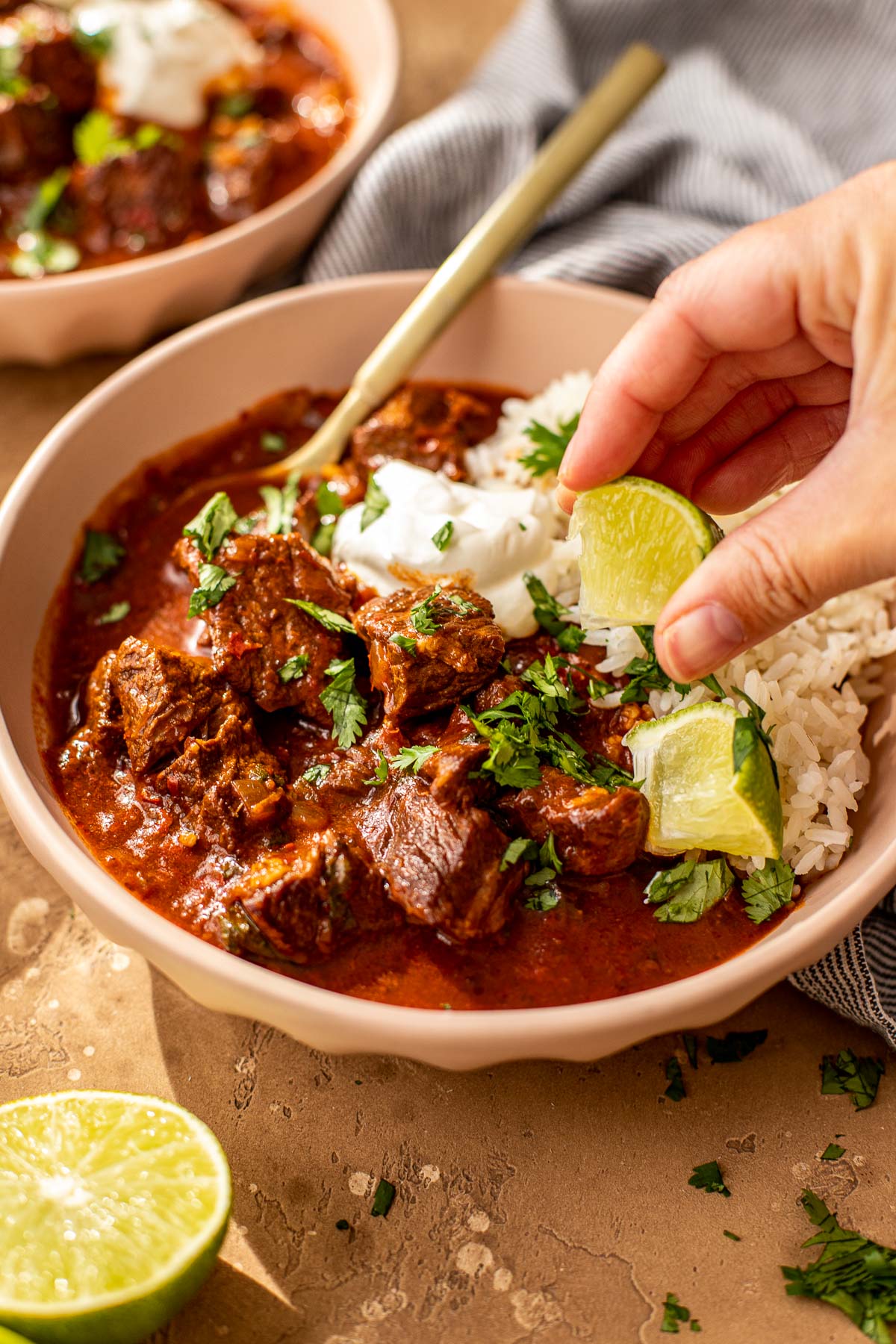
Chile Colorado is a slow-cooked beef and chile stew that’s deeply rich, earthy and savory. Served over rice or with warm tortillas, this Mexican beef stew is the perfect cold weather dinner.
I first learned about chile colorado when I was interning at America’s Test Kitchen. I was working on the books team and one of my many duties was to take a single dish, gather 5–10 different recipes and pinpoint similarities and differences between ingredients and methods. Chile Colorado was one of those dishes I researched. And while I don’t think they ended up developing or publishing a recipe for it, I was still intrigued.
Since then, I’ve been obsessed with learning more about cooking with dried chiles. Not only do they add tons of flavor, but when rehydrated they add the most silky textures to dishes like Carne Adovada.
So years later, here I am publishing a recipe for Chile Colorado. This recipe is developed by Jenni Lata and back tested by myself. I hope you enjoy!
What is Chile Colorado?
Chile colorado is a traditional Mexican dish featuring tender slow-cooked chunks of beef (or pork) in a richly-hued dried chile sauce. “Colorado” means “colored red” and has no connection to the state of Colorado.
The saucy slow-cooked meat is generally served simply with rice or tortillas and a few accompaniments like fresh cilantro, radishes and crumbled Mexican cheese. This dish is all about the tender meat and luscious chile sauce!
About the Chiles
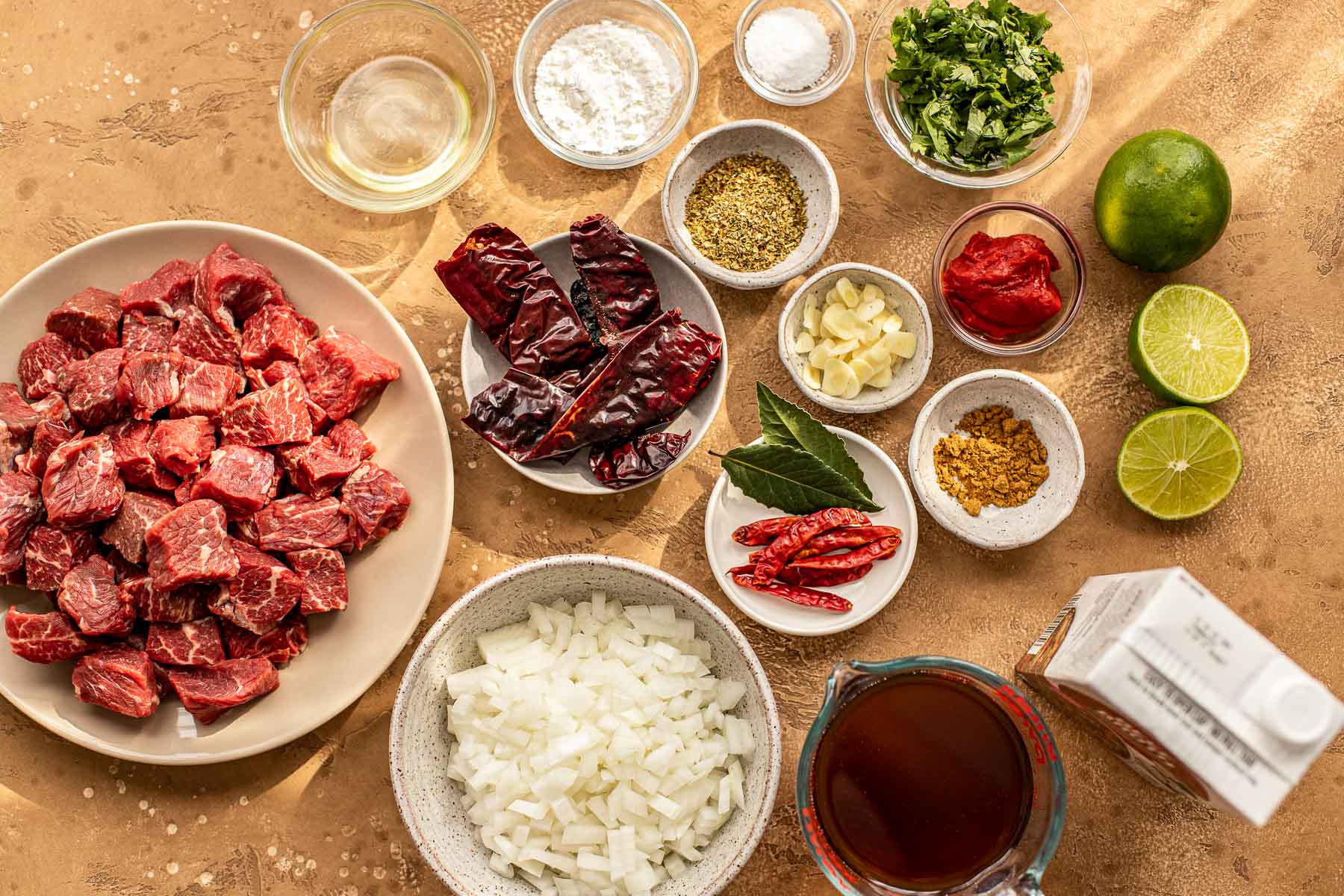
This beef stew is all about the deep red color and flavor of the dried chiles. The larger peppers (guajillo, new mexico, or pasilla) add an earthy fruitiness and mild spice.
The small chiles de arbol can add some serious heat. Adjust the amount of hot chiles you use according to your preference (and tolerance) for spice.
Dried chiles can be found at your local Mexican market or in the Mexican aisle of most grocery stores.
Cut of Beef to Use
For this we’re using chuck roast—a classic stew meat that is beefy in flavor and tenderizes nicely in a relatively brief simmer time. You need 3 ½ pounds of trimmed chuck roast. So if the chuck roast looks pretty fatty, ask for 3 ¾ pounds to account for what you will trim away.
How to Make Chile Colorado
- Simmer and Steep the Chiles
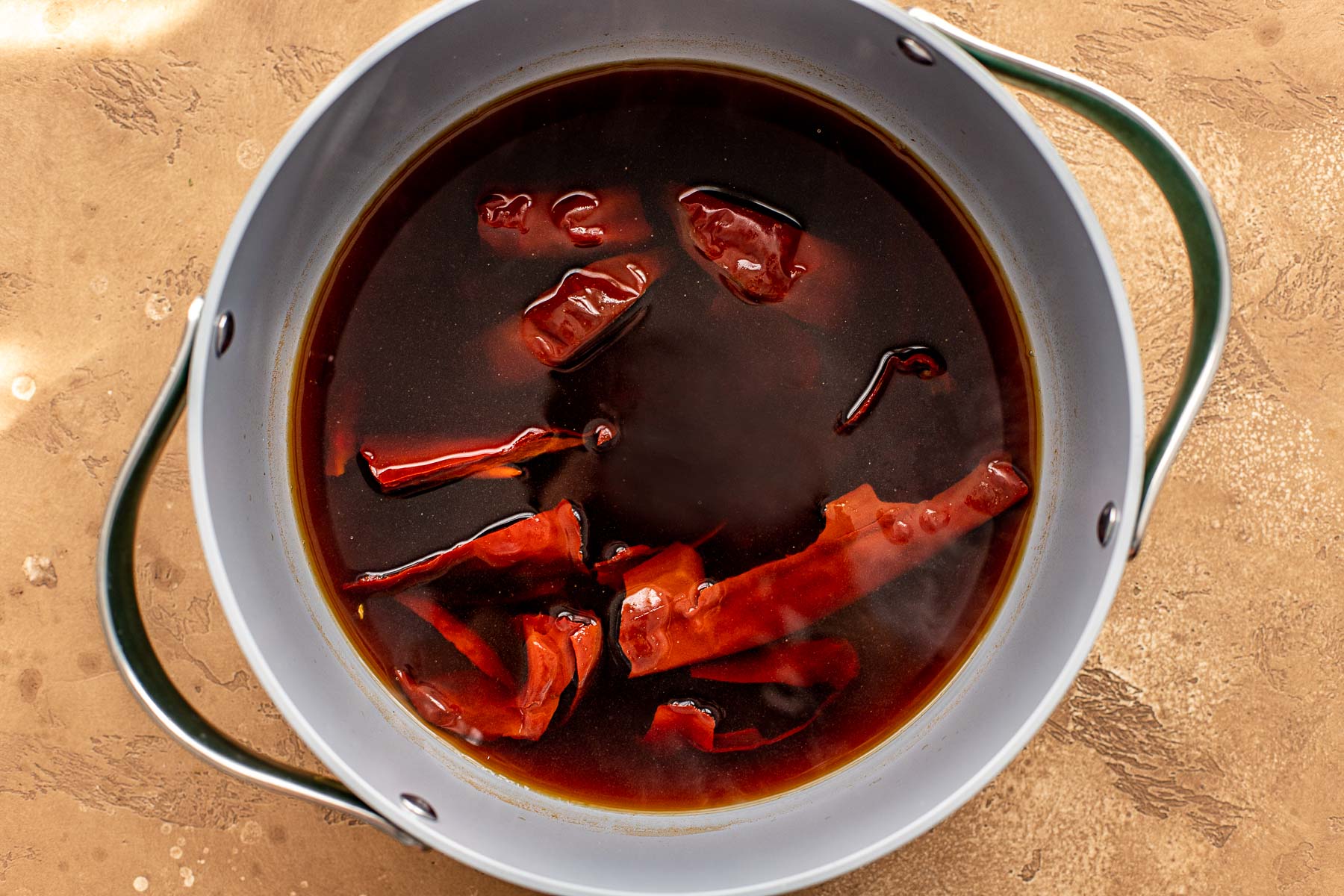
This step rehydrates and softens the dried chiles so they blend up very smoothly. While the chiles simmer and steep, you can work on prepping the beef, onions and garlic.
- Brown the Beef
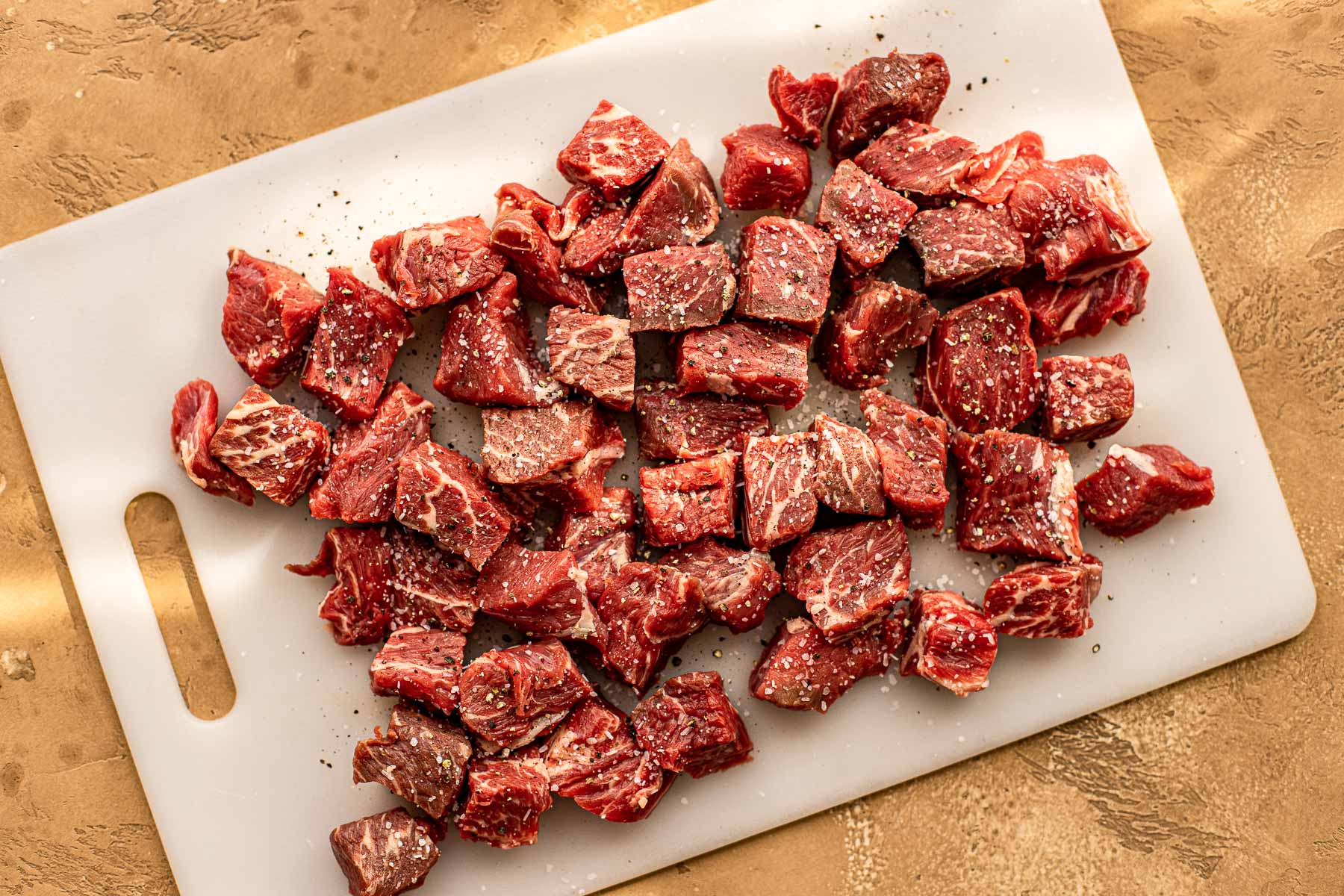
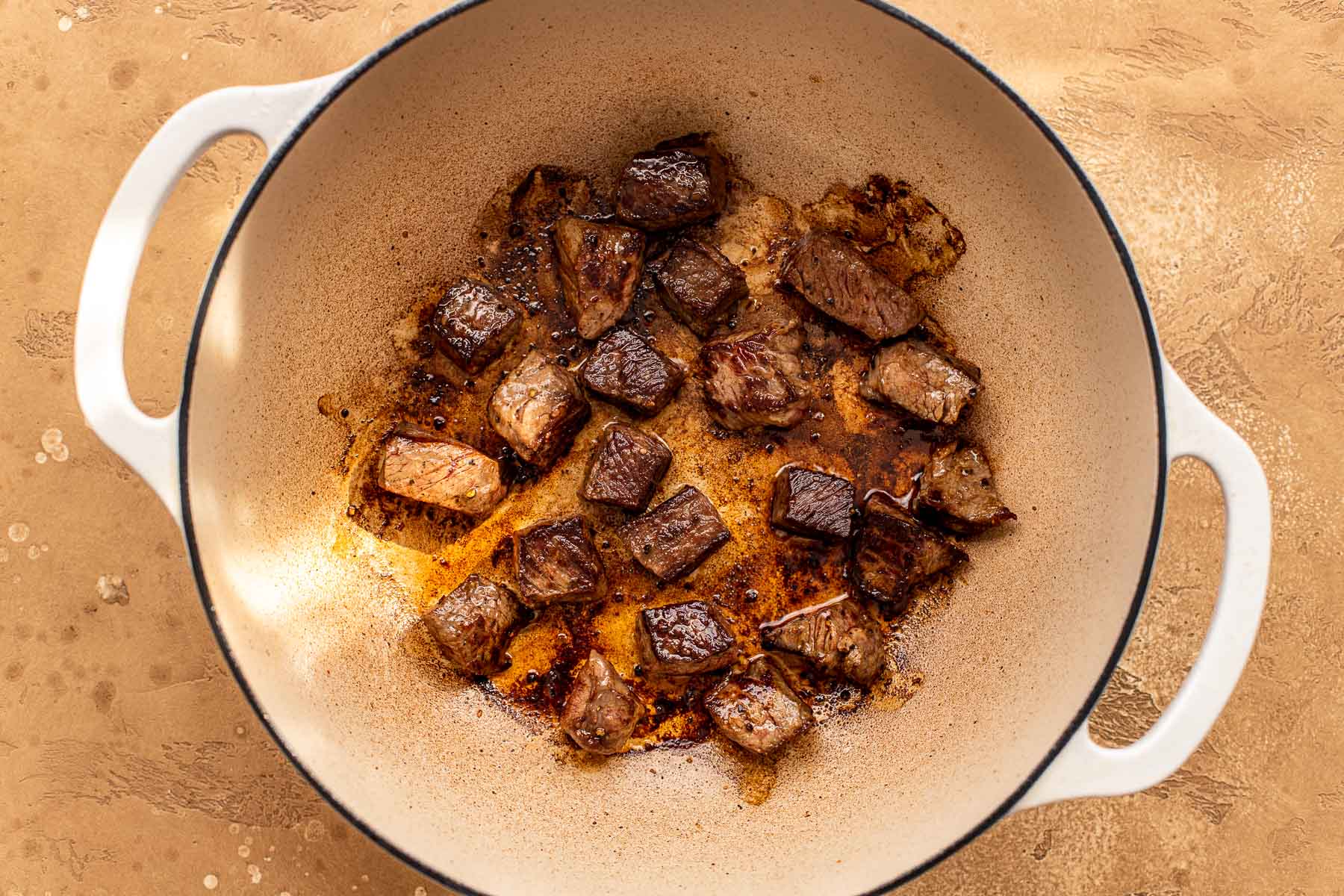
Season the beef well with salt and pepper, then brown the cubes in batches. I have a somewhat small Dutch oven (4.5 quart) so I brown the beef in three batches. If you have a larger Dutch oven, you will likely only need to do it in two batches.
- Cook the Onions and Aromatics
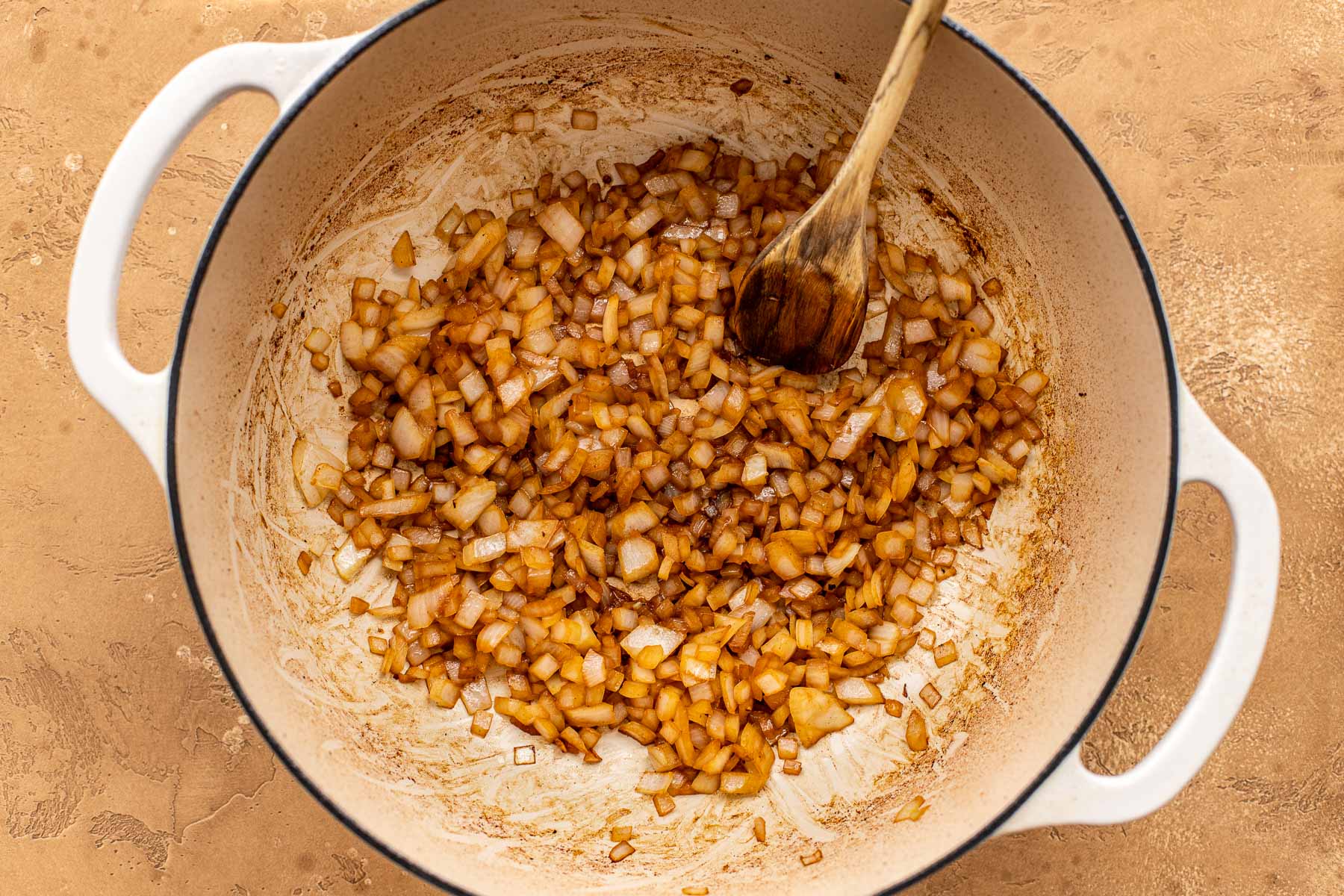
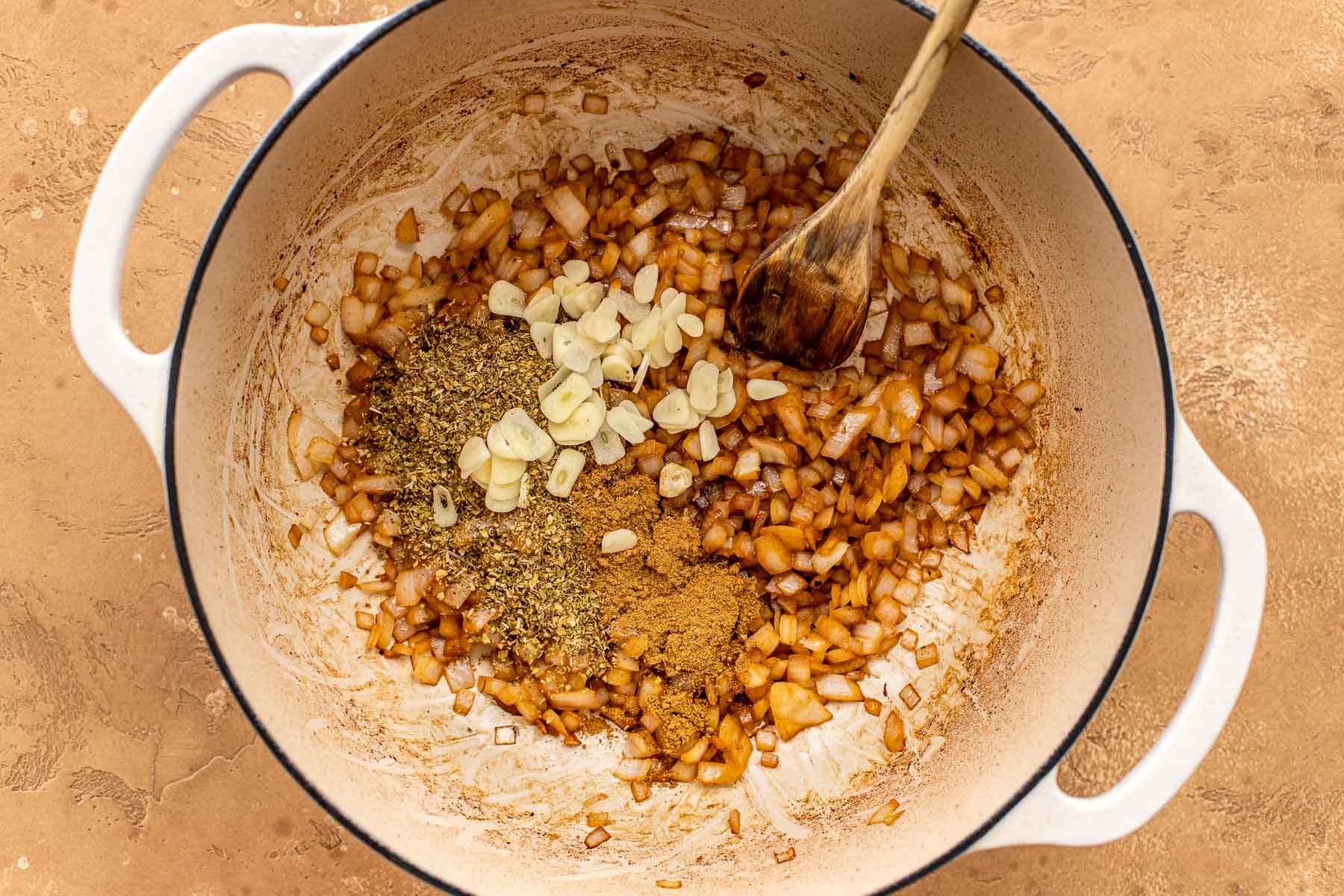
In the now-empty pot, cook the onions until they start to soften. Add the garlic, oregano and cumin and cook just until fragrant.
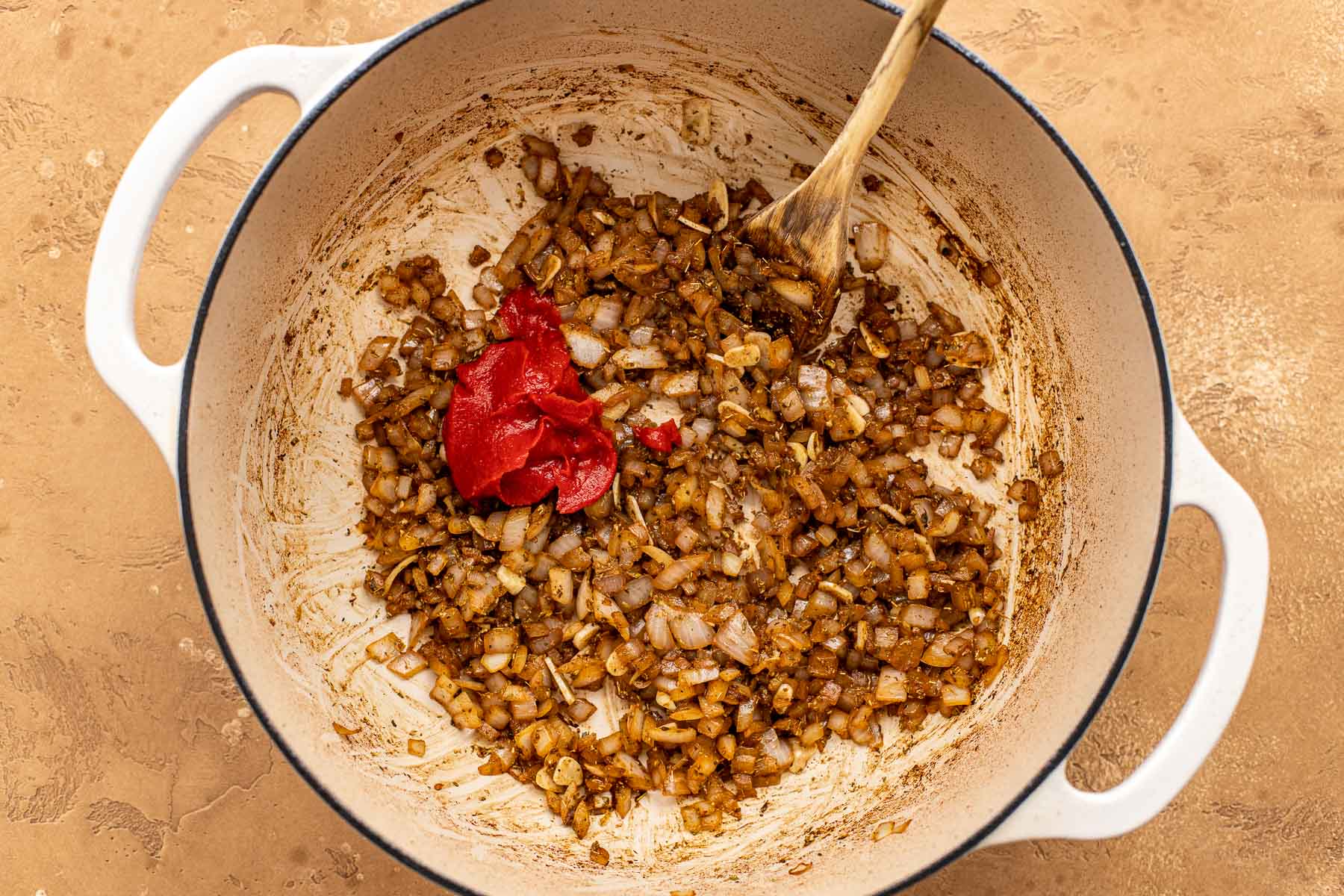
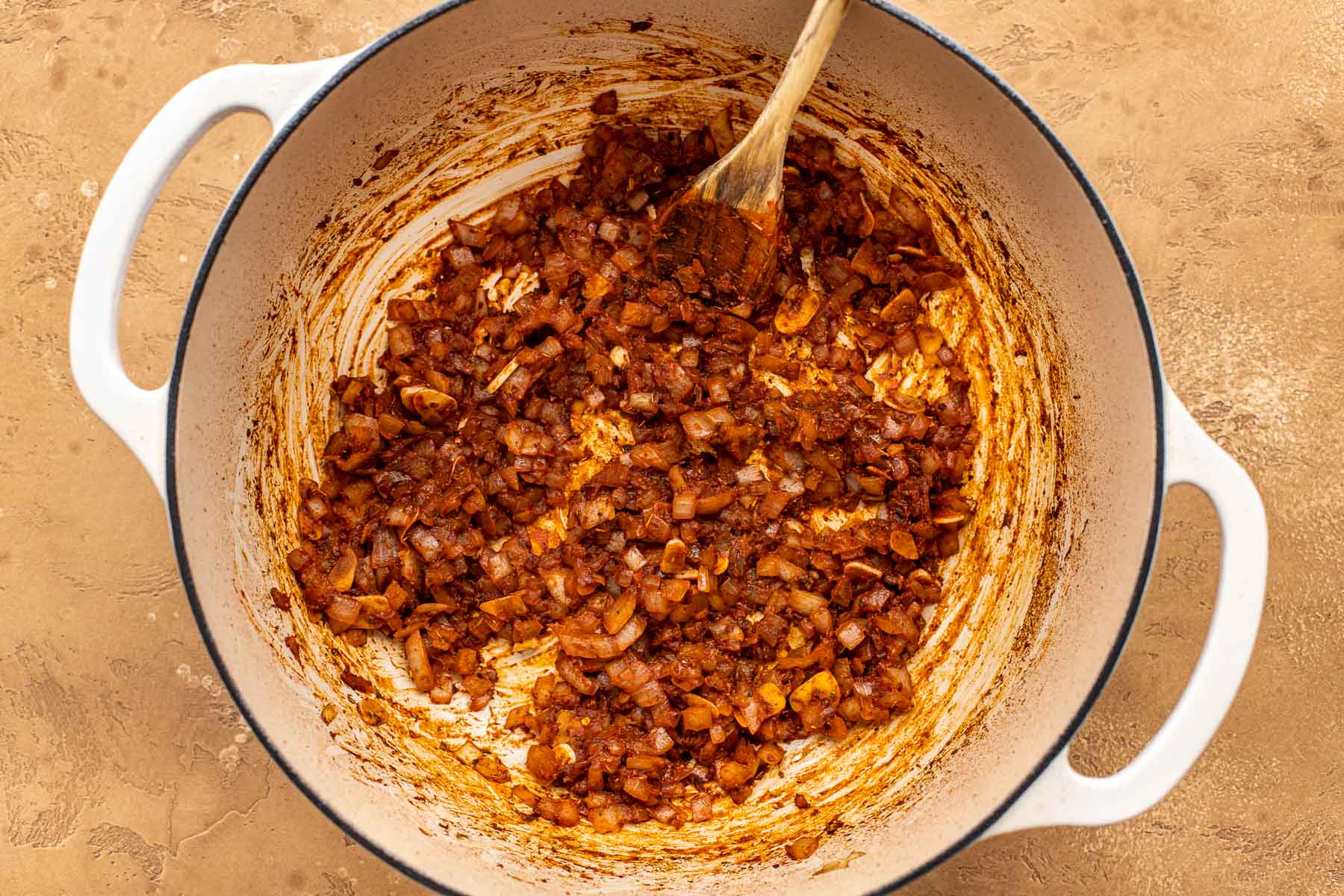
Stir in the tomato paste and cook a few minutes to caramelize.
TIP: for this, I recommend using Mexican oregano. It’s bolder and slightly citrusy. Italian oregano is more mild, sweet and even slightly minty. It’ll still work, but Mexican oregano will bring more flavor to the dish. I usually get Mexican oregano at my local Mexican market. Marjoram is a great substitute.
- Blend the Chiles and Broth

While the onions are cooking, transfer the rehydrated chiles and broth to a blender and blend until smooth.
- Add the Beef and Chile Sauce
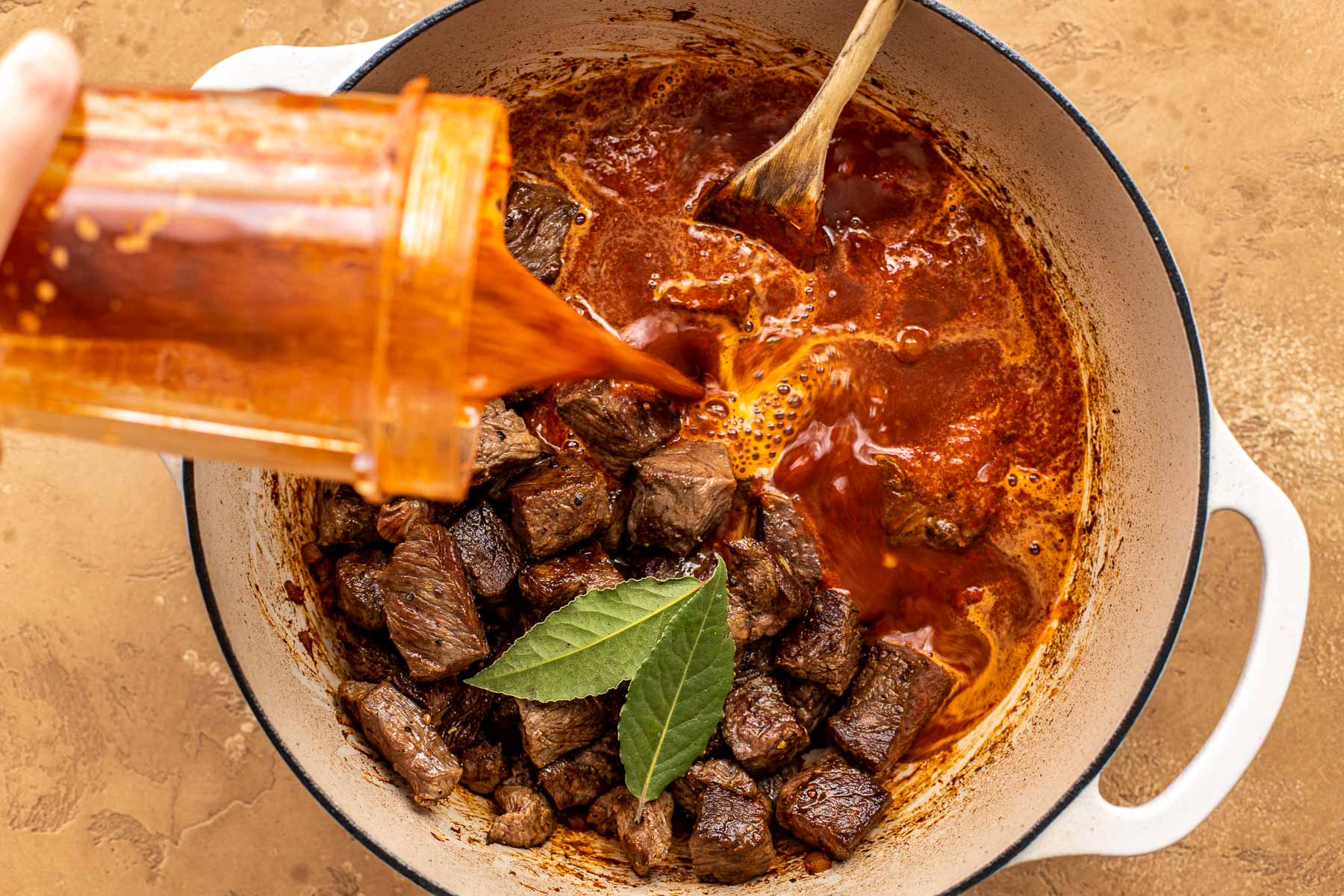
Add the browned beef and any released juices to the pot, scraping up any browned bits on the bottom of the pot. Add the blended chile sauce and the bay leaves, stir to combine, and bring to a simmer.
- Simmer Low and Slow
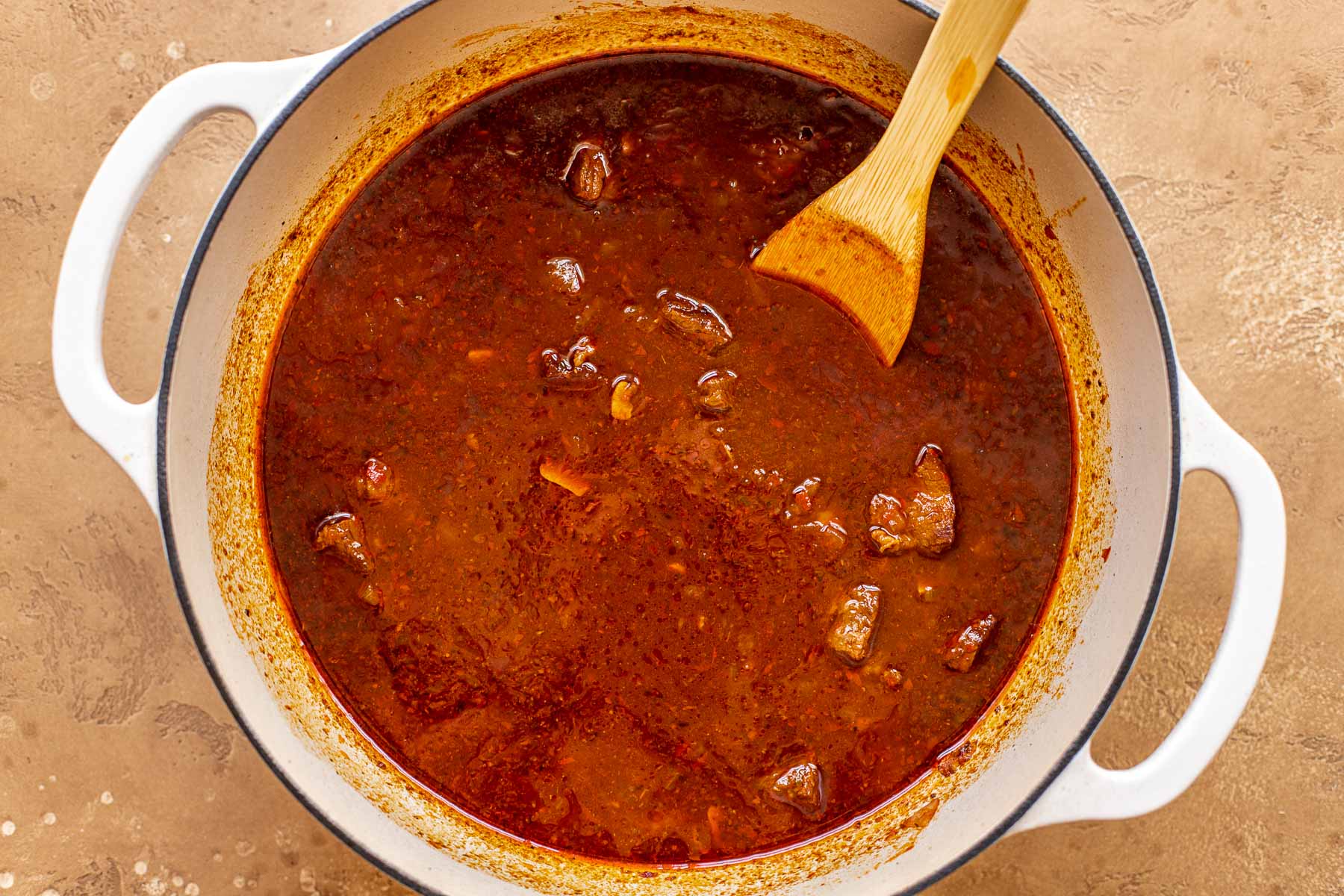
Reduce the heat to low, cover the pot, and simmer until the beef is tender, about 2 hours.
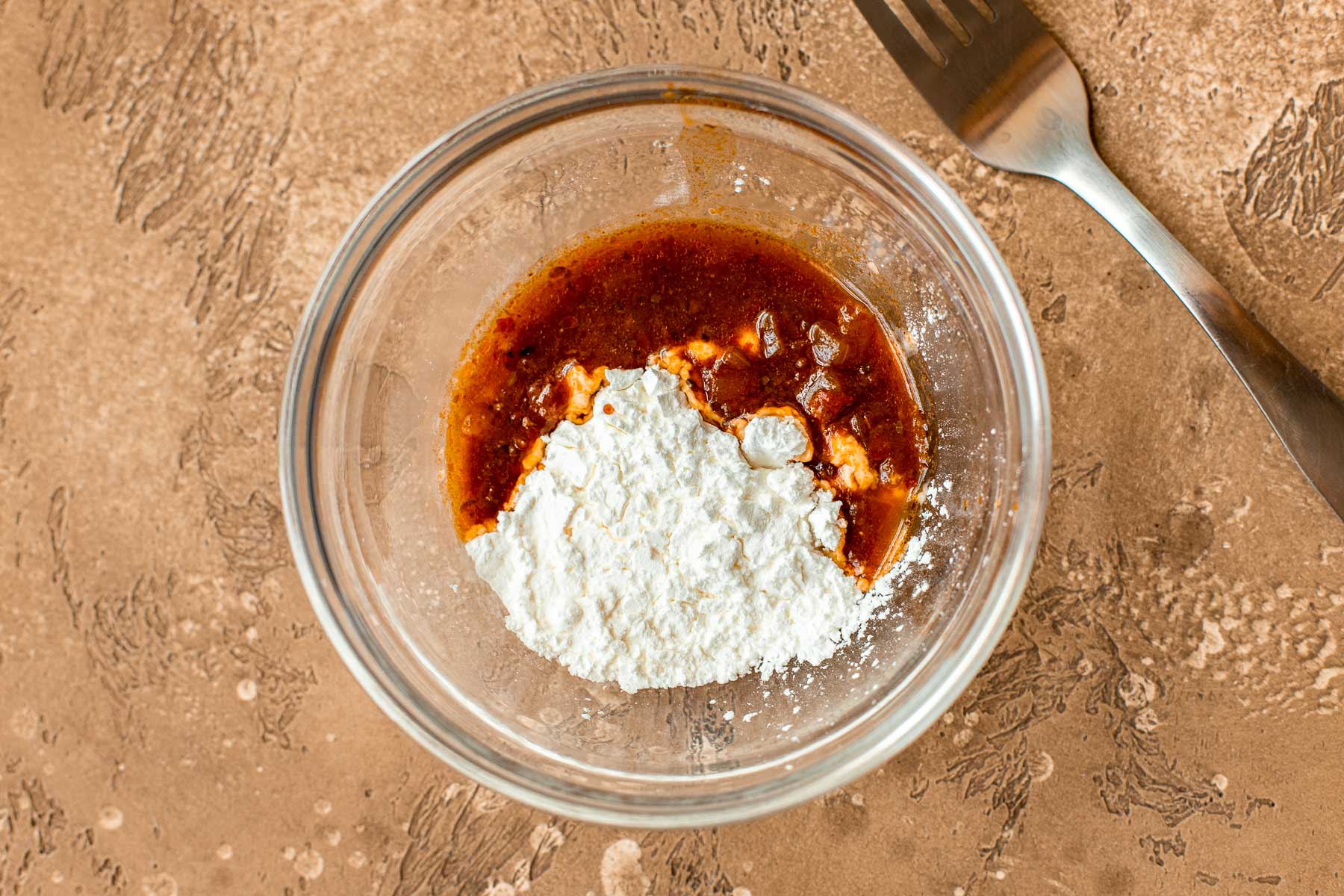
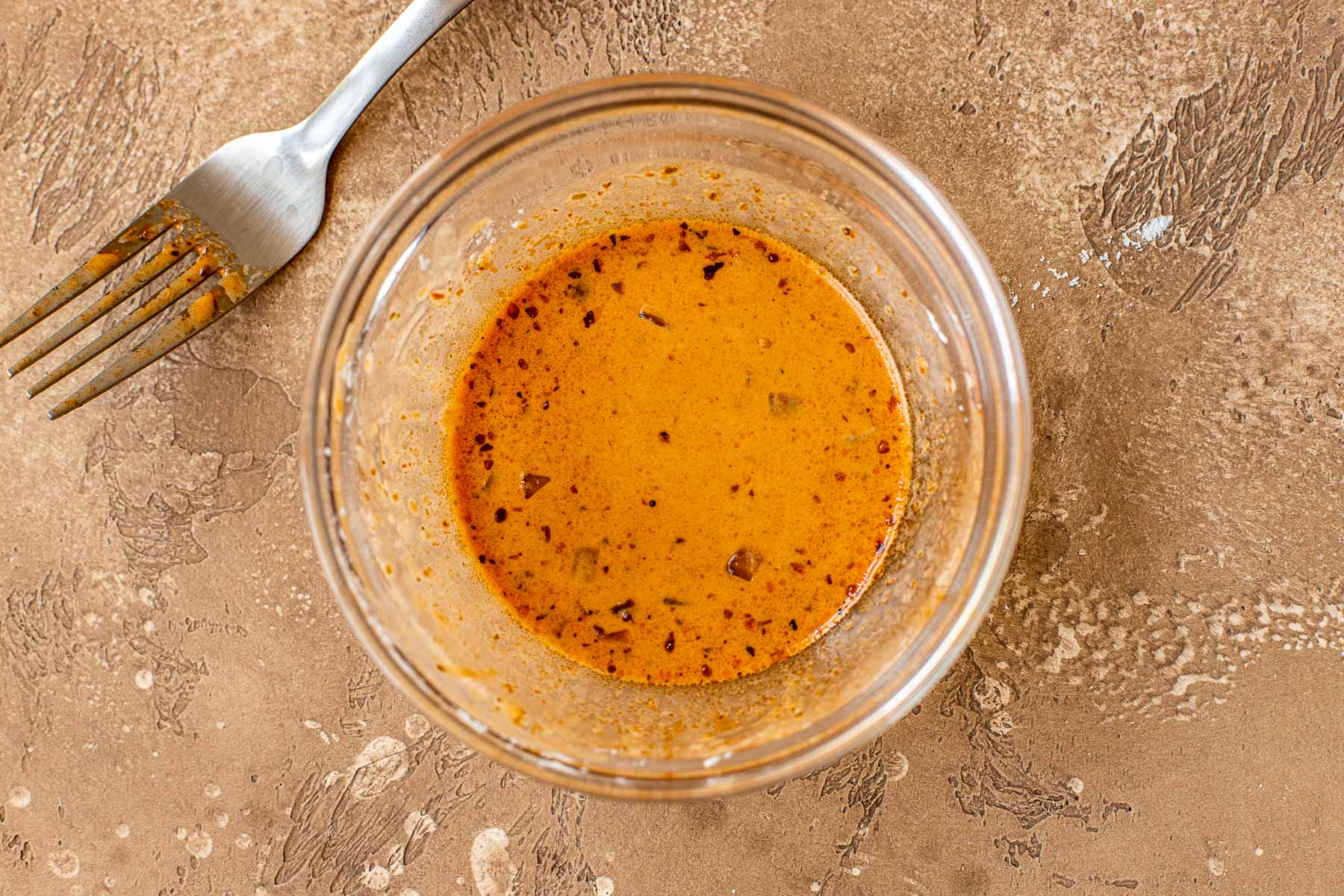
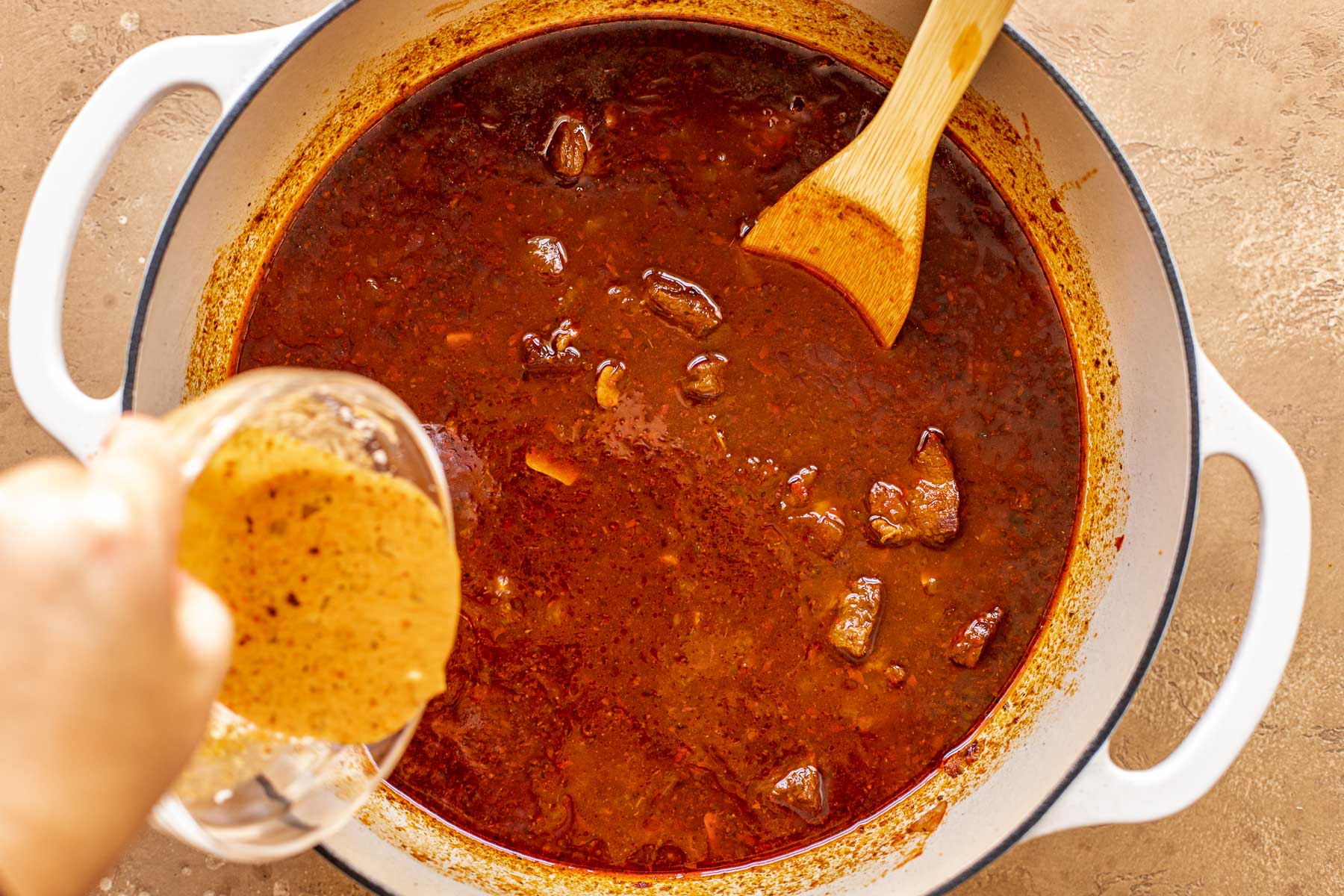
Optional: right before serving, if the chile is thinner than you like, you can make a quick slurry with a few ladles of the chile mixed with 2 tablespoons of cornstarch. I don’t usually do this, but it’s a great option if you want something a bit thicker and “saucier.”

Serving Chile Colorado
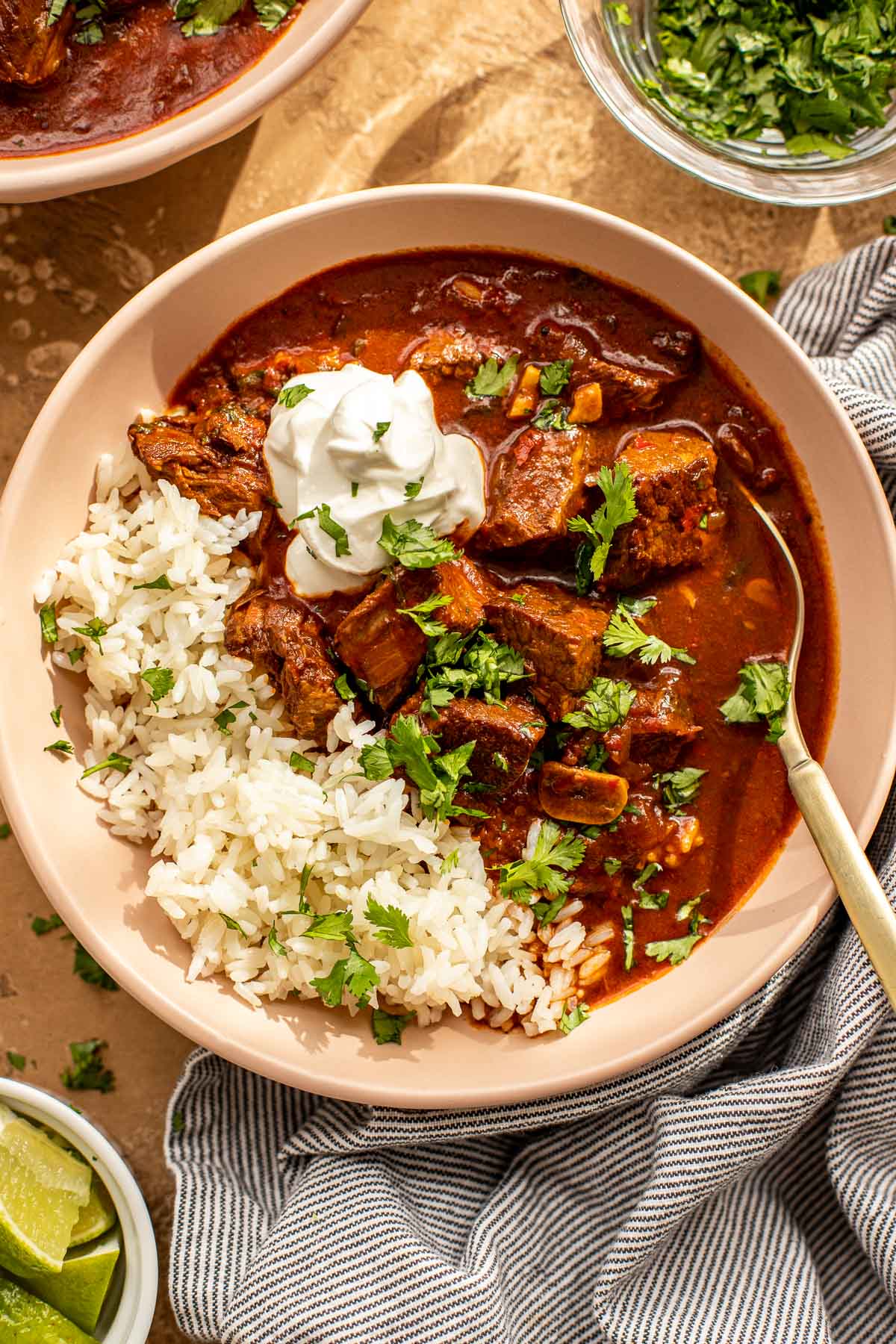
As shown, I like to serve Chile Colorado over rice (Cilantro Lime Brown Rice would be great) with Greek yogurt, lime wedges and fresh cilantro. But this is just one way to serve it. Warm corn tortillas, avocado and thinly sliced radishes are all great additions as well.
Tips for Making Mexican Beef Stew
- If the stew comes out a little spicy for your liking, a dollop of sour cream or yogurt on top does a wonderful job of mellowing the heat.
- I often make this Mexican beef stew ahead of time. I make it in a big Dutch oven so I can just place the lid on top and pop it in the fridge. That way, when I’m ready to serve, I can just place the pot right on the stove and get it heated up.
- Sometimes when I have just a little bit leftover, I’ll bulk up the stew with common chili ingredients like diced canned tomatoes, black beans or kidney beans. It’s a great way to stretch the leftovers a bit further and transform it into a common chili.
Chile Colorado Recipe
Description
Video
Save This Recipe!
Ingredients
- 6 cups beef broth
- 2 ounces (about 8-10) dried mild red chiles, such as Guajillo, New Mexico, or pasilla
- 3 –6 dried chile de arbol
- 3½ pounds trimmed beef chuck roast, cut into 1-inch cubes
- Kosher salt and black pepper
- 2 tablespoons avocado oil or vegetable oil
- 1 onion, diced (about 1½ cups)
- 4 cloves garlic, thinly sliced (about 2 tablespoons)
- 1½ tablespoons dried Mexican oregano
- 1 teaspoon ground cumin
- 2 tablespoons tomato paste
- 2 bay leaves, dried or fresh
- ¼ cup chopped fresh cilantro + more for serving
- 2 tablespoons freshly squeezed lime juice
- Steamed white rice, for serving
- Sour cream or plain Greek yogurt, for serving
Instructions
- Rinse dried chiles and remove stems and seeds. Bring 6 cups beef broth to a simmer in a medium pot. Add dried chiles and simmer for 20 minutes. Remove from heat, cover, and let steep 20 minutes. Blend chiles and broth in a large food processor or blender; set aside.
- Season beef chuck generously with 2 teaspoons salt and ½ teaspoon pepper on all sides. In a large heavy-duty pot or Dutch oven, heat 2 tablespoons oil over medium-high heat. Sear beef, working in batches to avoid overcrowding, until deeply browned on all sides. Transfer to a large bowl.
- Reduce heat to medium-low and add 1 diced onion to the pot. Cook until onions have softened and loosened all of the brown bits on the bottom of the pan, about 5 minutes. Stir in 4 sliced cloves garlic, 1½ tablespoons oregano, and 1 teaspoon cumin, and cook until fragrant, 1–2 minutes.
- Stir in 2 tablespoons tomato paste and cook 2 minutes longer. Return browned beef to pot along with blended chile sauce and 2 bay leaves. Bring to a simmer over medium heat, then cover and reduce heat to low. Simmer until beef is tender and falls apart when pried with two forks, about 2 hours.
- Remove lid and discard bay leaves. Taste and season with salt and pepper as needed.
- OPTIONAL: for a thicker, more silky stew, make a cornstarch slurry with 2 tablespoons cornstarch and a few ounces of broth ladled from the stew. Whisk to combine then stir slurry into pot and simmer a few more seconds until thickened.
- Stir in ¼ cup chopped cilantro and 2 tablespoons lime juice. Serve hot with rice, more cilantro leaves, and a dollop of Greek yogurt or sour cream.
Notes
Nutrition
This sponsored post is in partnership with the Iowa Beef Council. As always the thoughts, opinions, recipe, photos and content are all my own.
