This post may contain affiliate links.
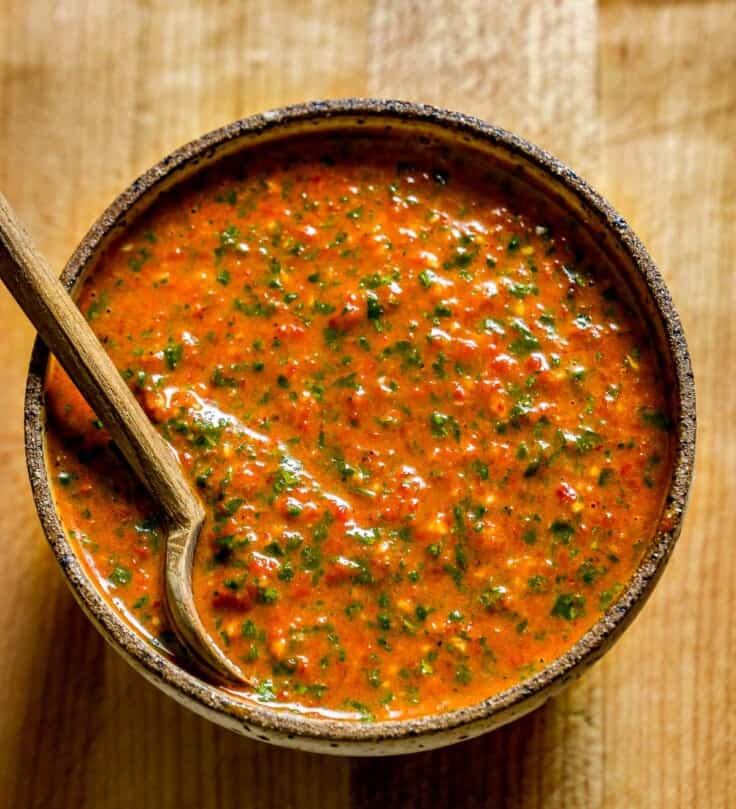
Red Chimichurri, or Chimichurri Roja, is a red version of the olive oil-based herb sauce from Argentina. In addition to a bunch of green herbs, this Argentinian sauce recipe is made with roasted red peppers, a bit of smoked paprika and red wine vinegar. The vibrant sauce is bold, aromatic and acidic, making it a great sauce to spoon over roasted or grilled meats and vegetables or used as a spread for sandwiches.
I first researched and developed a chimichurri sauce recipe when I was working as an Assistant Editor at Cuisine at Home Magazine. Since then I’ve made countless variations, and this is a fun one.
It’s a bit thicker, slightly sweet from the red peppers and a touch smoky from the smoked paprika. Absolutely delicious.
Reader Review
Delicious red chimichurri. We’re having it with a sourdough loaf :).
– Evelyn
Table of contents
What Is Red Chimichurri Sauce
According to The New Food Lover’s Companion, chimichurri is as common in Argentina as ketchup is in the United States. It’s a popular herb condiment that is also used as a marinade and sauce.
Most commonly, this sauce is green and made with finely chopped parsley, oregano, onion and garlic, and is blended with olive oil and vinegar to make a drippy sauce.
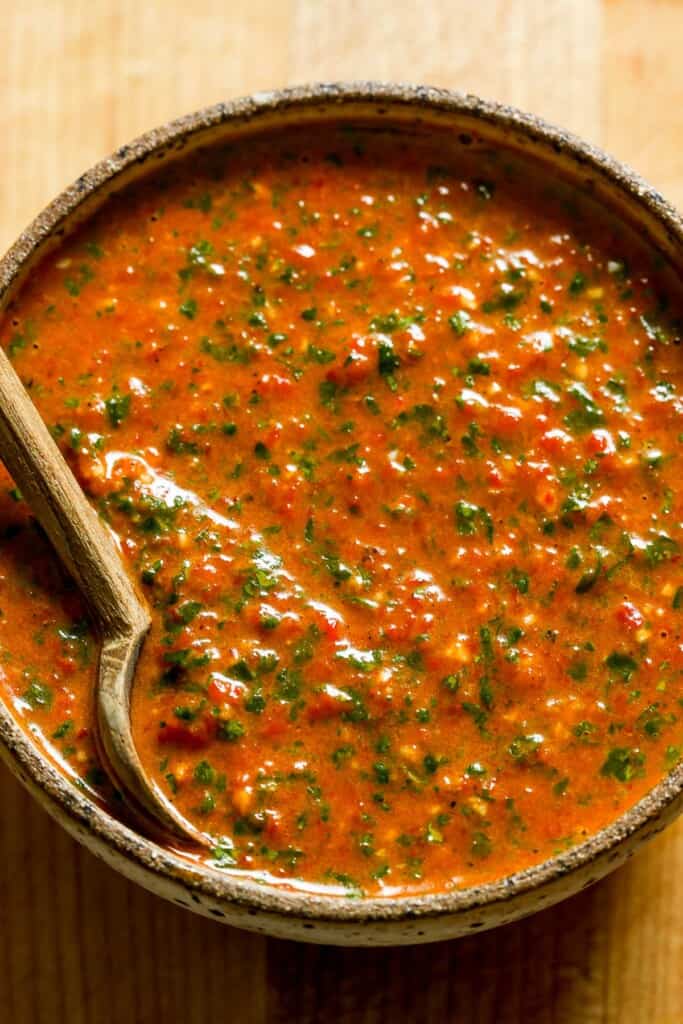
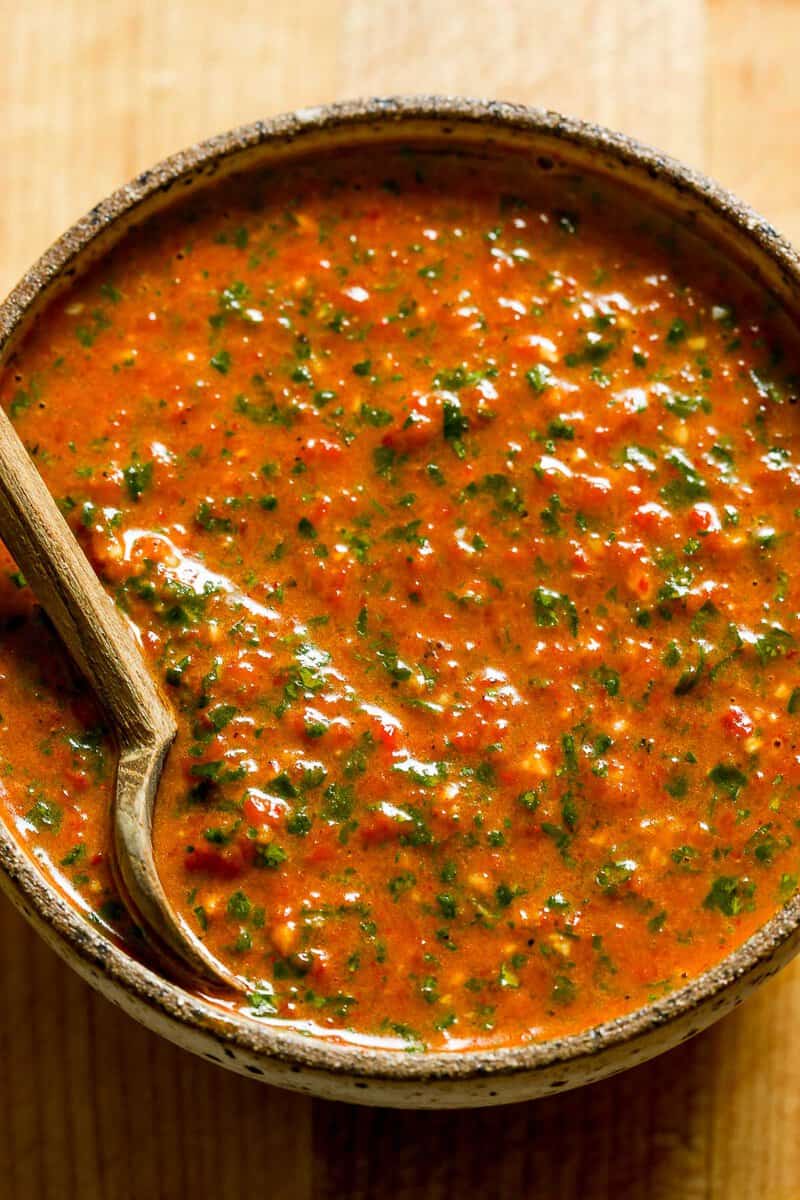
Red chimichurri is very similar to the green variety, except it also features roasted red bell peppers, a bit of smoked paprika and red wine vinegar. The result is a fairly thicker and silky sauce.
Both green and red chimichurri consist of herbs, olive oil and acid. The red or rojo variety, is slightly smoky thanks to the addition of smoked paprika and charred red peppers.
You can also try my Cilantro Chimichurri which is not traditional, but absolutely delicious!
Ingredients in Red Chimichurri
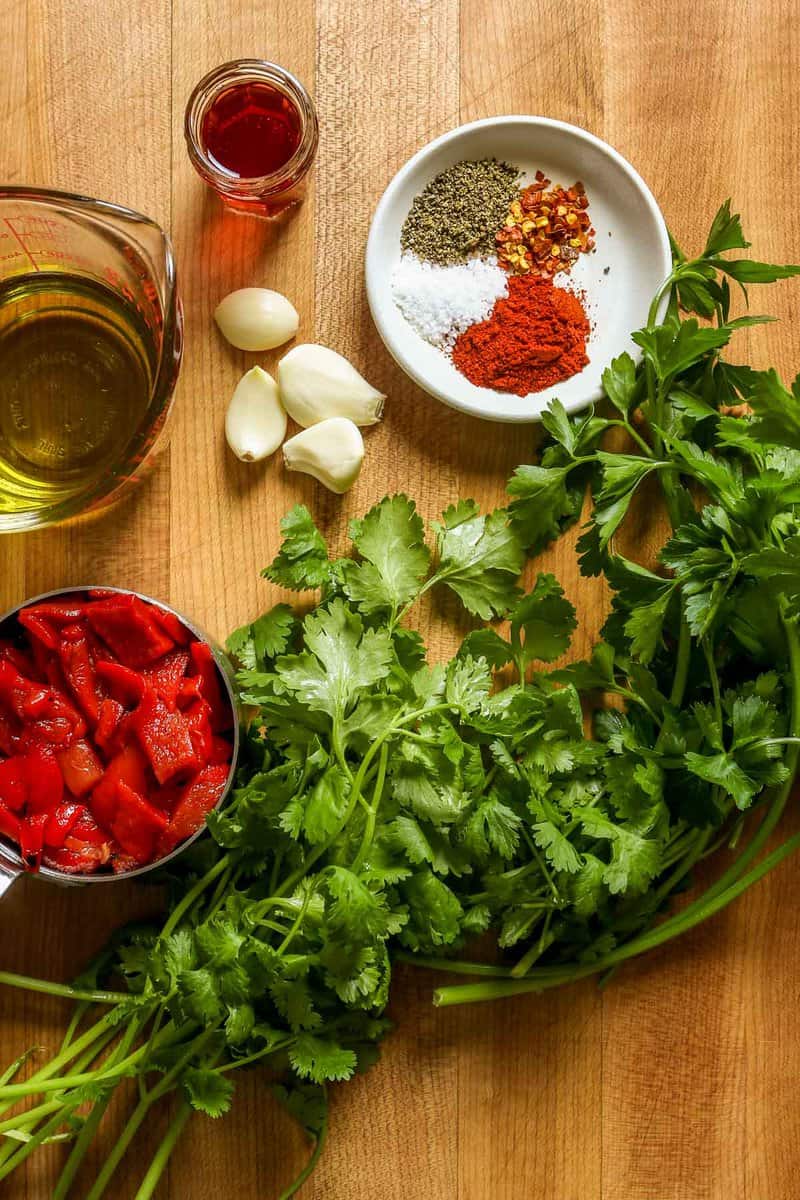
- Roasted Red Peppers: you can roast your own bell peppers or you can use jarred roasted red peppers. You’ll need one 8-ounce jar (drained) or a cup of roasted peppers.
- Garlic: fresh is a must here! Use 4 medium cloves of garlic.
- Parsley: opt for flat leaf parsley instead of curly parsley. It lends a better texture and flavor to the sauce.
- Cilantro: not traditionally used, I think it lightens everything up and adds a balance of flavor. You can skip it and use additional parsley if you’d like.
- Smoked paprika: an important addition that gives the sauce a signature smokiness.
- Crushed red pepper flakes: many recipes call for cayenne but I like to use red pepper flakes. You can use cayenne instead, but start with ⅛ teaspoon and adjust to your spice preference.
- Olive Oil: you’ll need ⅓ cup of olive oil for this recipe. Since it’s such a large portion of the sauce, use a good extra-virgin olive oil. Opt for something flavorful but not too robust or spicy.
- Red wine vinegar: you can use white wine vinegar or sherry vinegar in a pinch.
How to Make Chimichurri Rojo
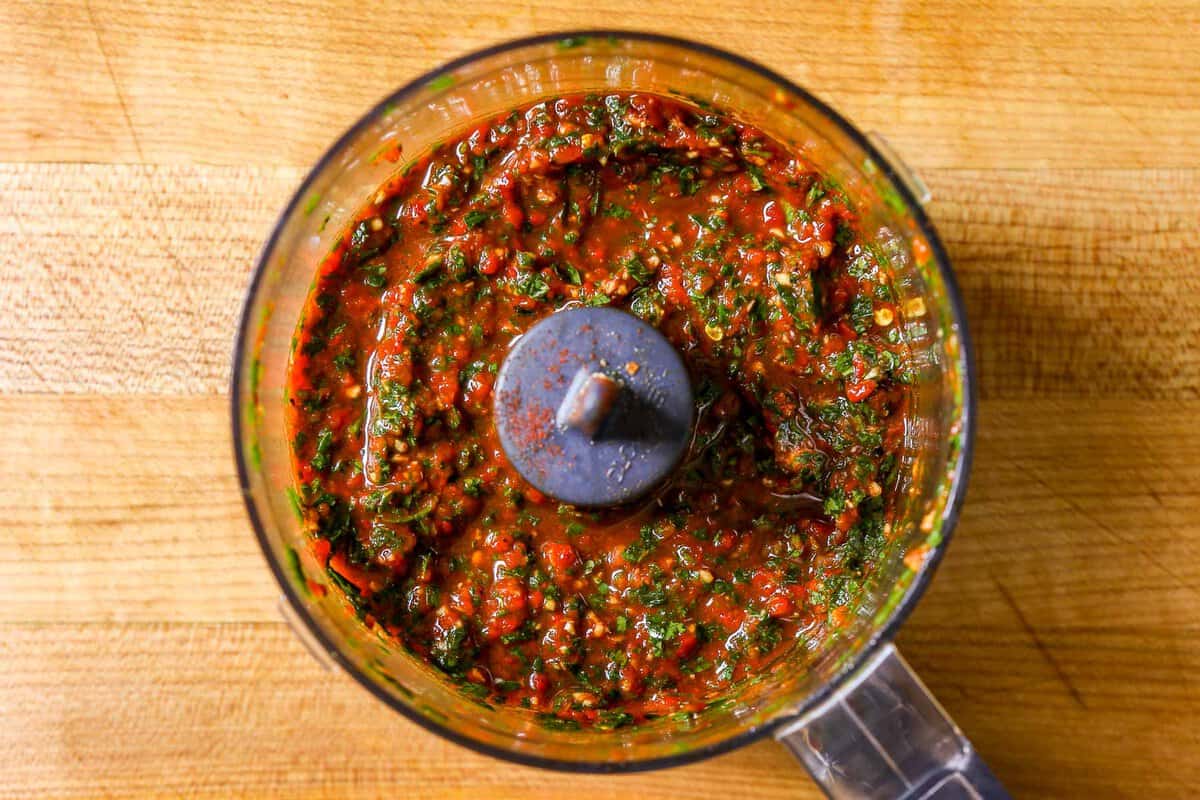
- In a mini food processor or blender, pulse the peppers, herbs, garlic and spices until finely minced.
- Scrape down the sides of the processor then add the olive oil and vinegar. Process until a sauce comes together and everything is emulsified.
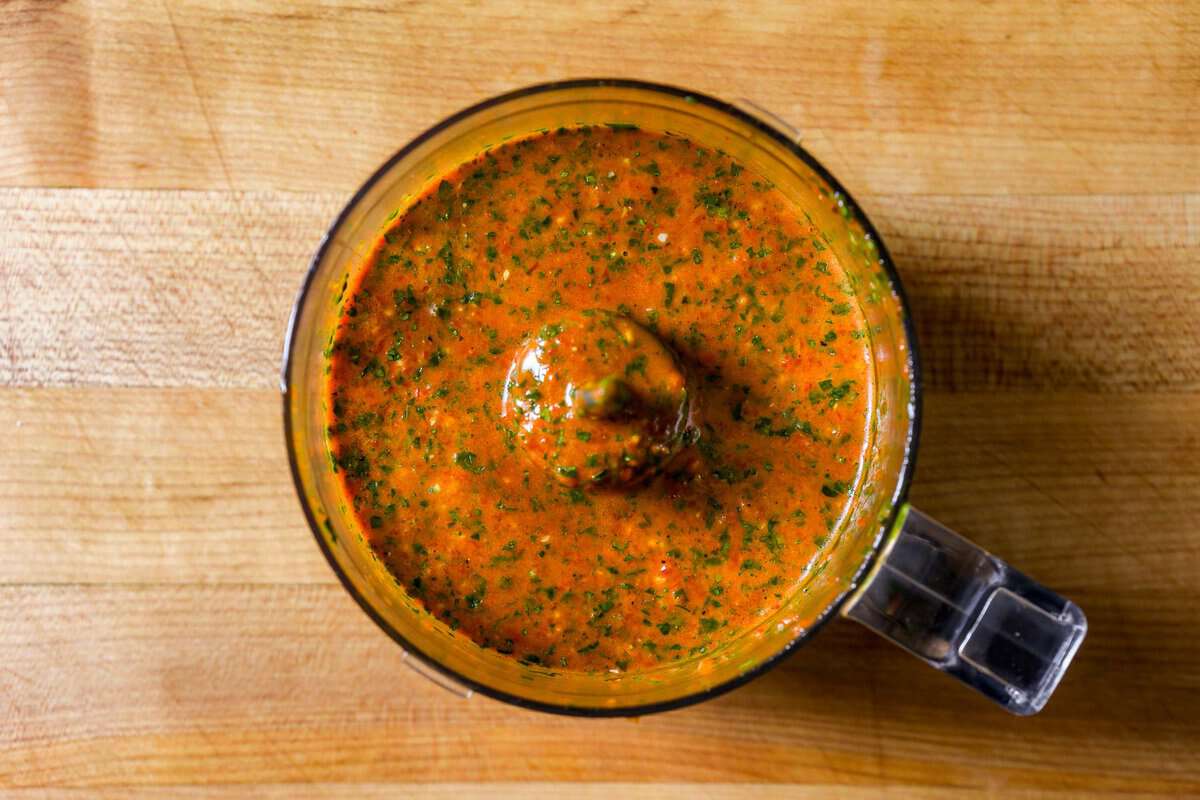
- Give the sauce a taste and adjust the seasoning as needed with additional salt, pepper and vinegar.
- Serve the sauce as desired (I share some ideas below) or transfer to an airtight glass container and store in the refrigerator for up to 2 weeks.
Test Kitchen Tips
- I recommend using a mini food processor or blender for this recipe. If you’re using a really large food processor, the herbs and peppers won’t get chopped as finely as they should. You can always make this by hand by mincing all of the ingredients and slowly drizzling and whisking in the oil.
- Chimichurri is not intended to be really smooth, it should be fairly chunky. So be careful not to over blend it!
- Fresh herbs and fresh garlic are best. Do not use dried herbs here.
- For the best flavor, use quality extra-virgin olive oil. It doesn’t have to be the most robust olive oil, but it should be flavorful and fresh.
Storing and Freezing Red Chimichurri
The sauce will last up to 2 weeks in the refrigerator when stored in an airtight container. For longer storage, store it in the freezer for up to 3 months. I like to freeze the sauce in small portions using ice cube trays or Souper Cube trays—it allows you to have control over how much sauce to thaw and it makes for a quicker thaw time.
How to Use This Sauce
- First and foremost, this sauce is great spooned over any grilled or roasted meat. I like Grilled Top Sirloin.
- Or use it to make my Chimichurri Chicken!
- It’s also great as a spread on this Steak Sandwich.
FAQs
Not very spicy at all! Just a ¼ teaspoon of red pepper flakes are used. You can skip then altogether if you don’t want any spice.
When stored in the refrigerator, red chimichurri will last up to 2 weeks.
Yes! Just mince the peppers, garlic and herbs by hand then mix everything together in a large bowl.
Red Chimichurri Recipe
Description
Video
Save This Recipe!
Ingredients
- 1 cup roasted red pepper or 1 (8-ounce) jar, drained
- ¾ cup loosely packed flat-leaf Italian parsley leaves and tender stems (from 1 small bunch)
- ¼ cup packed cilantro leaves and tender stems
- 4 medium cloves garlic, peeled
- 1 ¾ teaspoons smoked paprika
- ½ teaspoon each kosher salt and black pepper
- ¼ teaspoon crushed red pepper
- ⅓ cup olive oil
- 2 ½ tablespoons red wine vinegar
Instructions
- In a mini food processor, add 1 cup roasted red peppers, ¾ cup parsley, ¼ cup cilantro, 4 cloves garlic, 1 ¾ smoked paprika, ½ teaspoon salt, ½ teaspoon pepper and ¼ teaspoon crushed red pepper flakes. Pulse until mixture is minced.
- Scrape down sides of bowl, add ⅓ cup oil and 2½ tablespoons vinegar and blend until an emulsified sauce comes together (it should still be chunky in texture). Season to taste with salt and vinegar.


Delicious red chimichurri. We’re having it with a sourdough loaf :). But I’m sure it’s delicious with meats too ^^
Oh yum!! I just got a great loaf of sourdough, I might have to follow your lead.
Absolutely the best sauce for Chipotle Carne Asada! Yummy for my tummy … and everything else too.
Meh pretty bitter
Hi Ford,
I’m so sorry to hear that. Were you using flat leaf Italian parsley? Or curly leaf parsley? For the best flavor, flat leaf Italian parsley should be used. I will specify that in the recipe. The bitterness is likely coming from the stems of the parsley. Appreciate your feedback.
Great recipe! I’m going to use it with steak tomorrow night so it has overnight in the fridge so the ingredients can get to know each other. Thanks for sharing. I left out the red pepper. Acid reflux.
I hope your steak dinner was wonderful! Glad to hear you enjoy the recipe.