This post may contain affiliate links.
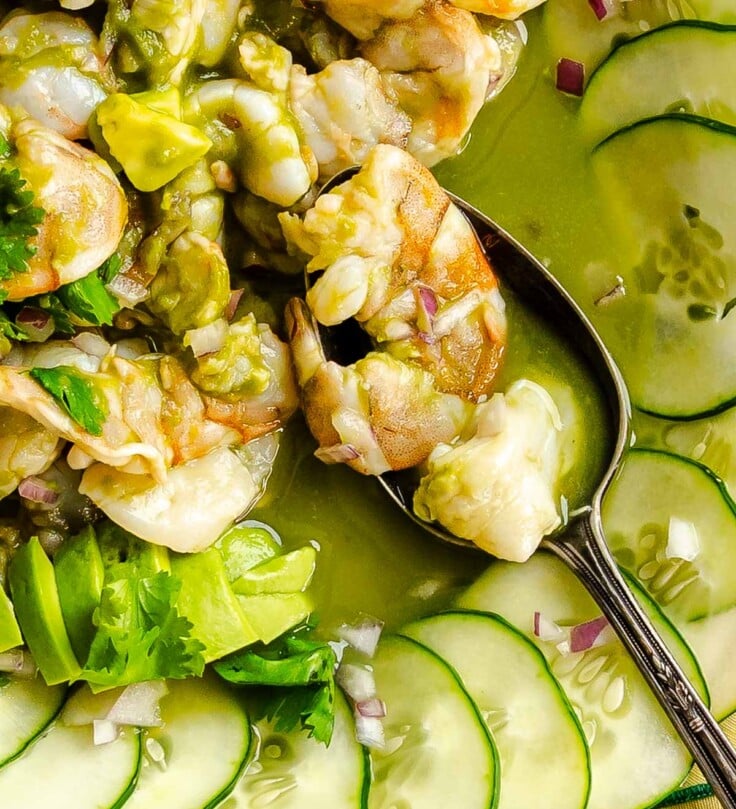
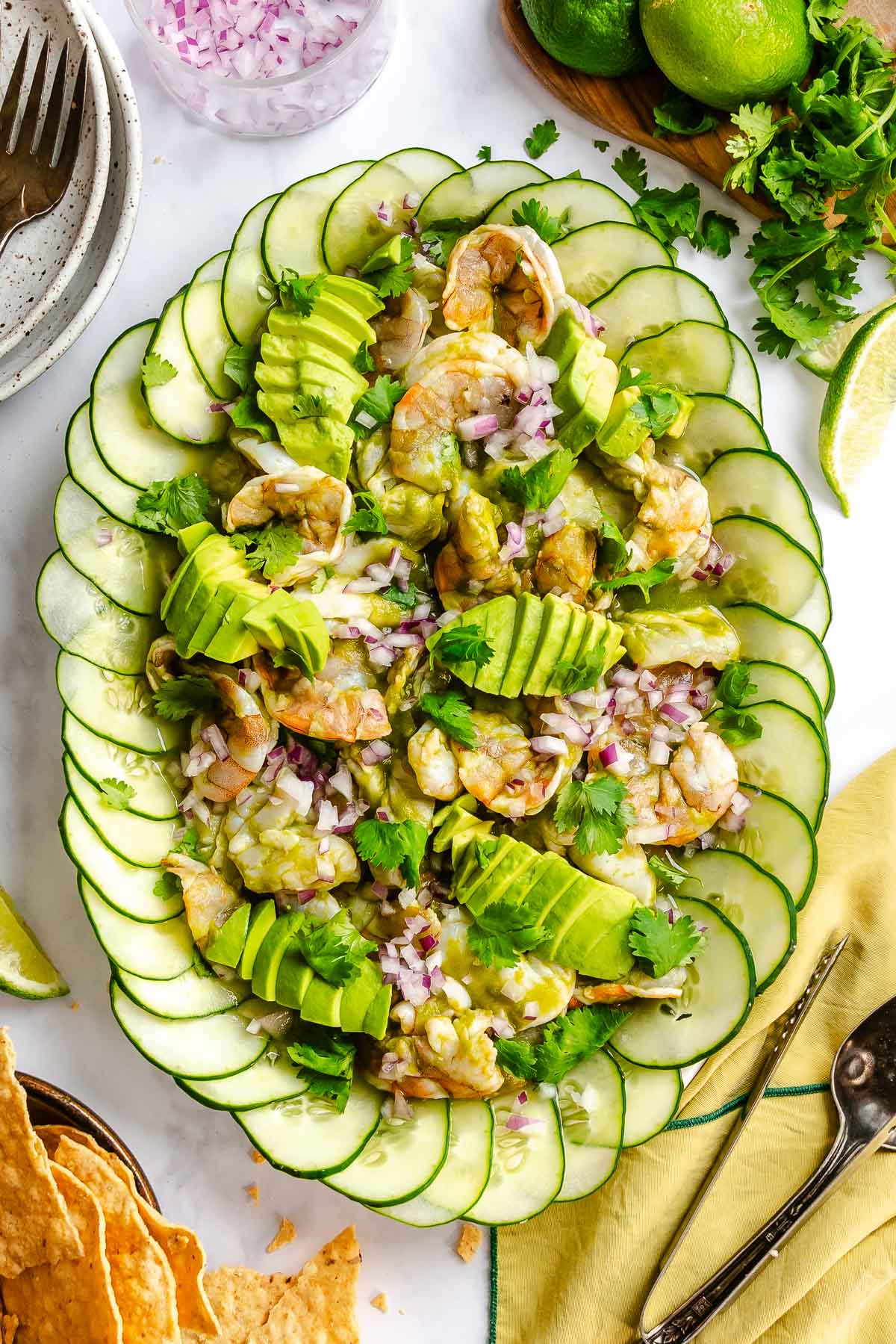
This shrimp aguachile is based on my time learning and cooking in Mexico City. The tart green sauce is made of lime juice, cucumber, serrano, and cilantro. In addition to the shrimp, I add some thinly sliced scallop to bring a mild sweetness to the entire dish (inspired by the aguachiles you’ll find in Baja California). To bring it all together, it’s finished with sliced cucumber, red onion, and avocado.
This past spring I spent three weeks living and cooking in Mexico City. My singular goal during those three weeks was to learn, cook, and eat (so I could come home and develop even more Mexican recipes). I took numerous cooking classes and tours, visited different markets, and ate at a variety of different restaurants.
There’s so much to say about Mexico City (the colors! the art! the coffee! the pastries! the tacos!) but one thing that really struck me was how fabulous their seafood is.
It’s impossible to find a Mexico City restaurant guide that doesn’t include a few seafood spots. And they always have an aguachile on the menu.
Throughout the three weeks of cooking and eating my way through Mexico City—and my trip to Todos Santos in Baja California last year—I’ve had some really incredible aguachiles.
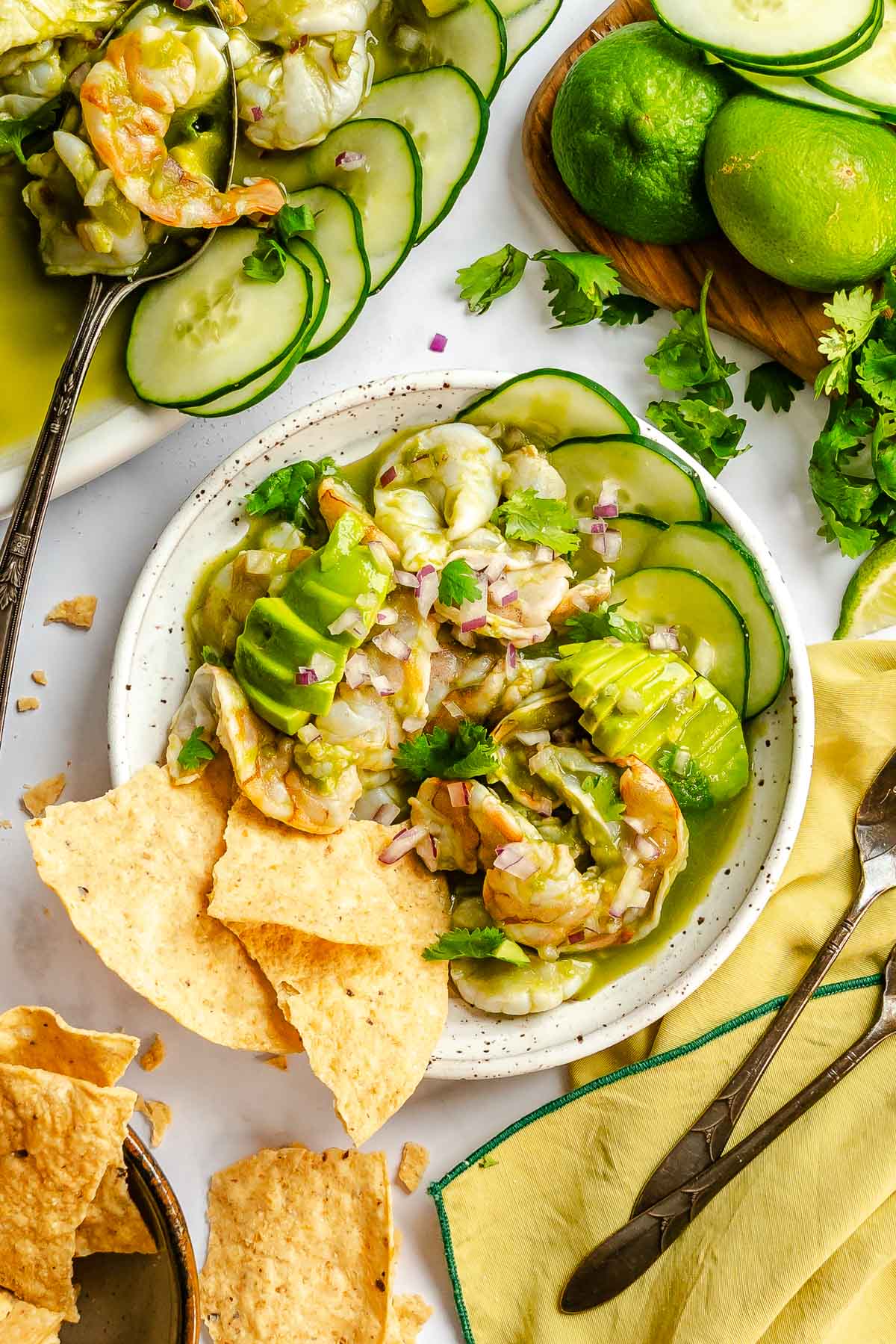
The aguachiles I’ve had in Mexico City are generally really bright, acidic, and spicy while the ones in Baja California are less spicy and slightly sweet. The recipe I developed is in line with what you’ll find in Mexico City. And the way I serve and garnish it is inspired by the aguachile I had at Mi Compa Chava.
Aguachile vs Ceviche
Aguachile is Mexican ceviche from Sinaloa. The classic version of this dish is made with raw shrimp in a thin marinade made of blended cucumber, red onion, lime juice, and jalapeños or serranos.
The spicy acidic mixture could easily be used in ceviche as it’s acidic enough to “cook” the raw seafood. However, unlike ceviche which marinates for awhile, aguachile is intended to be served raw and sashimi-like.
Another key difference is the sauce; aguachile generally features a tangy green chile sauce while ceviche usually relies on citrus juice alone.
Buying Raw Fish for Aguachile
By definition, aguachile is a dish of raw fish, served raw. So you can’t use just any quality of fish for aguachile. It’s imperative you seek out very fresh fish from a trusted source. Here are some tips for doing so:
- Seek out a trustworthy fish monger. If you don’t know how to find one, start asking around. Ask your friends who are avid cooks or stop in to a local restaurant or sushi spot and ask them where they would recommend sourcing fish. Tell the fish monger what you’re cooking. If they steer you away from something, trust them.
- Let freshness and availability determine what seafood you use. If you can’t find ultra-fresh shrimp or scallops, you may have better luck with sourcing ahi tuna or arctic char. You could even use cooked octopus. Aguachile can be made with any seafood as long as it’s very fresh and comes from a reputable source.
- The sticker shock is real. High-quality, ultra-fresh seafood comes at a premium. Be prepared to spend some money. Catching, handling, chilling, and transporting quality fish in a timely manner costs money and you will see that reflected on the price tag. Luckily you don’t need a lot to enjoy authentic aguachile at home.
Why Shrimp and Scallops
I tested shrimp and scallops separately and liked them both. So I combined them. It’s that simple.
Shrimp is classic and you can certainly make this with just shrimp. But the scallops add a soft texture and sweet flavor that rounds out the dish.
How to Make Aguachile
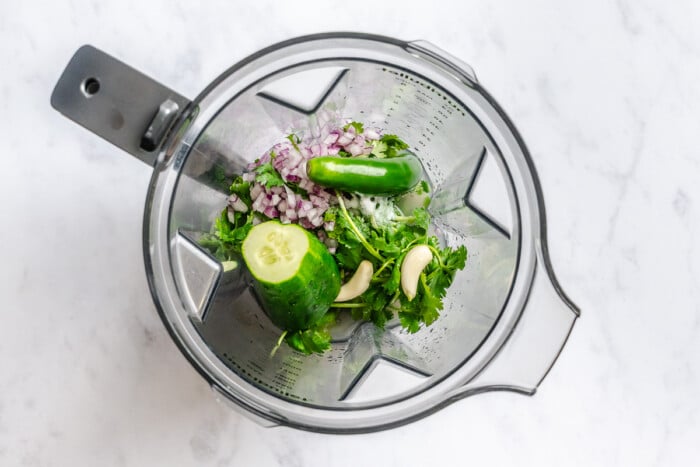
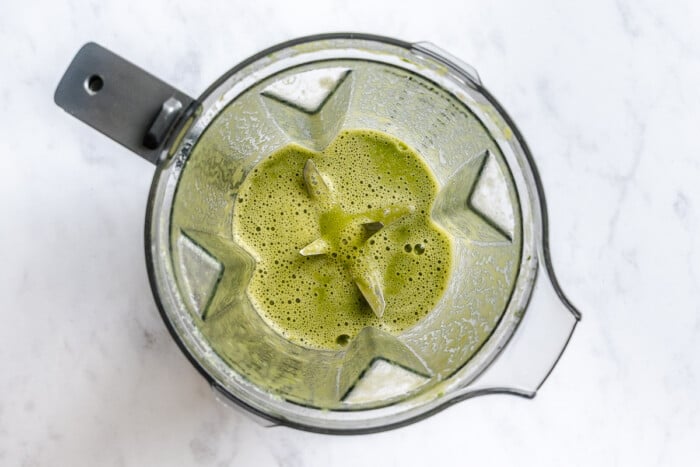
- Make the sauce by blending the cucumber, cilantro, lime juice, garlic, red onion, serrano and salt together until smooth.
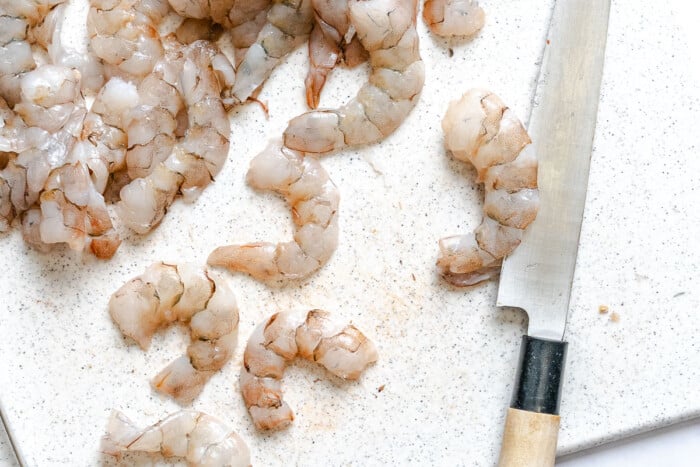
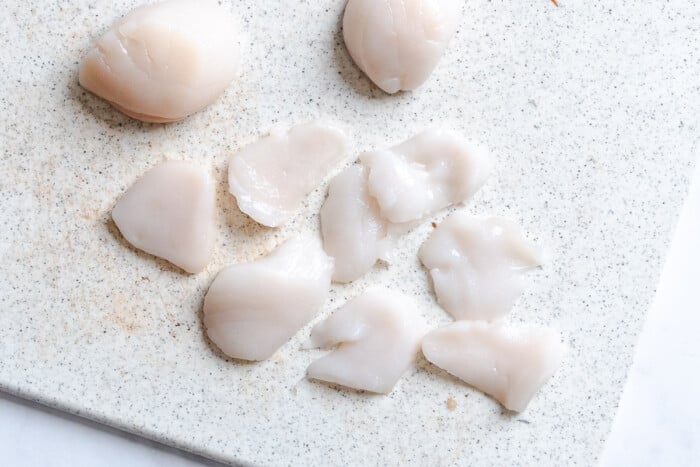
- Prep the seafood by slicing the shrimp in half (into two thin halves) and thinly slicing the scallops.
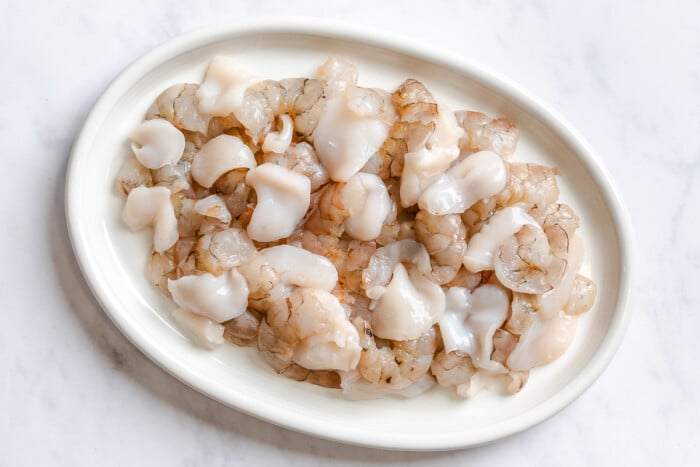
- Arrange the seafood on a large platter, then pour the blended sauce over top and toss to combine.
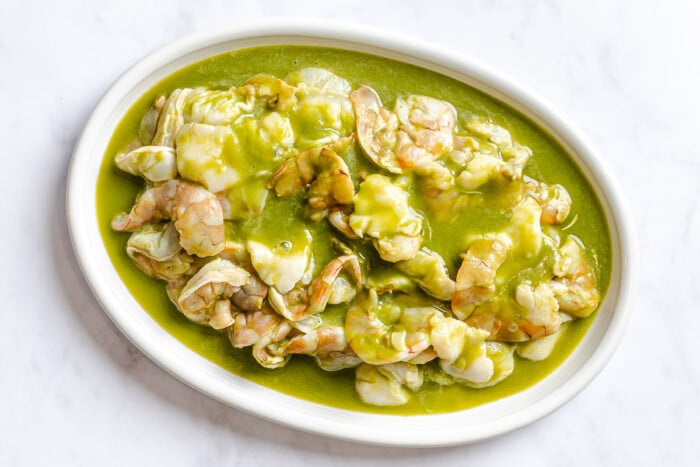
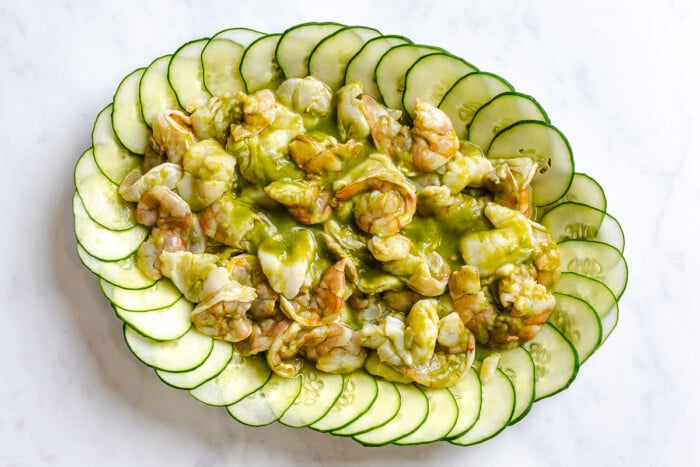
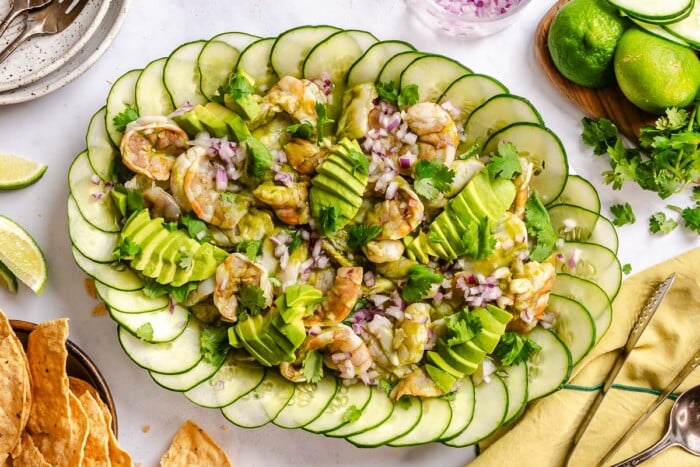
- Arrange cucumber slices around the edge of the platter (this is a very traditional way to serve aguachile). Then top with avocado, more red onion, and cilantro.
Serve Aguachile With Tostadas
Every aguachile I’ve had in Mexico has been served with tostadas. And while they don’t taste as good as freshly made tostadas in Mexico, package tostadas are a good runner up. They have great flavor, are nicely salted, and are thicker than tortilla chips, which makes them ideal for scooping and holding the juicy seafood.
More Mexican-Inspired Bites
Shrimp and Scallop Aguachile
Description
Save This Recipe!
Ingredients
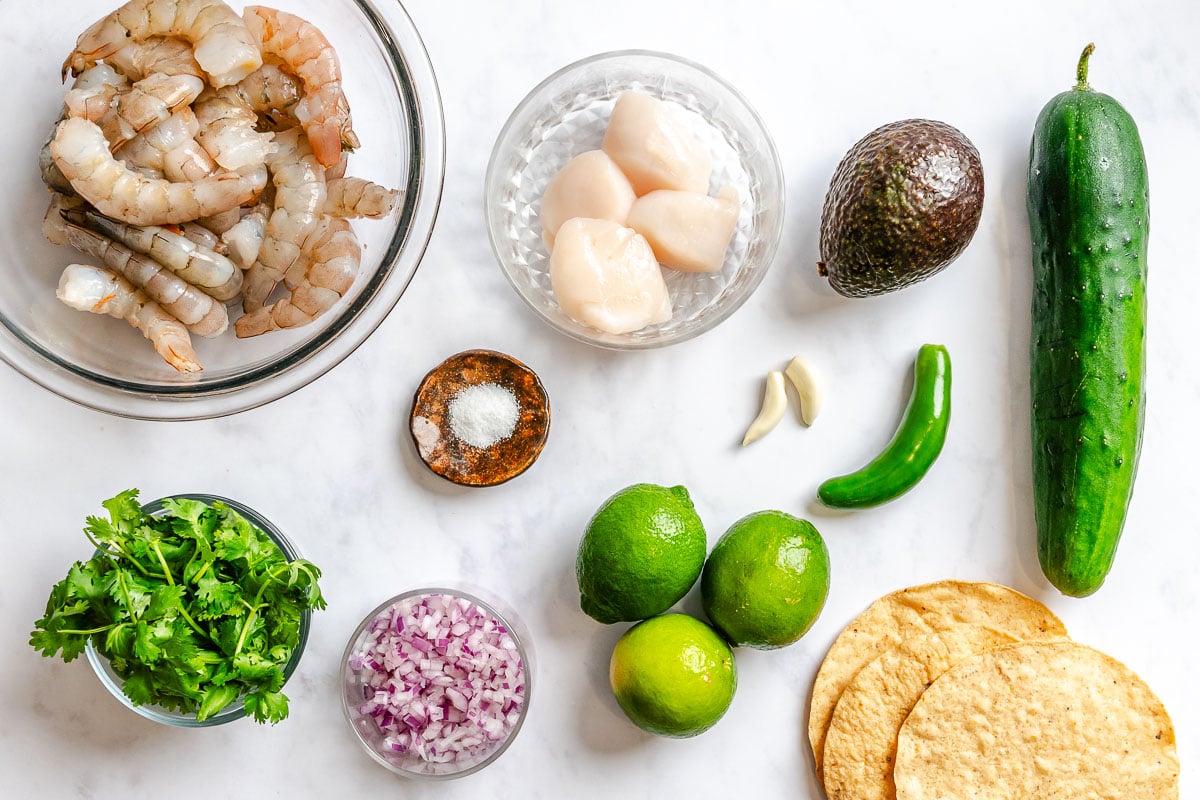
- 1 pound 16/20 shrimp, peeled and deveined*
- 4 large scallops (4 ounces total), feet removed
- ½ cup cilantro, plus more for garnish
- ½ cup freshly squeezed lime juice
- 2 small cloves garlic
- 1 regular cucumber, divided
- ½ cup finely diced red onion, divided
- 1 serrano*
- ¼ teaspoon kosher salt
- 1 avocado, thinly sliced
- Tostadas, for serving
Instructions
- Using a sharp knife, cut shrimp in half to create two thinner halves. Very thinly slice scallops; transfer shrimp and scallops to a large platter. Thinly slice ¾ of cucumber.
- Add remaining ¼ of the cucumber, ½ cup cilantro, ½ cup lime juice, 2 cloves garlic, ¼ cup red onion, 1 serrano, and ¼ teaspoon salt to a blender. Blend until smooth, about 1 minute.
- Drizzle sauce over shrimp and scallops and lightly toss to combine.
- Arrange cucumber around perimeter of platter. Sprinkle remaining ¼ cup red onion over seafood then arrange sliced avocado over top and sprinkle with some cilantro leaves.
- Break tostadas into large chip-size pieces and serve with aguachile immediately. Note: The longer you let agauachile sit, the more *cooked* the fish will get. Aguachile is meant to be served like raw sashimi. If you prefer a ceviche-like experience, let the dish sit for 5–20 minutes before serving.
Notes
When sourcing shrimp, I recommend seeking out farm-raised American shrimp or shrimp sourced from the following countries: Ecuador, Thailand, Indonesia, or Chile. Serrano: for a spicier aguachile, just trim off the stem and add the entire serrano to the blender—ribs, seeds, and all. For a mild aguachile, remove the ribs and seeds.
