This post may contain affiliate links.
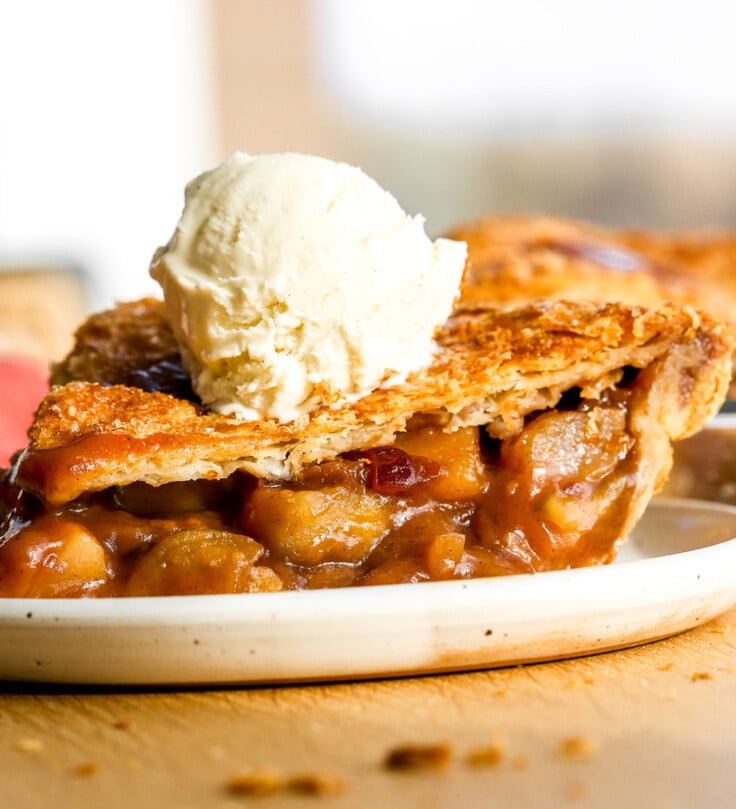
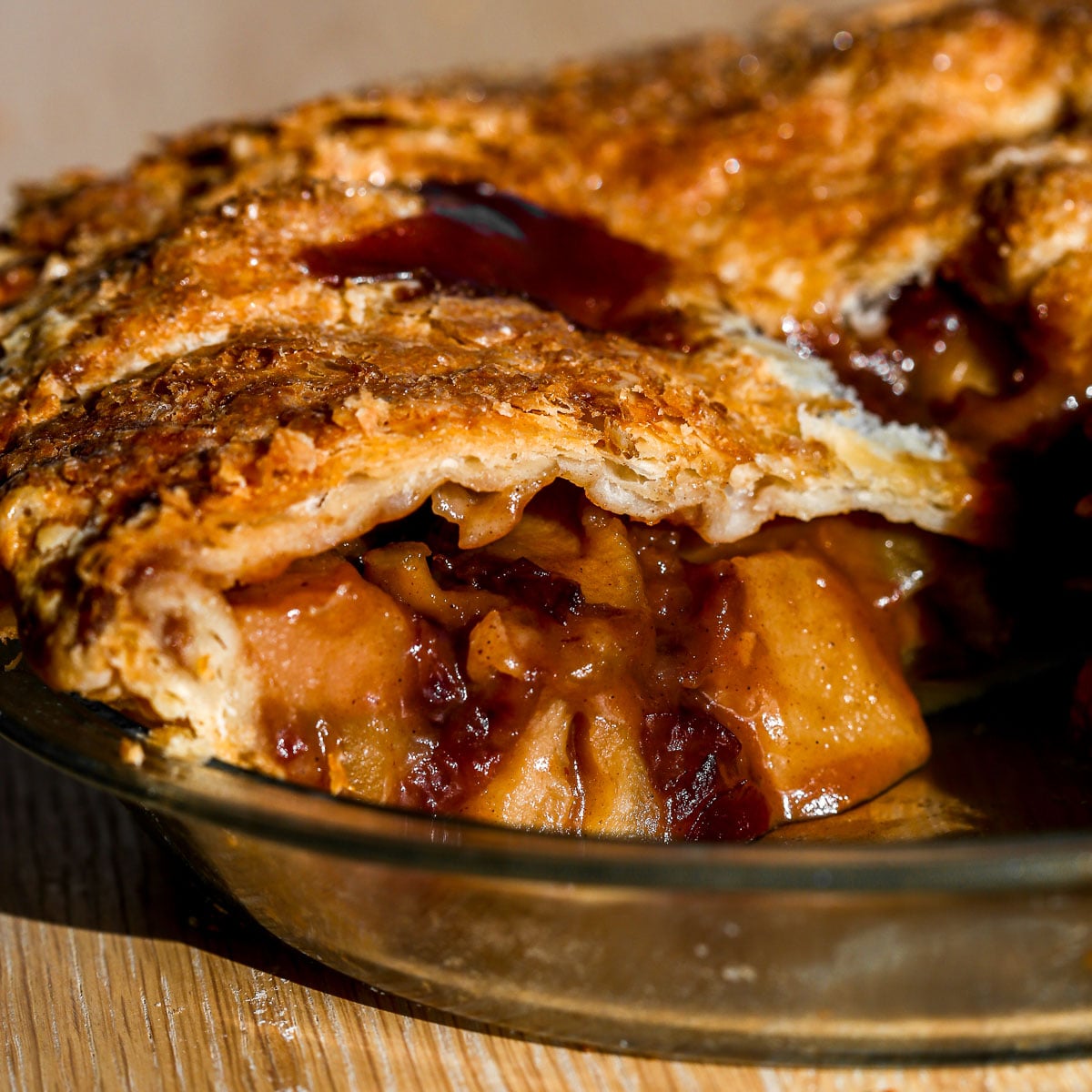
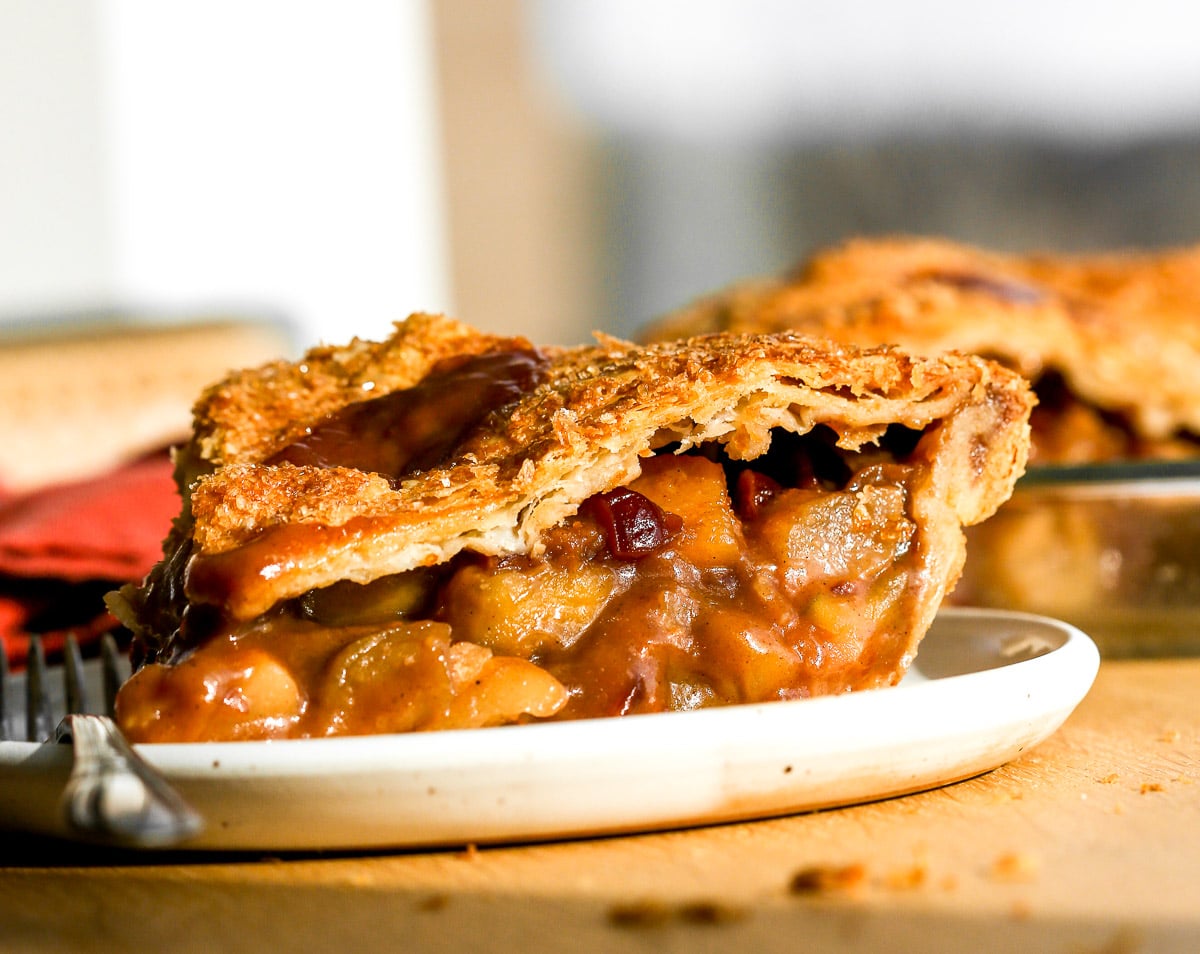
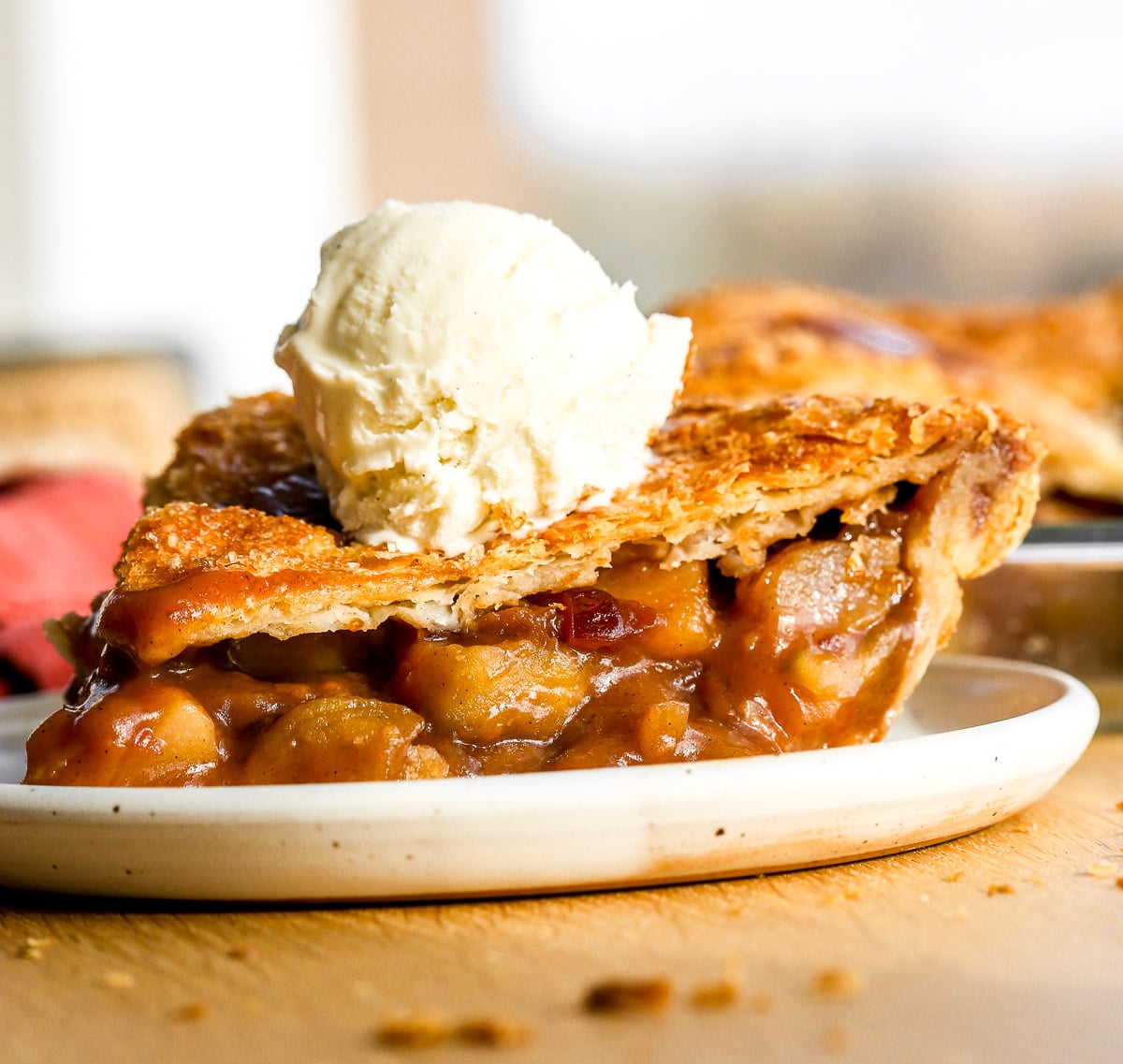
An apple pie with a whole lot more going on! This pie is made with an all-butter pie crust and filled with a caramely apple-pear filling enhanced with orange, dried cranberries and just enough spice to add some warmth. If you’re looking for an apple pie that will wow, this is it.
I’ve been baking this apple pear pie for years. And I’ve always made it from memory, using whatever pie crust recipe I’m loving at the moment (usually an all-butter pie crust but sometimes one made with both butter and shortening), always with Granny smith apples, Bosc pears, and dried cranberries, and always enhanced with orange in some way or another.
After years of baking this, and frequent requests for it at Thanksgiving, I’ve finally put pen to paper and committed it to writing.
For this recipe I use an all-butter pie crust that comes together in the food processor and results in one of the flakiest, layered crusts you can make. (Which, for a double crust, is quite the feat.)
The filling gets a jump start on the stovetop which cooks off some moisture and makes it more consistent and foolproof. Plus, the apples and pears are cut pretty large, so they maintain texture throughout the stove top cooking, and the baking.
The filling is thickened with flour, which doesn’t make as clear of a gel as cornstarch, but it is very stable. I also think it makes for a more luscious filling that’s not tacky or gelatinous.
The Apples and Pears I Recommend
For this pie, use Granny Smith apples and Bosc pears. Granny Smith apples are tart, take on a wonderful texture when cooked, and add a lot of appley flavor.
And Bosc pears are best here because they retain their texture during cooking.
I don’t recommend using other varieties. Neither Granny Smith apples nor Bosc pears are overly sweet—and the majority of the sweetness in this recipe comes from the brown sugar. So if you opt for sweeter varieties, your pie will either be too sweet or, if you decrease the sugar, the ratios will be thrown off.
An All Butter Pie Crust
I recommend using an all-butter pie crust for this recipe. It’s just as flaky as one made with shortening and a whole lot more flavorful. The crust for this pie is very similar to my all-butter pie crust, just with slightly less butter.
But through my testing, I’ve found a double crust pie crust needs slightly less butter than a single crust pie crust. Too much butter in a double crust and the top will melt before setting, causing parts of it to fall down and off the sides of the pie.
So learn the ins and outs of making an all-butter pie crust, but make sure you refer to the apple pie recipe for the correct pie crust amounts!
There are a few steps, but nothing complicated
Make the pie crust dough (I do this a day or two ahead of time).
- Process the flour and salt in a food processor. Pulse in the butter until the butter is lentil-sized.
- Transfer the mixture to a large mixing bowl and drizzle ice water over top.
- Use a rubber spatula to bring the dough together by mixing and pressing the dough against the sides of the bowl.
- Press the dough into a cohesive mass, divide in half, then form each half into a disk, wrap in plastic wrap, and chill.
Make the filling (I like to do this a day ahead of time)
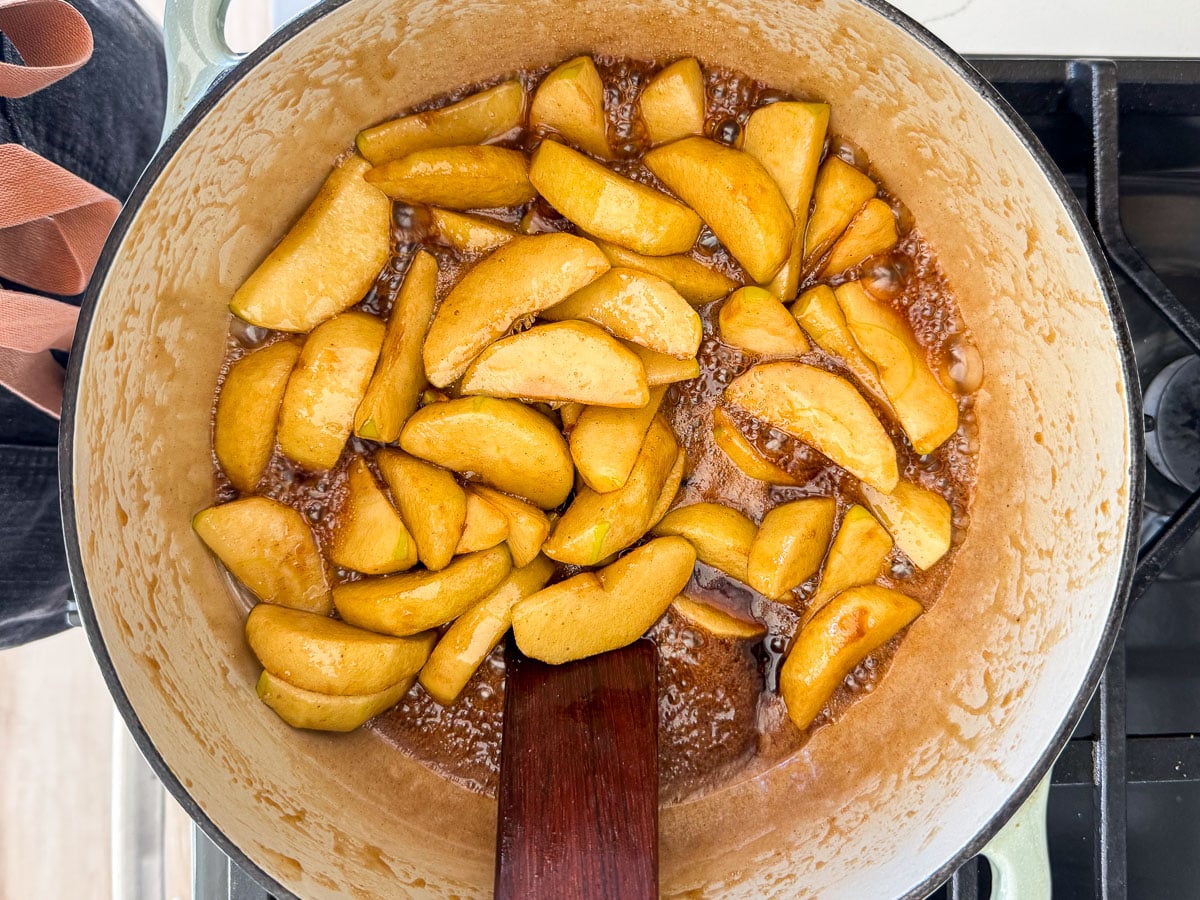
- Cook apples and brown sugar in browned butter until sugar is dissolved and apples start to release liquid.
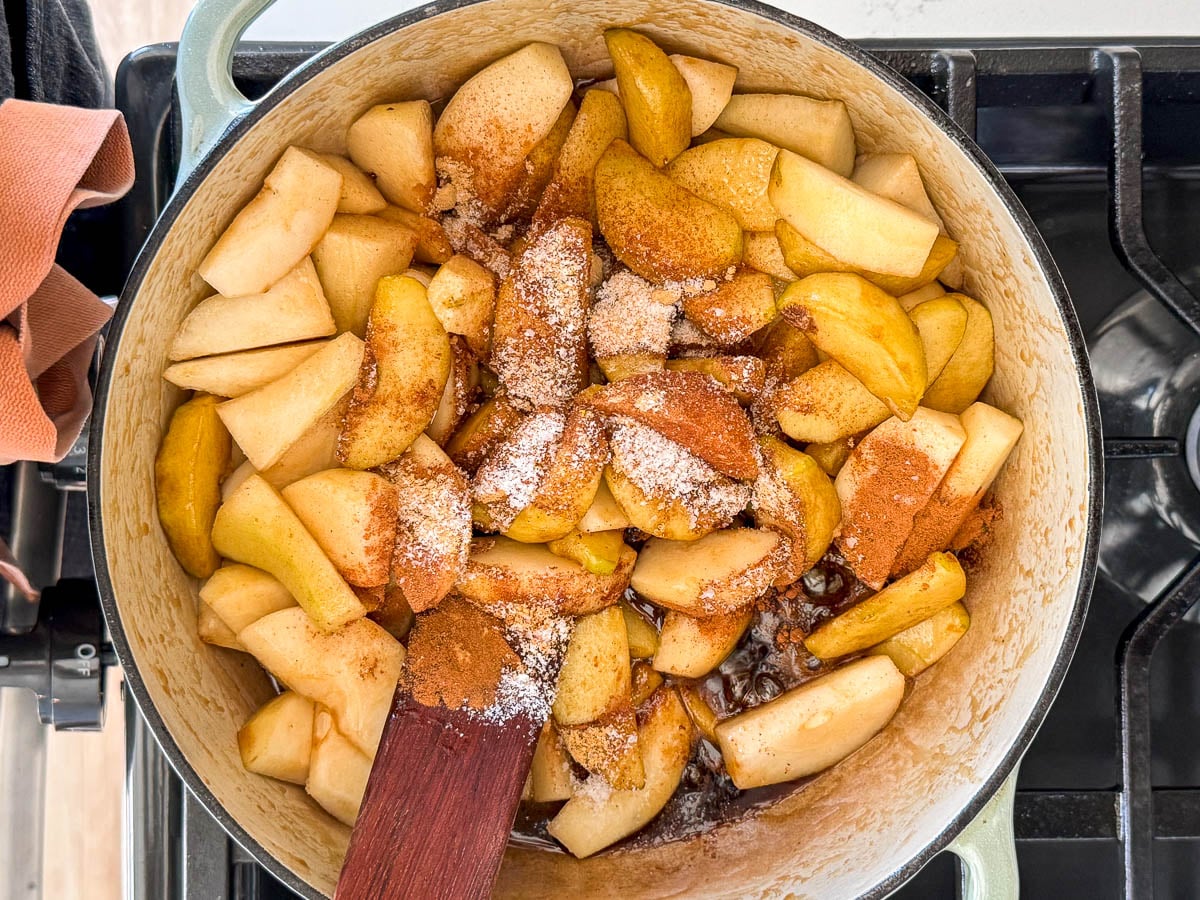
- Add the pears and spices and cook until the pears start to soften.
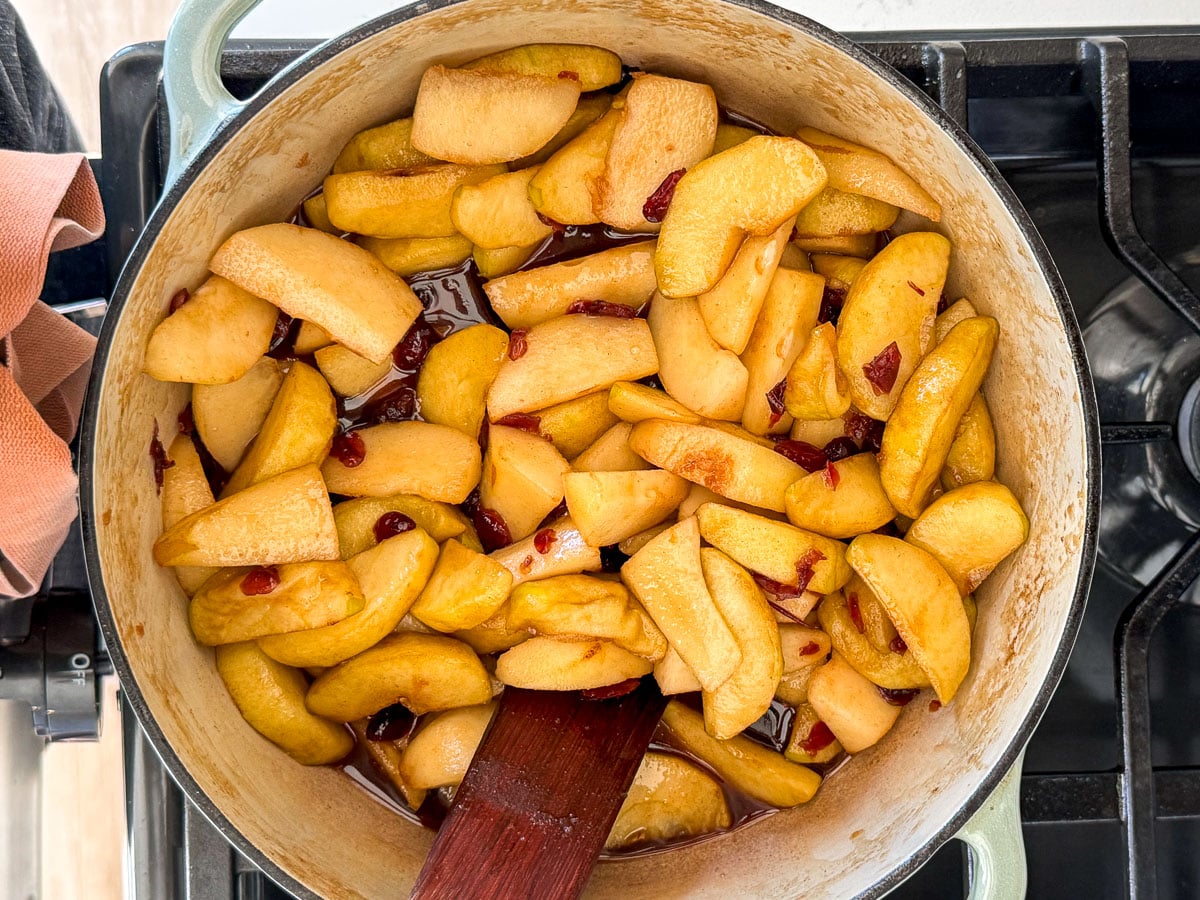
- Stir in the cranberries (rehydrated in orange juice).
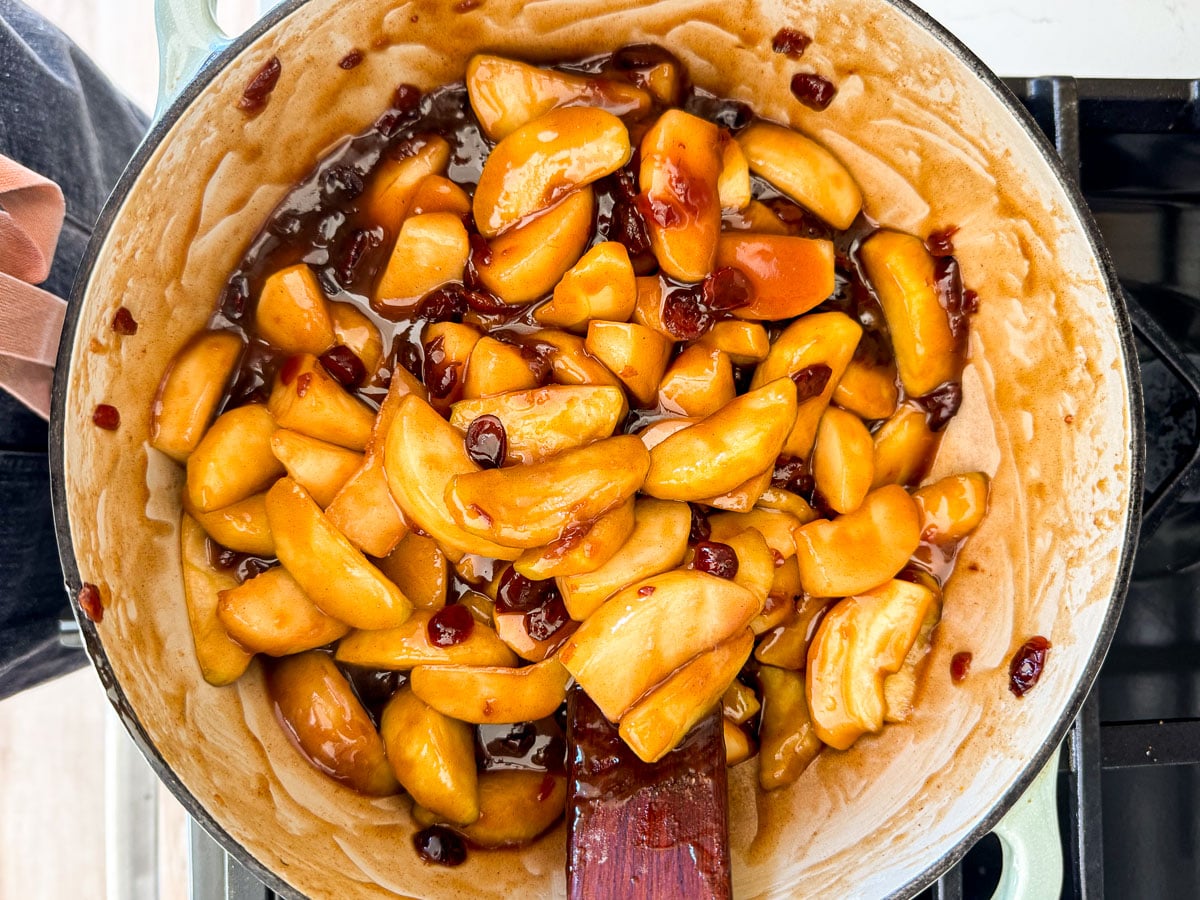
- Sprinkle the flour-sugar mixture over the fruit and stir to incorporate; cook until the mixture thickened and large burping bubbles form on the surface. Remove from heat and stir in vanilla. Let the mixture cool completely.
Assemble and chill
- Roll out one dough dish then transfer to a pie plate.
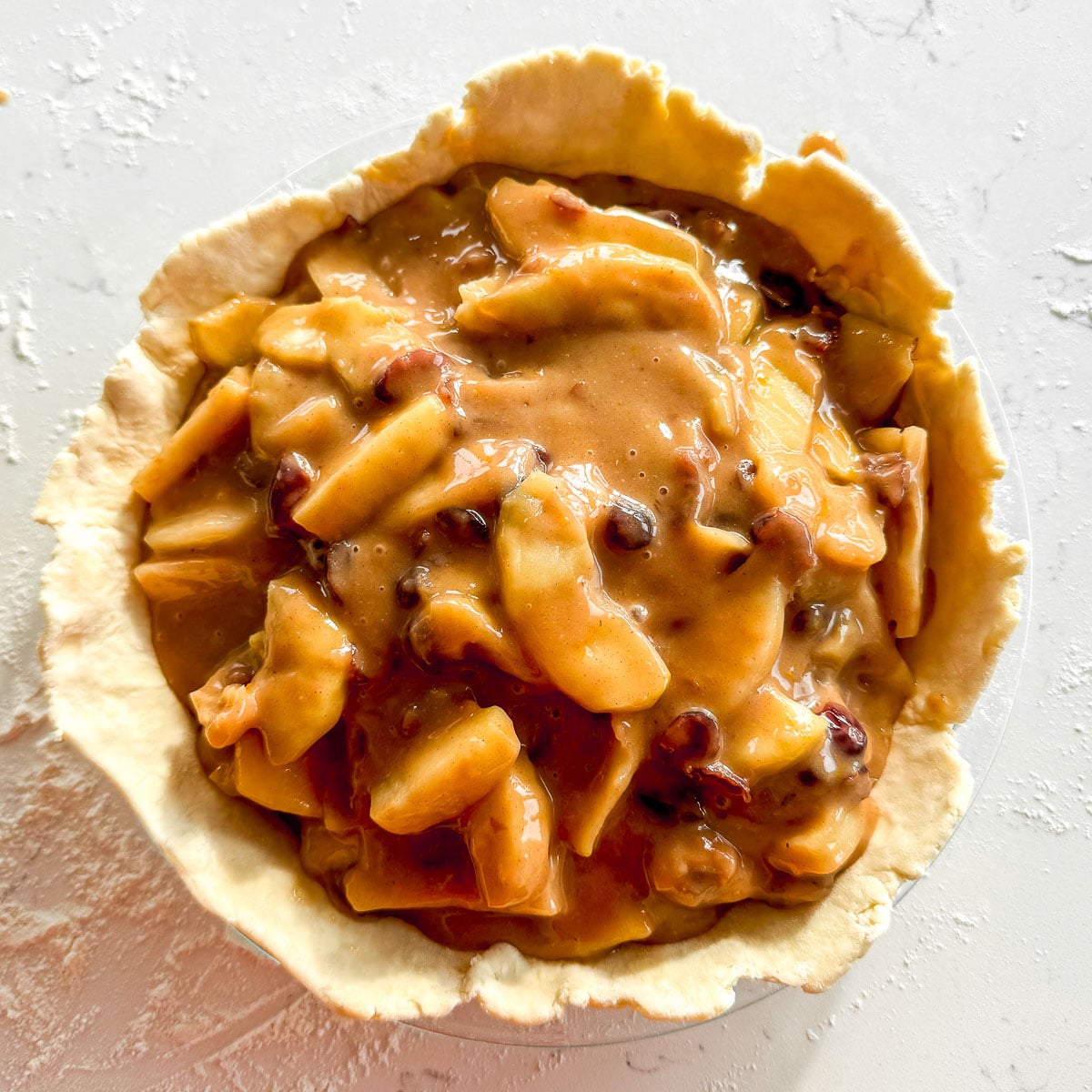
- Pour filling into crust. Roll out second dough disk and place over top the filling.
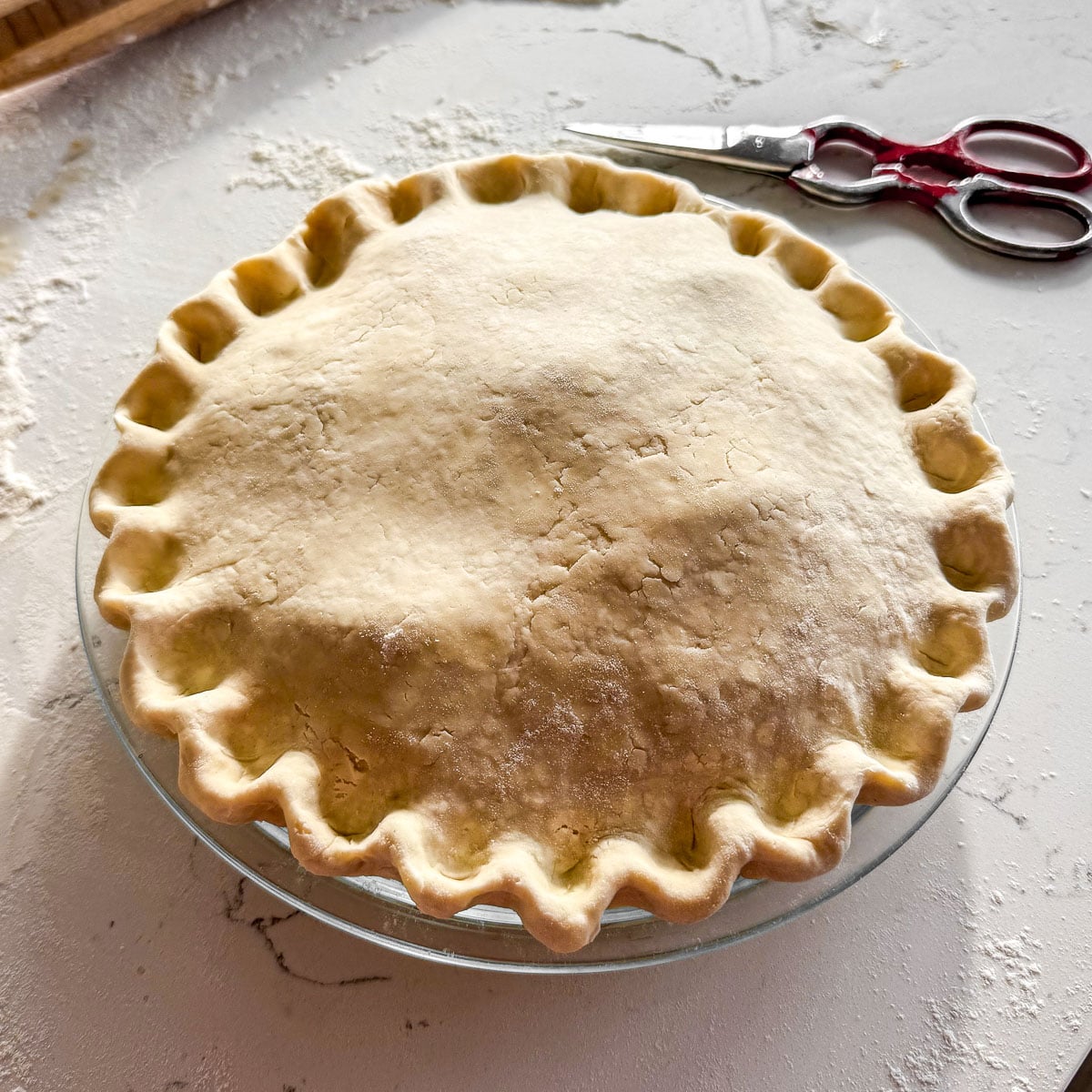
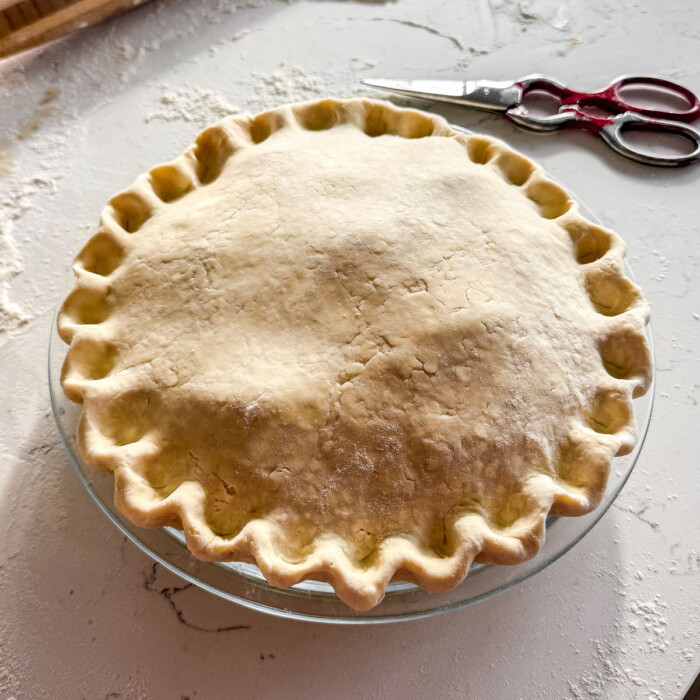
- Press the top and bottom crust together around the edge of the pan. Then trim and crump the crush.
- Chill the pie until it’s firm to touch, at least 1 hour or up to 8 hours.
Bake and Cool
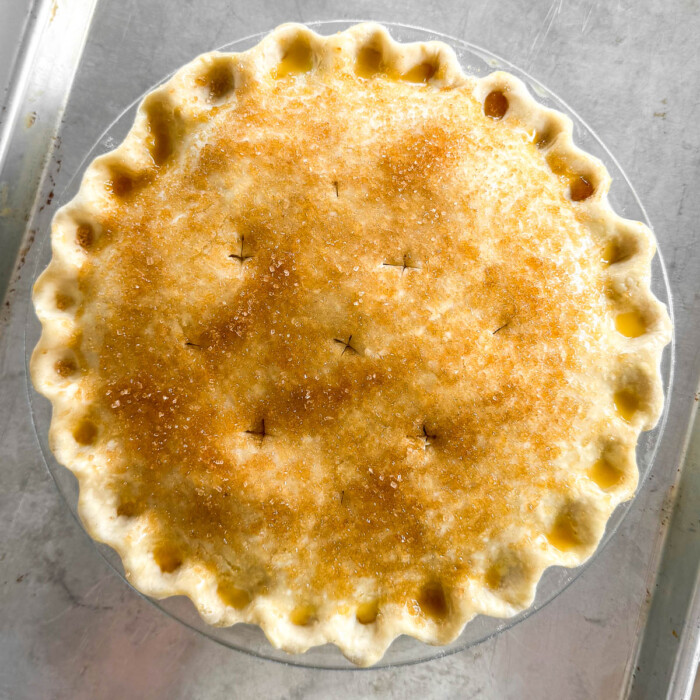
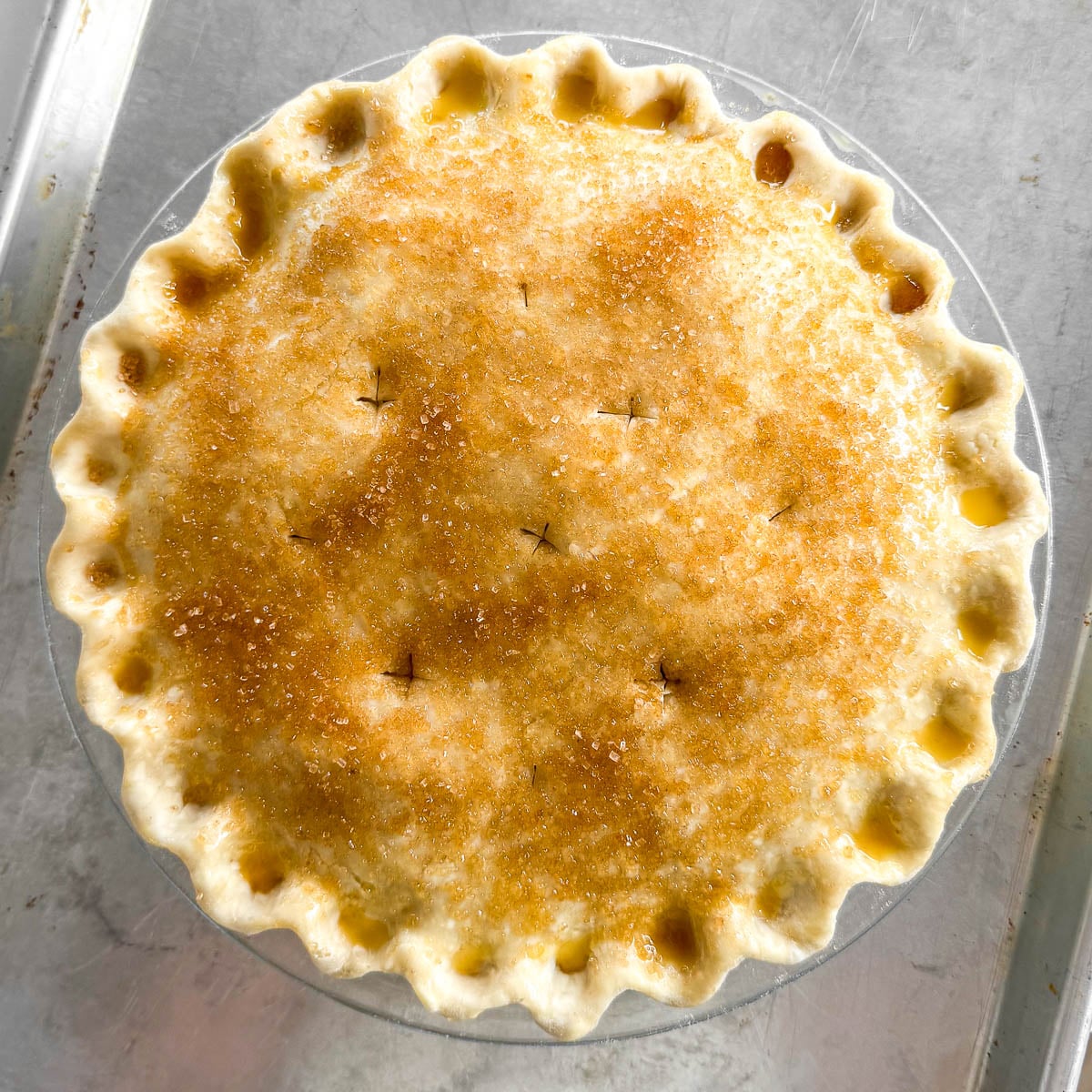
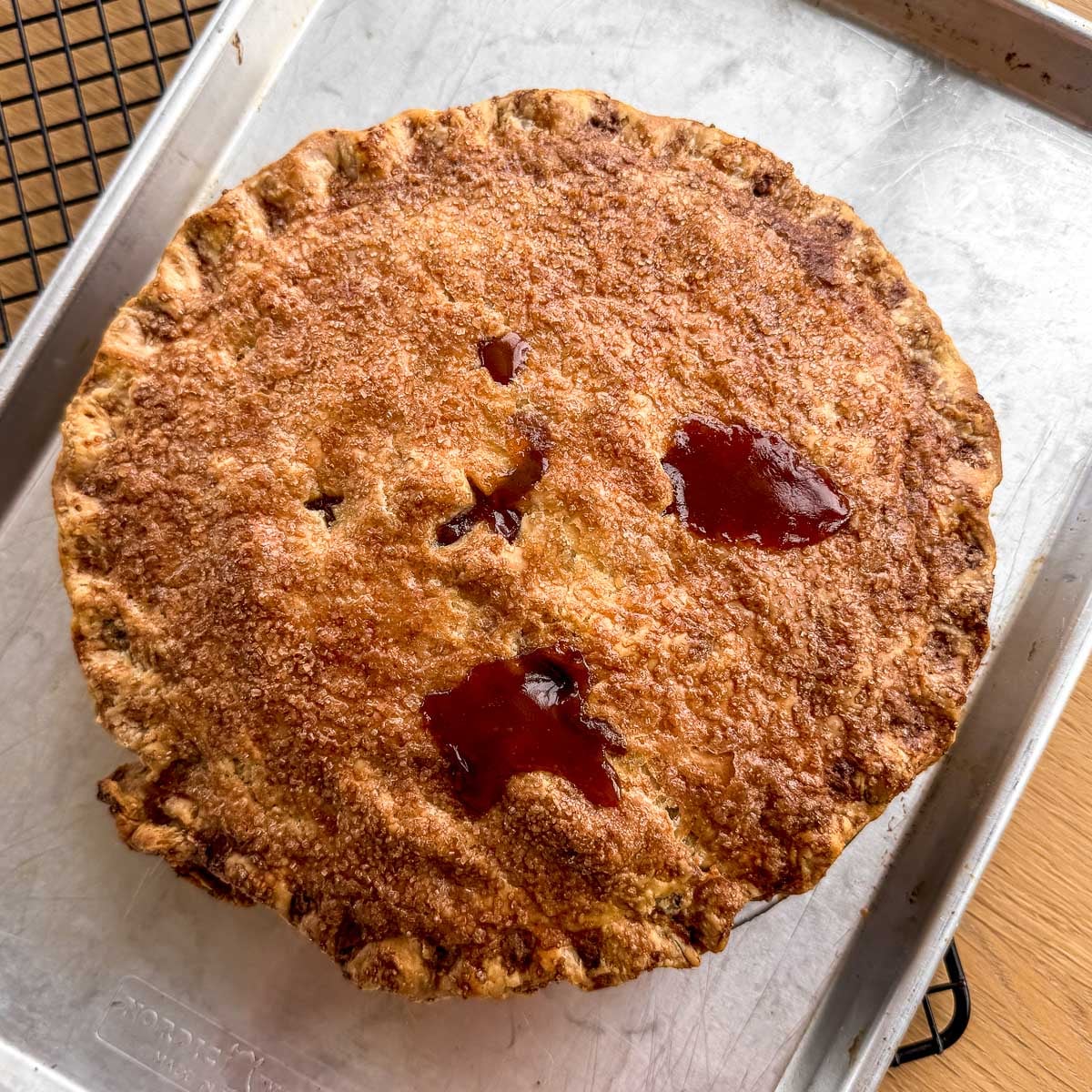
- Brush the pie with egg wash them sprinkle with turbinado sugar to coat. Cut steam holes in the top and bake until deeply golden brown.
Prep the Components Ahead to Make Assembling Easy
Apple pie is my favorite type of pie for a lot of reasons, but one reason is that you don’t have to fill the crust with a warm filling (like you do with pumpkin pie or pecan pie). You can prep the pie dough and the filling ahead of time, making the assembly and baking a breeze.
Prepping the dough: store the plastic-wrapped pie dough in the fridge for up to 3 days or in a freezer bag in the freezer for up to 3 months.
Prepping the filling: let the filling cool completely before you transfer it to an airtight container. The filling can be made and stored in the fridge up to 1 day ahead of time.
If I’m making this for Thanksgiving, I’ll bake it a day ahead of time. Let it cool completely, then loosely cover with foil and stash it on the counter overnight.
What Kind of Pie Plate to Use
This recipe was developed using a regular 9-inch pie plate—NOT a deep dish pie plate. The risk of using a deep dish pie plate is you won’t have enough crust to fill and cover the sides of the plate.
For material, I prefer a glass pie plate because it conducts heat well and you can see the doneness of the crust through the glass. A metal pie plate will also work well here. This it the pie plate I use for all of my pies!
Apple Pear Pie with Cranberries and All Butter Pie Crust
Description
Save This Recipe!
Ingredients
Crust
- 2½ cups (300g) all-purpose flour
- 1 teaspoon kosher salt
- 16 tablespoons (226g) frozen unsalted butter, cut into ½ inch cubes
- 6 –10 tablespoons ice water
Filling
- 5 tablespoons (70g) unsalted butter
- 1½ –1¾ pounds (680–790g) Granny Smith apples (4–5 apples) peeled and cored, quartered, and cut into ½-¾ inch slices
- 1½ –1¾ pounds (680–790g) Bosc pears (3–4 pears), peeled and cored, quartered and sliced into ¾-inch-thick slices
- 1 cup (200g) light or dark brown sugar
- ⅔ cup (86g) dried cranberries
- ¼ cup orange juice
- 1 teaspoon grated orange zest
- 1 teaspoon (3g) ground cinnamon
- 1 teaspoon (3g) ground ginger
- ¼ packed teaspoon freshly grated nutmeg
- ¾ teaspoon Morton kosher salt or 1 teaspoon Diamond Crystal
- ⅓ cup (40g) all-purpose flour
- ¼ cup (50g) granulated sugar
- 1½ teaspoons vanilla extract or paste
- 1 egg beaten with 2 teaspoon water
- Turbinado sugar
Instructions
Crust
- Process flour and salt in a food processor. Scatter butter over flour; pulse until butter pieces are lentil-sized (some irregularity is normal – some pieces should be smaller, some may be bigger) about 15 pulses. Transfer mixture to a medium bowl. Use your fingers to smear any large pieces of butter between flour.
- Drizzle 6 tablespoons ice water over flour mixture. Using a rubber spatula, mix dough together, pressing against sides of bowl, until a rough dough comes together. If it’s still too dry, drizzle in additional water, by tablespoon, just until it comes together.
- Dump shaggy dough out onto a large piece of plastic wrap and press into a cohesive mass. Divide in half, then form each half into a 4-inch disk; wrap each tightly in plastic and refrigerate at least 30 minutes (or up to 3 days).
Filling
- In a medium pot, melt butter over medium heat; cook butter, stirring occasionally, until milk solids begin to brown, and butter smells toasty, 4–6 minutes.
- Add apples and brown sugar and stir well to coat. Continue to cook over medium heat, stirring occasionally, until sugar begins to melt and apples begin to release liquid, about 4 minutes.
- Meanwhile, combine cranberries and orange juice in a small microwave-safe bowl and microwave 1 minute, stirring halfway through; set aside.
- Add pears, cinnamon, ginger, nutmeg, and salt, and stir well to combine. Continue to cook until pears just slightly soften, about 3 minutes. Stir in steeped cranberries and orange juice.
- Meanwhile, whisk granulated sugar and flour together to combine; sprinkle over surface of fruit, and stir well to combine. Continue to cook, stirring constantly, until mixture begins to thicken, 2–3 minutes. Reduce heat to medium-low, and continue to cook until mixture begins to form fat bubbles on surface, about 2 minutes.
- Remove from heat and stir in vanilla and orange zest; spread mixture onto a baking sheet to cool completely (if prepping ahead, transfer to a container and cool completely before covering and refrigerating for up to 2 days).
Assemble
- On a lightly floured surface, roll out one portion of pie dough to ¼ inch-thickness (11–12 inch round). Gently transfer dough to a 9-inch pie plate, lightly lifting up and pressing down into edges.
- Pour filling into lined pie pan, and spread into an even layer.
- On a lightly floured surface, roll out second portion of pie dough to ¼ inch-thickness (11–12 inch round). Gently transfer dough to top of pie.
- Use your fingers and thumbs to firmly press crusts together all around. Using scissors, trim away excess dough, leaving about 3/4-inch overhang all around.
- Tuck dough edges underneath itself all around. Press firmly on dough to adhere to plate. Crimp edges of pie as desired.
- Transfer pie to refrigerator, and chill for at least 1 hour or up to 8 hours.
- Preheat oven to 400°F (205°C) with racks set in upper and lower thirds.
- Place chilled pie on baking sheet. Brush surface of pie with egg wash, and just lightly brushing edges (they brown fastest). Sprinkle surface generously with turbinado or granulated sugar. Using a paring knife, cut a few "x" in top of crust.
- Transfer pie on baking sheet to lower rack. Bake until pie is starting to become golden on surface, about 30 minutes. Reduce oven temperature to 375ºF (190°C), and continue to bake until pie is deeply golden brown, and filling bubbles through vents, 65–75 minutes.
- Cool baked pie completely to room temperature before slicing.
- If you prefer to serve warm, gently reheat at 300ºF (148ºC) for about 10 minutes.
