This post may contain affiliate links.
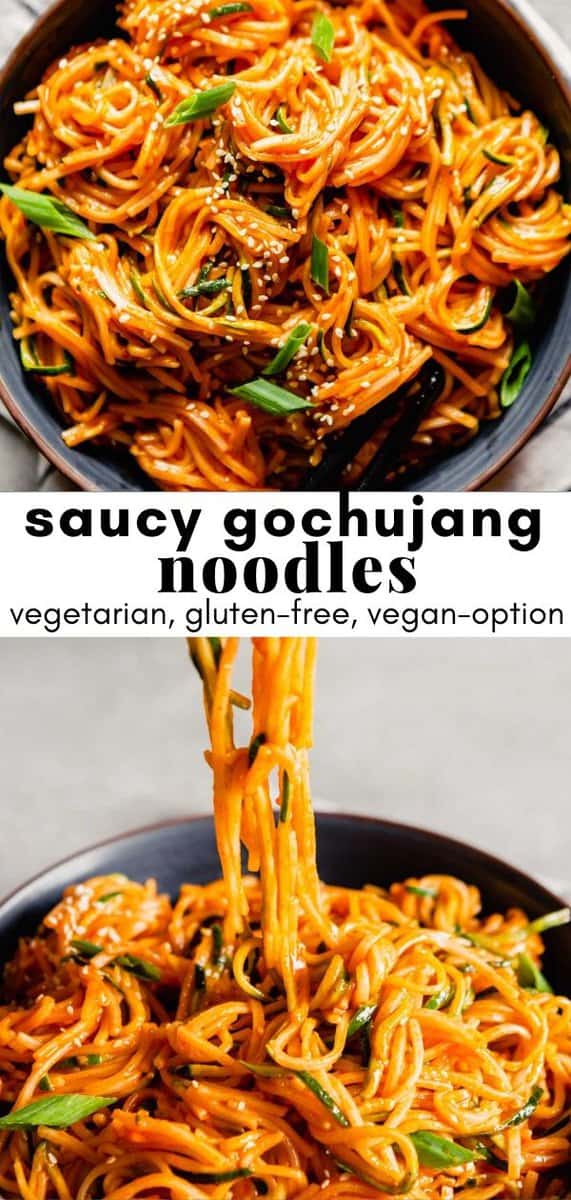
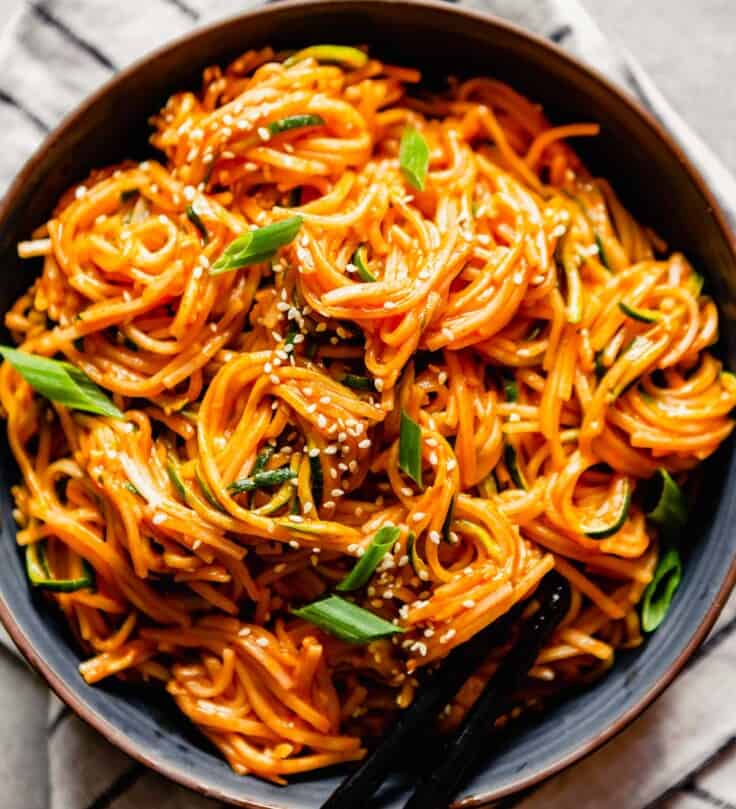
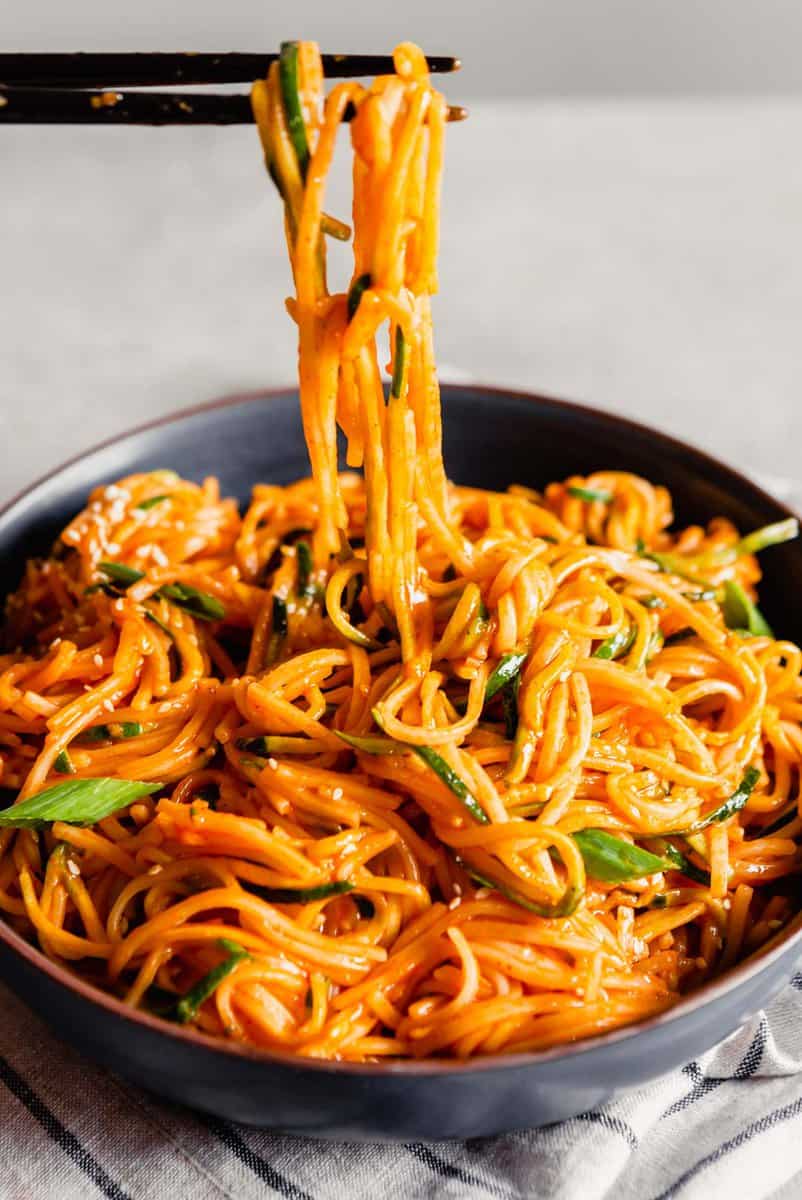
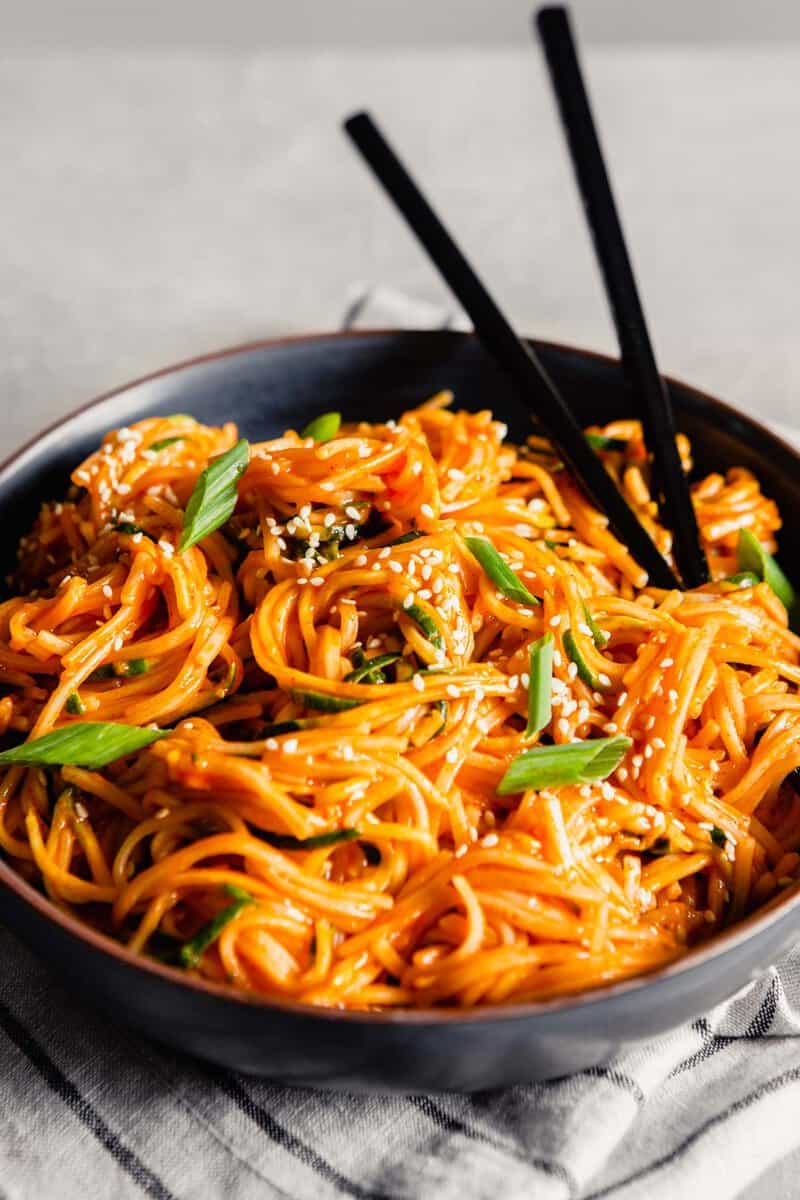
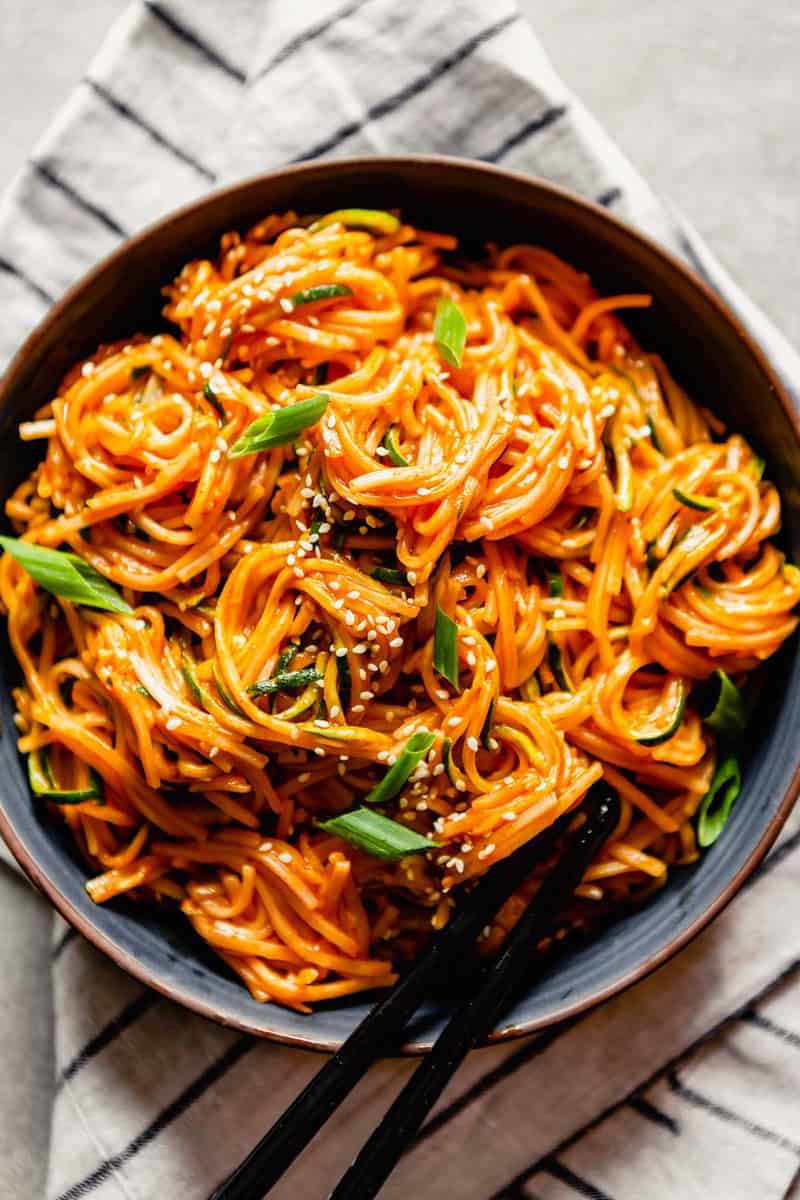
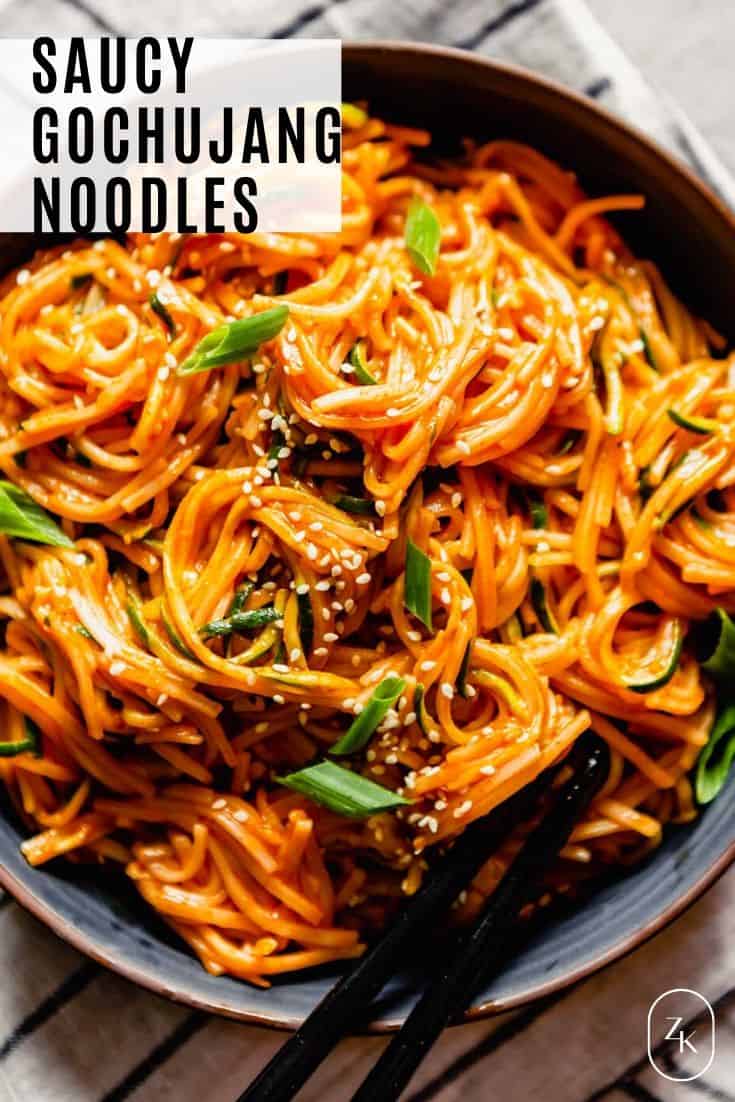
This recipe for Gochujang Noodles is both spicy and insanely savory. It’s one of those dishes where the moment you finish cooking it, you can’t seem to stop eating it. But if you can, it’s the perfect base for any protein making it a great weeknight meal. Each bite of these creamy gochujang noodles is buttery and silky smooth.
It’s key to use rice noodles here. Their starchiness makes for a luscious sauce while their stickiness holds onto all that flavorful sauce. If you prefer to use up pasta in your pantry, spaghetti, angel hair or linguine pasta can be used to make these gochujang buttered noodles.
Speaking of pantry, this 20-minute recipe relies on just a few pantry ingredients to give these Korean Gochujang Noodles major flavor. Gochujang, hoisin, lime, garlic and toasted sesame oil do all the heavy lifting.
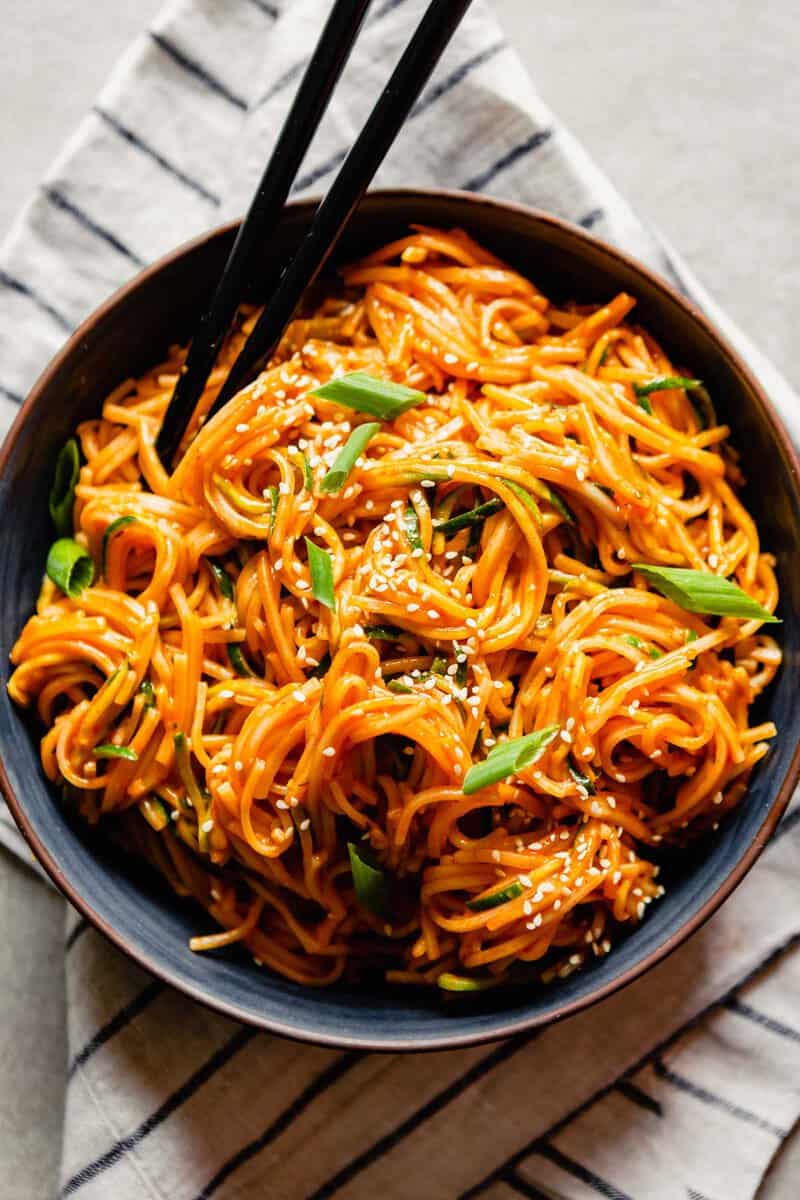
Totally optional, but I like to make this dish with both zucchini noodles and rice noodles. Not only are you sneaking in some veggies, but the zucchini noodles add a nice crunch alongside the chewy rice noodles. A perfect combo.
Reader Review
“I love this recipe so much. I’ve made it weekly since I discovered it. I usually put black beans in for added protein.”
– Ayesha
This recipe article was originally published in November of 2019, it has since been updated with helpful tips, ingredient notes and step-by-step images
Table of contents
Ingredients Needed

Below are a handful of notes that will help make this a success. The full recipe, with ingredient amounts, can be found in the recipe card below.
- Zucchini: I like to use spiralized zucchini (zucchini noodles) in addition to rice noodles—it adds the perfect crisp-tender texture to the dish.
- Rice noodles: Feel free to use any type of rice noodles such as pad thai, stir-fry, vermicelli, straight cut, etc. You’ll need 8 ounces, unless you skip the zucchini, in that case use 16 ounces.
- Gochujang: Gochujang is a fermented Korean chili paste that’s sweet, spicy and savory. It’s bright red in color, sticky and thick in texture, and is used as a condiment or in sauces in Korean cooking. (Think “sticky tomato paste,” to help you visualize the texture). Look for it in the Asian section of your grocery store sold in short (usually red) rectangular containers. And of course, you can always get gochujang on Amazon.
- Hoisin sauce: also called peking sauce, this sauce is actually a common Chinese condiment and is rich in salty, sweet flavor. Find hoisin in the Asian section of your grocery store.
- Lime juice: you’ll need one lime for this recipe. A bit of fresh lime juice balances out the savory, spicy flavors of this dish. You can also use rice vinegar.
- Olive oil: use a mild olive oil here since you’ll also be using toasted sesame oil and butter (trust!).
- Garlic: fresh is best! You’ll need 1 teaspoon of minced fresh garlic.
- Cornstarch: a spoonful of cornstarch is essential for thickening the sauce.
- Toasted sesame oil: just a couple teaspoons really amps up the flavor of these noodles.
- Butter: 2 tablespoons of butter is essential for creating luscious, silky buttered gochujang noodles.
- Scallions and sesame seeds: garnish the noodles with scallions for a note of freshness and toasted sesame seeds for additional nuttiness.
How To Make Easy Gochujang Noodles

- Spiralize the zucchini (this is my favorite spiralizer) then toss the strands with salt and let them drain while you prepare the other components.
Tip: cut any excessively long strands of zucchini noodles. If they are too long they will just create a knot of noodles.

- Make the gochujang sauce by combining gochujang, hoisin, lime juice, olive oil and garlic.

- Cook the rice noodles according to package directions then drain and toss with the gochujang sauce.

Tip: cook the pasta and sauce over medium for just a minute or so. This is all you need to cook that “bite” out of the fresh garlic.

- Squeeze the zucchini noodles to release excess water (a lot will come off!) Reserve the water for making a cornstarch slurry. Toss in the zucchini noodles with the rice noodles and sauce until combined and everything is coated.
- Whisk together some of the reserved zucchini water and the cornstarch to make a slurry—an essential step to create a thick, smooth sauce. Add the cornstarch slurry to the pot of noodles and cook for a minute or so until thicken.
- Off heat, throw in a few pats of butter and a drizzle of toasted sesame oil.
Test Kitchen Tips
- For this gochujang noodle recipe, I use a mixture of zucchini noodles and rice noodles (although you can choose to use one or the other if you don’t want a mixture). For all rice noodles, use 14–16 ounces of rice noodles. If you choose to use all zucchini noodles, use 6–8 medium zucchini.
- Toasted sesame oil is not the same as regular sesame oil. Be sure to seek out toasted sesame oil at the store.
- If you’re gluten-free be sure to check the labels of gochujang. Some products are gluten-free, while others are not.
Serving Ideas
Personally, I eat this dish straight out of the pot with a fork, I just can’t help myself. But in my better moments, I’ll top each serving of these creamy gochujang noodles with some kind of tofu.
Crispy tofu strips or crispy shredded tofu are both great options for a meatless meal. Pan seared chicken breast is a personal favorite, but these noodles are also a great side dish for steak, especially sliced grilled skirt steak.
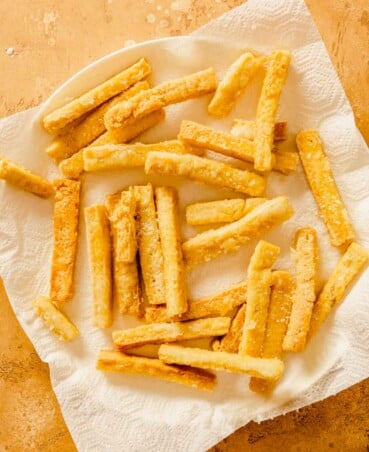
Tofu & Tempeh
How to Make Crispy Tofu
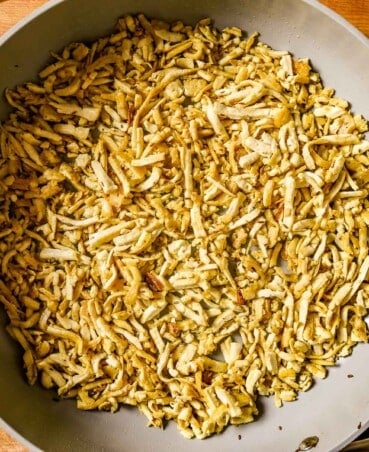
Tofu & Tempeh
Shredded Tofu
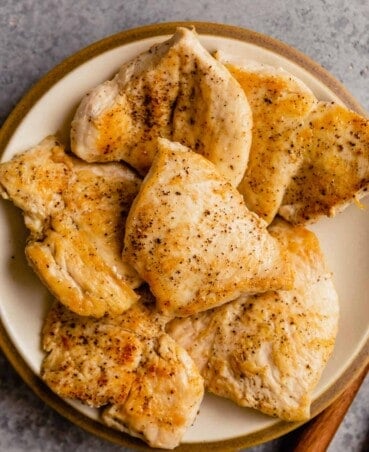
30-Minute Meal
The Only Way I Pan Sear Chicken Breasts
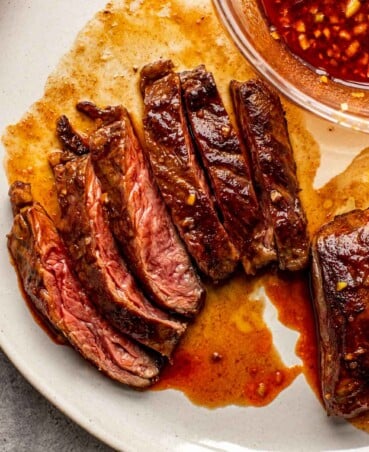
Storage and Reheating
Store leftover gochujang noodles in an airtight container in the refrigerator for up to four days. Reheat gently in the microwave on partial power until warmed through and saucy again. You may need a splash of water to loosen them up a bit.
For longer storage, you can freeze these noodles for up to two months.
More Ways to Use Gochujang
I use gochujang for all kinds of recipes, including one of my favorite weeknight meals, sheetpan Korean Meatballs. It’s also great for glazes because it’s sticky and slightly sweet, perfect for glazing beef short ribs in this savory Korean Beef Stew.
Or mix it into mayo and you’ve got a very quick and easy gochujang aioli, perfect for all kinds of sandos, but especially leftover meatloaf sandwiches.
And finally, upgrade homemade caramel corn with gochujang!
Saucy Gochujang Noodles (Easy Korean Noodles)
Description
Video
Save This Recipe!
Ingredients
- 3 large zucchini, spiralized*
- 1 teaspoon kosher salt
- ¼ cup gochujang*
- 3 tablespoons hoisin sauce
- 3 tablespoons fresh lime juice
- 3 tablespoons olive oil
- 1 teaspoon minced fresh garlic
- 8 ounces rice noodles, cooked according to package directions; drained
- 1 tablespoon cornstarch
- 2 tablespoons unsalted butter, vegan butter if needed
- 1 tablespoon toasted sesame oil
- Sliced scallions and sesame seeds for serving, optional
Instructions
- Toss 3 spiralized zucchinis with 1 teaspoon salt in a strainer set over a bowl; let sit 15 minutes.
- Meanwhile, whisk together ¼ cup gochujang, 3 tablespoons hoisin, 3 tablespoons lime juice, 3 tablespoons oil, and 1 teaspoon minced garlic.
- Cook 8 ounces rice noodles according to package directions; drain and transfer back to pot over medium heat. Pour gochujang sauce over noodles and cook 2 minutes.
- Squeeze zucchini noodles over a bowl to release excess liquid (when you think you’re done, squeeze a bit more), reserve liquid then transfer zucchini noodles to pot with rice noodles and sauce and gently toss to combine.
- Whisk together ½ cup reserved zucchini water and 1 tablespoon cornstarch; pour into pan with noodles and cook until thickened and silky; about 1 minute. Off heat, stir in 2 tablespoons butter and 1 tablespoon toasted sesame oil.
- Top with scallions and sesame seeds and serve immediately.
Equipment
Notes
Nutrition


I tried gochujang sauce for the first time last year and now I love it! These noodles were a hit at my house.
We love anything spicy, saucy and with noodles in this house – this recipe was a hit! Thank you!!
So quick and easy! We loved it with some shishito peppers for an appetizer!
My whole family loved this!
Freaking love gochujang! And we do Asian at least 1x per week!
A good depth of flavors with just the right amount of heat…good by itself or combined with your Asian turkey meatballs, chicken or shrimp…This warmed me up on a cold winter day! Thanks Lauren!
🙂 So happy you enjoyed these! Gochujang is such a fun ingredient to cook with!
These look so good! But just an fyi, many hoisin sauces are not GF. I would add to your notes, to check labels.
Hi Jaime! Thanks for letting me know, I remember seeking out a GF version but forgot to mention it in the post. I will add that note!
Oh gosh, I did NOT like this dish. It was extremely spicy for my taste.
HOWEVER! My husband loved it so much he went for thirds. He won’t shut up about how good it was. I don’t remember him liking a dish SO much. AND its suuuper easy to make. So this will probably be on our dinner rotation!
Why not eat food you love, Ingrid?
Super yummy! Very spicy, but still great. I recommend a squeeze of lime right on top before you eat it to temper the spice and add just a little more zing. I stirred in meatballs I had made a while back and frozen; it was great. Normally with noodle/sauce recipes I have to double the sauce (especially if I’m adding protein), but that wasn’t necessary with this recipe.
This is going to the top of my want-to-eat-but-dont-want-to-cook list. Simple and tasty. I went for 100% zucchini noodles and left out the butter. And despite your warning I used regular sesame oil as that is the only kind I had 🙂 I also added some sugar snap peas. Fried them first and then put them on top (instead of tossing in the sauce) Thank you so much for this fabulous recipe!
We loved this! I also made your Glazed Asian Turkey Meatballs to go with this, cause my husband likes his meat! LOL Also a big hit! Thanks for 2 great recipes!
I’m so glad to hear your enjoyed the noodles and meatballs Carolyn!! Two of my favorite recipes! 🙂
Made this last night with the Vietnamese Mango Salad. Both recipes were outstanding!! Thank you !
The recipe was super easy and super good. I used shredded cabbage (stir fried and lightly steamed) added in with the noodles instead of zucchini. It gave a satisfying crunch to the otherwise creamy dish. We’ll definitely make this again – thanks!
Hi Brenda—I’m so glad you enjoyed this! I love the idea of adding cabbage, genius!
@zestfulkitchen thank you so much! I LOVED this recipe. The only thing I changed was that I added shrimp. Yum! Also I don’t have a spiralizer, but I just did thin slices of the zucchini. My sister and I really felt this was the perfect amount of spicy, and very very flavorful!
Yay! I’m so glad you enjoyed it, and love that the thin slices of zucchini worked well! 🙂
I tried this recipe, and I loved it!!!
It was so silky and the texture is perfect!!!
although I made my sauce different, and used no zucchini, it was delish!!!!!!
I love this recipe so much. I’ve made it weekly since I discovered it. I usually put black beans in for added protein.
Yay! Hi Ayesha! I am SO happy to hear you love these noodles. Such a great idea to add black beans, I’ll be doing that the next time I make these!
I love gochujang but this recipe was NOT it.
Hi Annie,
I’m sorry to hear you didn’t enjoy it. Was there something in particular you didn’t like?
I had been really nervous about cooking with rice noodles because I’d tried it once before & absolutely botched it, but this time they turned out great! Thanks very much for the recipe, it’s a keeper
I’m so glad they worked out well this time!! This is one of my favorite recipes, so much flavor! 🙂
It was okay, I mean I loved the heat, and the whole idea of the dish…but I didn’t like the raw zucchini. I followed the package directions on my rice noodles and cooked to al dente, but they broke apart into pieces when tossed with the tough, raw zucchini. After adding the cornstarch slurry (which I didn’t think it needed because it was already thick) it all stuck together like paste and tasted chalky. Ruined the sweetness of the gochujang sauce 🙁
Hi Madison, I’m sorry to hear you didn’t enjoy it very much. A few things I’m curious about—did you salt and squeeze the zucchini? By doing this you draw out excess moisture from the zucchini which gives them a “cooked” texture. Additionally, rice noodles are really starchy on their own, so you’re right, if I didn’t add the 1/2 cup water this dish wouldn’t need that tablespoon of cornstarch. To make the dish saucier without losing the silkiness I opted for a small amount of cornstarch and a fairly good amount of water. This definitely shouldn’t have come out chalky or with the noodles sticking together. Per the instructions, I recommend cooking the rice noodles, draining, then immediately transferring back to the pot with the sauce. If the cooked noodles are allowed to dry and cool they will likely stick together without any sauce or oil. I hope these tips help!
Thank you for sharing this simple yet delicious recipe!! Love it! =^.^=
Yay! So happy you love it Angelina!